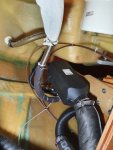
Ducting for blown air heating

Na ... an overheat trip would shut down completely requiring some kind of reset or manually turning on. Your problem sounds more like temp sense reacting prematurely. Where is the stat sensor position in relation to hot air outlet ?

I've set it to temp by panel and the control panel is mounted at the chart table and only gets to about 18 degrees before going to idle, despite being set to 26. Nearest duct is other end of the saloon.

Maybe duff controller?
 
An old thread I know but I've been having issues with my Planar d4 heater cycling down to idle from startup when the set point is way above the panel temperature. I've got insulation right up to the heater on the outlet duct and it does bend down slightly too (unavoidable unfortunately).

Think this could be the problem? The supplier suggested it might be an overheat issue. Not an easy job to remove to test so wondered about other people's experiences...
I have exactly the same problem. I had a D5 Eber before which lasted 20 years and never seemed to do anything other than full chat. The planar seems very sensitive to warming of the intake air for the burner and also any restriction to inflow or outflow of the heating air and it does as you say. Full power for about 5 to 10 minutes then down to tick over and then cycles back up to full power and repeats. it’s in a lazarette and opening the lid helps considerably which I take to be access to more air and colder air. It hasn’t done a winter yet. Will be interesting to see how it does in cold weather.
 
I've set it to temp by panel and the control panel is mounted at the chart table and only gets to about 18 degrees before going to idle, despite being set to 26. Nearest duct is other end of the saloon.

Maybe duff controller?
Yep, been there. I set it to 30. Seems to do best when set to work by power (last option on the menu). 18 degrees seems to be the max I can get the controller to read.
 
I have exactly the same problem. I had a D5 Eber before which lasted 20 years and never seemed to do anything other than full chat. The planar seems very sensitive to warming of the intake air for the burner and also any restriction to inflow or outflow of the heating air and it does as you say. Full power for about 5 to 10 minutes then down to tick over and then cycles back up to full power and repeats. it’s in a lazarette and opening the lid helps considerably which I take to be access to more air and colder air. It hasn’t done a winter yet. Will be interesting to see how it does in cold weather.

That's exactly the behaviour I'm experiencing. I've added a duct for intake to pull from cockpit and it has a bit of a bend in it so might start by removing that...
 
Same here. Maybe new controller worth a try?
Have a look at what temperature the actual unit is reaching (I think down arrow while it is running brings up a schematic to show it). They are designed to throttle down when the unit reaches within a degree or so of the set max temperature. I just get the sense the whole thing is fussier than older eber. There’s three of us now seeing the same thing so doubt a dodgy controller unless it’s a bad batch. My unit was installed around spring this year by their recommended installer who I definitely trust.
 
I’ll pm vyvcox and make sure Owen sees this thread. Planar is his baby in the uk
Hi, it does indeed sound like overheating in these cases. Let me explain how it works.
When the heater is running it constantly monitors the exhaust temperature and the heat exchanger temperature. The heat exchanger temperature should be around a maximum of 200C which gives you a sensible outlet temperature around 80-100C at the ducting. If the air flow through the ducting is restricted the heat exchanger temperature will rise (due to not enough air cooling it) of this reaches a value (lets assume 225C) it will ramp down the burner power. This is overheat protection mode. It then continues to monitor the heat exchanger temperature and if it drops it then ramps back up again. If it keeps increasing it will ramp down further. It will in fact get to a point where it will stop the burner completely to allow it to cool. If it cools in a reasonable time it will then restart and carry on. We very often see yachts with self installed heaters with this issue. Personally i always keep the first outlet in the ducting to be a 90mm fixed open grille with 90mm ducting all the way to the grille from the heater. I then tee off at various points for the other grilles always maintaining that 90mm first section. Then it is impossible to accidentally close it. Keeping ducting in smooth bends is key. They are actually very tollerant and this overheat protection mode was not always in the heaters. They used to just go out on fault 01 which is overheat. It did tend to be too easy to have this fault so this control method was introduced about 4 years ago to avoid this problem. However all the heaters I install in boats never hit the overheat protection unless someone blocks a grille or kinks the ducting. Heat insulation on the ducting has no effect on this in the slightest so that can be discounted. All those woth these issues remove the ducting from tbe heater and run the heater without any ducting and I am sure you will see that the heater the. Runs without stopping and at full power. This will indicate you do not have sufficient airflow to keep the heater cool enough to run. They do still go into error 01 if the blockage is extreme but this is rare, although we sometimes find peoples dogs sit on outlets in vans and cause this! ?
 
Have a look at what temperature the actual unit is reaching (I think down arrow while it is running brings up a schematic to show it). They are designed to throttle down when the unit reaches within a degree or so of the set max temperature. I just get the sense the whole thing is fussier than older eber. There’s three of us now seeing the same thing so doubt a dodgy controller unless it’s a bad batch. My unit was installed around spring this year by their recommended installer who I definitely trust.
Unfortunately the only way to see the heat exchanger temperature is with our diagnostics kit and a laptop. This shows you exactly. The reading you see on the display is a separate sensor mounted on the circuit board inside which more or less measures the inlet air temperature to the heater.
 
I suspect ducting problem as stated below. Please read my reply to stuart wineberg. It wont be the controller at fault. Its unfortunately an installation issue I am sure.
Thanks Owen. What I dont get is that this is a drop in replacement for a D5. Same ducting, same location and in fact better ventilation due to a new air duct and removing the boxing that was round the eber. So that was pumping more heat and never blinked for 20yrs.
 
Thanks Owen. What I dont get is that this is a drop in replacement for a D5. Same ducting, same location and in fact better ventilation due to a new air duct and removing the boxing that was round the eber. So that was pumping more heat and never blinked for 20yrs.
What diameter is the ducting? I have seen Eners running 75mm ducting and then that being adapted to fit an autoterm and then they never work well. It has to be a smooth 90mm all tge way to the first grille. Then it will run for many many years. We only ever have problems in yachts witg this issue where old ducting has been used or the transition pieces, grilles, Ys etc. Restrict flow. Perhaps you can do a sketch of your dicting sizes and layout but also if you do as i say and disconnect the ducting from the heater you will see if the heater then runs consistently. [Deleted quoted content removed]
 
Last edited by a moderator:
Hi O
What diameter is the ducting? I have seen Eners running 75mm ducting and then that being adapted to fit an autoterm and then they never work well. It has to be a smooth 90mm all tge way to the first grille. Then it will run for many many years. We only ever have problems in yachts witg this issue where old ducting has been used or the transition pieces, grilles, Ys etc. Restrict flow. Perhaps you can do a sketch of your dicting sizes and layout but also if you do as i say and disconnect the ducting from the heater you will see if the heater then runs consistently. [Deleted quoted content removed]
Hi Owen, I'll switch to PM now as its getting very specific to my boat. We can come back to the main forum with a conclusion but I dont want to damage the reputation of your excellent fitters until we know exactly the outcome
 
Last edited by a moderator:
Ok, with further thoughts and discussion with tge installer involved this problem can also be attributed to poor fuel quality. Its a problem we have seen a lot in the covid era. The yachts are now using bio diesel content which draws in water and promotes diesel bug growth and also reduces the shelf life of diesel. The fact that yacht tanks have breathers on them and are not sealed like road vehicle tanks means the lighter constituents of the diesel can evaporate off and reduce the ability of the heater to burn it. This is not usually an issue with diesel engines as the run at high pressure and much higher temperatures than a diesel heater. In the covid times an awful lot of yachts have not used a full tank of diesel for two years or more so we have seen this a lot recently. I recommend anotger test for anyone suffering this issue is to connect a jerrycan of fresh diesel to the fuel pump intake and then see how it runs on pump fresh fuel, preferably road diesel that is turned over frequently and not likely to be stale. This is most likely the other solution. Thank you.
 
Ok, with further thoughts and discussion with tge installer involved this problem can also be attributed to poor fuel quality. Its a problem we have seen a lot in the covid era. The yachts are now using bio diesel content which draws in water and promotes diesel bug growth and also reduces the shelf life of diesel. The fact that yacht tanks have breathers on them and are not sealed like road vehicle tanks means the lighter constituents of the diesel can evaporate off and reduce the ability of the heater to burn it. This is not usually an issue with diesel engines as the run at high pressure and much higher temperatures than a diesel heater. In the covid times an awful lot of yachts have not used a full tank of diesel for two years or more so we have seen this a lot recently. I recommend anotger test for anyone suffering this issue is to connect a jerrycan of fresh diesel to the fuel pump intake and then see how it runs on pump fresh fuel, preferably road diesel that is turned over frequently and not likely to be stale. This is most likely the other solution. Thank you.
Nearly makes sense except all yachts buying from waterside distributors use certified FAME free red diesel. I reckon we have turned over the entire tank once this season (done 400 sea miles, not all motoring of course). Certainly worth trying the fresh fuel test.
 
What diameter is the ducting? I have seen Eners running 75mm ducting and then that being adapted to fit an autoterm and then they never work well. It has to be a smooth 90mm all tge way to the first grille. Then it will run for many many years. We only ever have problems in yachts witg this issue where old ducting has been used or the transition pieces, grilles, Ys etc. Restrict flow. Perhaps you can do a sketch of your dicting sizes and layout but also if you do as i say and disconnect the ducting from the heater you will see if the heater then runs consistently. [Deleted quoted content removed]

Here's my heater install. 90mm duct (non-closing) with three y connections down to 60mm. The first two y connections are reversed to limit air flow to aft cabin and heads.

The big compromise I had to make was that initial downward curve in main duct. Think that might be the issue? That was the best I could do without repositioning heater somewhere with more compromises...

Since this photo I've also added an intake duct to the cockpit which does have quite a curve in it. There are no kinks or obstructions in any duct.

Heater.jpg
 
Last edited by a moderator:
Here's my heater install. 90mm duct (non-closing) with three y connections down to 60mm. The first two y connections are reversed to limit air flow to aft cabin and heads.

The big compromise I had to make was that initial downward curve in main duct. Think that might be the issue? That was the best I could do without repositioning heater somewhere with more compromises...

Since this photo I've also added an intake duct to the cockpit which does have quite a curve in it. There are no kinks or obstructions in any duct.

View attachment 123238
Back to the original controversy in this thread, I would tend to leave the first section of ducting uninsulated to stop the heater getting to hot, but I may be shot down for that thought. Certainly worth a try. The first length on mine is uninsulated and I do have the problem as we know. Also notice your air intake is quite close to an uninsulated piece of exhaust - might be pulling in quite hot air
 
Here's my heater install. 90mm duct (non-closing) with three y connections down to 60mm. The first two y connections are reversed to limit air flow to aft cabin and heads.

The big compromise I had to make was that initial downward curve in main duct. Think that might be the issue? That was the best I could do without repositioning heater somewhere with more compromises...

Since this photo I've also added an intake duct to the cockpit which does have quite a curve in it. There are no kinks or obstructions in any duct.

View attachment 123238
This may seem like a silly question but ive seen it twice recently. The Y pieces (if they are the ones we supply ) have had the 60 and 75 mm reducer sections cut off on the 90mm section have they? That bend is not ideal but I would be surprised if it was causing an issue. As i say easy way to find out is undo the jubilee clip and remove the duct and then run the heater. Drawing air from outside is not advisable as it brings salty air into the heater which is not ideal. I would recirculate it to the cabin. If you need ventilation for drying just open the hatch.
 
Nearly makes sense except all yachts buying from waterside distributors use certified FAME free red diesel. I reckon we have turned over the entire tank once this season (done 400 sea miles, not all motoring of course). Certainly worth trying the fresh fuel test.
They say now that shelf life for diesel is about 6 weeks. Turning over the tank once in a season is not going to guarantee good quality diesel. Its more about vented tanks allowing the lighter elements to evaporate that is the issue on yachts. That’s what causes the flame temperature innthe heater to drop. Ive seen them do as you deacribe with temperatures at the heat exchanger of only around 140C at full power. I coukd tell immediately by putting my hand in front of the vent that it was not burning correctly. I ran the same heater on fresh clean diesel and it was back up to 200C as soon as the clean fuel reached the burner. Try ducting first (for the other posters) and then try the fresh diesel. In the case of an Eberspacher it would have just shut down instead of staying running.
 
Top