Drying out and repairing frames

Simon1974

New Member
Joined
18 Oct 2025
Messages
10
Visit site
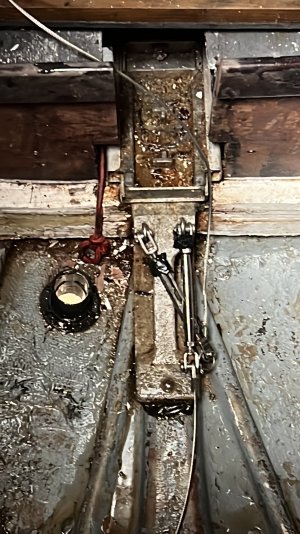
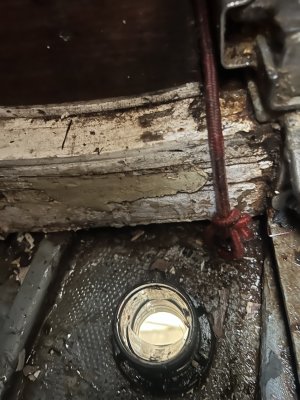
I’ve recently acquired Captain Moonlight which is a Paul Whiting design from 1976. The boat has been in a garden for a number of years and there was a cow churns worth of water extracted. The boat feels wet and needs drying out. The mast step frame looks like it is rotten but I need to really dry the boat out before I can work out if CM is salvageable.
Any hints on drying out and repairers in the South West, Sherborne way.

I’d like to restore the boat but I need to be sensible
 

Attachments

  • 9AB27112-D28F-4A90-BE12-8A90A6797A24.jpeg
    9AB27112-D28F-4A90-BE12-8A90A6797A24.jpeg
    1.1 MB · Views: 42
I’ve recently acquired Captain Moonlight which is a Paul Whiting design from 1976. The boat has been in a garden for a number of years and there was a cow churns worth of water extracted. The boat feels wet and needs drying out. The mast step frame looks like it is rotten but I need to really dry the boat out before I can work out if CM is salvageable.
Any hints on drying out and repairers in the South West, Sherborne way.

I’d like to restore the boat but I need to be sensible
 

Attachments

  • IMG_9968.jpeg
    IMG_9968.jpeg
    1.6 MB · Views: 39
  • CA214125-359F-438D-BAF3-749E5EA003FD.jpeg
    CA214125-359F-438D-BAF3-749E5EA003FD.jpeg
    1 MB · Views: 36
D7A17AB5-760B-4B55-8211-1BD7B3E62463.jpegFirst thing I would suggest is to get the paint stripped off to expose the bare wood.
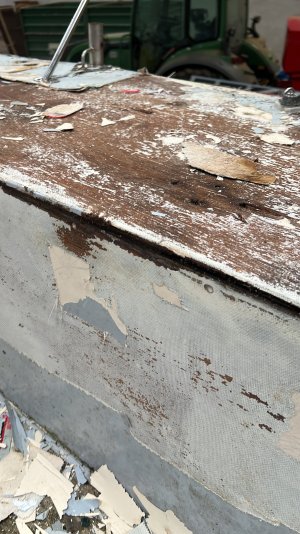
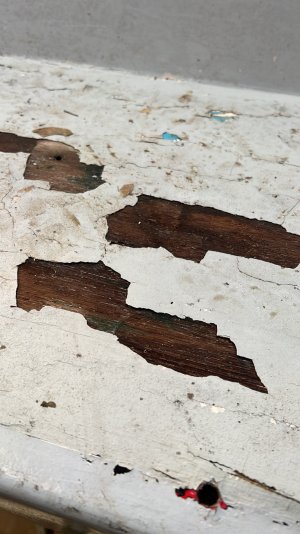
That’s what I’m doing, quite a lot of the cockpit wood needs paint removing and in places there is reinforcing GRP added. Unfortunately the GRP didn’t bond to the wood in quite a few places and has created pockets which trapped water.

I have a dehumidifier going 24-7 for a week and it’s taking out quite a lot of moisture. I’m more hopeful after a weekend of stripping paint and allowing the wood to start drying out but I’m also quite naive…
 
I don't know how effective a dehumidifier will be.

I'd favour erecting some kind of open-ended tent over the boat (to keep the rain off), opening up the hatches and windows and letting the wind blow through.
 
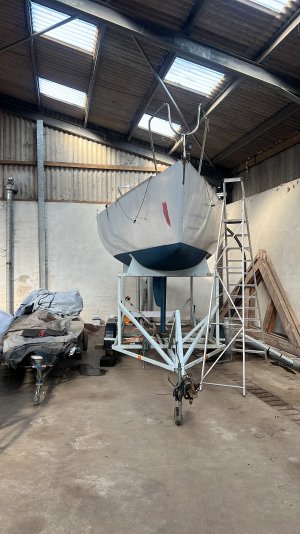
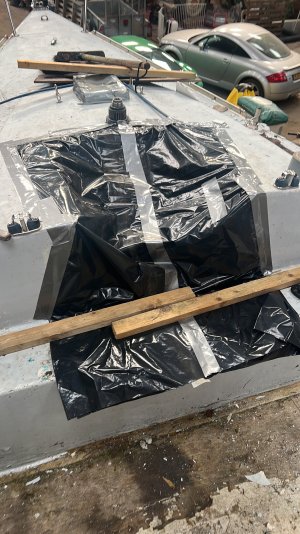
The boat is inside now. With the hatch sealed up I think the dehumidifier has taken out 6-8 litres so far. I do agree that some forced air through the cabin would be helpful
 

Attachments

  • 73C4A1E1-9CD4-4850-9651-048E1629E5C4.jpeg
    73C4A1E1-9CD4-4850-9651-048E1629E5C4.jpeg
    1.3 MB · Views: 25
I didn't realise she was inside. Makes the job pleasanter.

If you use the dehumidifier you have to keep everything sealed up otherwise you'll be dehumidifying the shed as well.

If you rely on ventilation, everything needs opening up. Maybe get some fans to keep the air moving.
 
I didn't realise she was inside. Makes the job pleasanter.

If you use the dehumidifier you have to keep everything sealed up otherwise you'll be dehumidifying the shed as well.

If you rely on ventilation, everything needs opening up. Maybe get some fans to keep the air moving.
Yep, all sealed up, even the speakers. I’ll take a measurement of how has been removed on Friday as that’ll be 12 days worth of constant running.

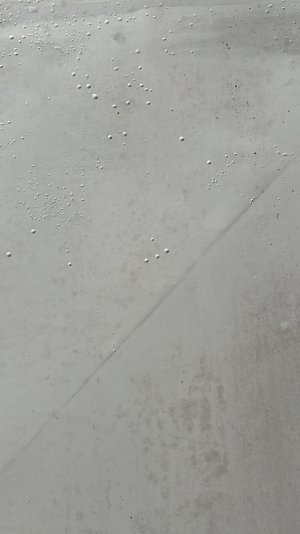
Being inside for only a short amount of time has made a big difference but I think it needs to be back to wood in the cockpit so I can assess the job ahead. The hull has bubbles which I assume is moisture so that will need to be sanded back to base paint layer as well. Not a quick fix and a feasibility assessment is needed.

Will probably look to get a light survey to see if this a go-no-go
 

Attachments

  • E229CCF6-299B-4382-84C2-CCED736B6E96.jpeg
    E229CCF6-299B-4382-84C2-CCED736B6E96.jpeg
    712.6 KB · Views: 24
Yep, all sealed up, even the speakers. I’ll take a measurement of how has been removed on Friday as that’ll be 12 days worth of constant running.

Being inside for only a short amount of time has made a big difference but I think it needs to be back to wood in the cockpit so I can assess the job ahead. The hull has bubbles which I assume is moisture so that will need to be sanded back to base paint layer as well. Not a quick fix and a feasibility assessment is needed.

Will probably look to get a light survey to see if this a go-no-go
 

Attachments

  • 3FF4A145-86E7-48AC-9582-9B50F2F9000C.jpeg
    3FF4A145-86E7-48AC-9582-9B50F2F9000C.jpeg
    1.3 MB · Views: 18
It looks like she is a grp hull? with wooden floors etc. The mast step looks like its laminated.
I would get as much paint off as you can to speed drying out. Im not sure if dehumidifier will be any faster tbh.
Think i would have it on if its cold & damp & open up with fan on when its warm.
Summers coming so she will dry out then!
 
The hull has a GRP top lip where the cockpit has been reinforced but I don’t think the rest of the hull is covered.

I’m going to take the steel mast step off this weekend to allow the air to get to it and I agree that once it warms up some air flow will probably do a better job than a dehumidifier.

Most important is removing the damages layers and let the air do its job.
 
If she is cold moulded any paint needs to be stripped off the inside or anywhere wet or it will never dry out. A moisture meter will be very useful, i have an extech one & its excellent plus cheap off amazon!
A lot will depend on what glue she is laminated with, hopefully epoxy, if its UF glue i wouldnt bother as its lifespan is 30 to 40 years after which it starts to break down.
 
One is on order now, well reminded.
I’d expect it to be epoxy given what it’s used for vs UF which seems too rigid a glue to use in such a use case??
I’m almost scared to see how wet it is, but I do expect to see it drying as better weather comes our way it would be sensible to identify anything in the rot danger zone though.
 
From the photo of it on its trailer it looks a lovely boat, but you're brave man to take that on.

Hope you got it for free 🤞🤞🤞
 
Drying out....I don't think a dehumidifier is the best solution at the outset, possibly more beneficial once the wind and sun have worked, but probably take all covers off and all loose paint would be a good start. Completely open her up. .However, if she is to stay under cover, then that is possibly the only alternative unless you can open all windows and doors to allow natural drafts to work.
I would certainly advise starting your own survey on her, even at this point as you will be able to identify major problems or areas where you might have serious reservations about. Hammer test the hull skin inside and out as , even though she may be very wet, seriously decayed areas will be found if present. You will save a lot of time and energy by doing this first. The main areas of serious concerns would probably be the centreline structure as major issues here would be rather costly. I get the impression she might be a cold moulded timber hull as against a planked hull. If she is the the glue used is of major importance and another reason for hammer testing the hull skin to ensure all of the planks are still glued securely to eachother.
What I would be careful not to do is to start repairs before you have fully ascertained what needs doing as it is easy to spend an enormous amount of time stripping and repairing one area only to find that you have to undo all the new work to access larger significant areas that become apparent a bit later.
 
Top