Drying out a fin keel boat

Crinan12

Well-Known Member
Joined
6 Mar 2019
Messages
606
Visit site
Hi all

I was going to have a go at drying out my boat (fin keel seamaster 925) at Crinan this weekend

I've spoken to a helpful local who says it is very doable

I'm a bit nervous about it though

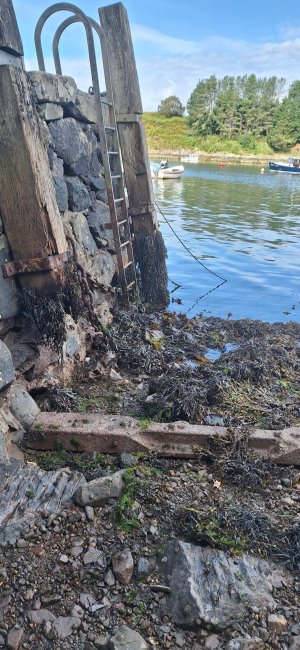
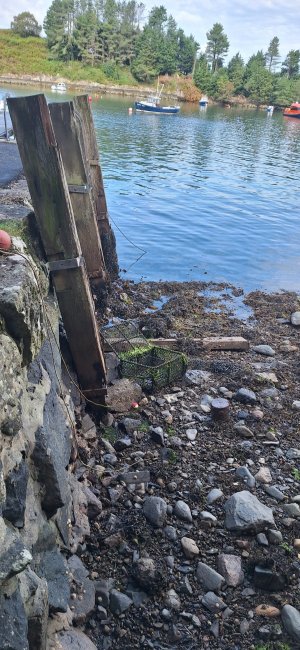
In the photo you can see 3 posts- should I be leaning the widest part of the boat against the middle post? And do I use a fender to protect the hull from getting scratched or would it be better to use some other sort of padding ?

There are three sleepers on the seabed which people have presumably used to rest their keels on before but I was going to drag them out of the way and just rest the keel on the seabed.

My boat lists to port because my batteries and water tanks are in that side. Is that an issue ? (assuming I go in forwards and reverse out).

I am just doing this to replace prop shaft anode. I can always have the boat lifted to do it but I think it is £500ish so would be nice to save the money

Thanks
 

Attachments

  • 20250822_103033.jpg
    20250822_103033.jpg
    1.1 MB · Views: 45
  • 20250822_103336.jpg
    20250822_103336.jpg
    875.3 KB · Views: 45
  • 20250822_103629.jpg
    20250822_103629.jpg
    884.4 KB · Views: 45
I am on the Tamar at Saltash and people dry out their boats all the time on the local pier.

If there is a post or something you can attach the end of your main halyard to that gives you another anchor point and the ability to pull the hull over a bit.

Fender, fender and fender.
 
Make a fender board,very simple device ,fenders on the boat side between board and boat ,fender board taking the rough wall or post ,a bit of scaffolding board will do…..google has photos…..Dont let boatheelintowards the wall/post too much
 
Last edited:
Certainly, use a 'fender board', typically a borrowed scaffolder's plank.

( pedant mode - you should already be carrying such a t'ing in that rough ould corner of the world. Cut in half with the cut-edges loosely rope-laced together, it's an easy, cheap and stowable device for them ruff ould Heilan' walls such as at Crinan. )

And use the sleepers fairly close together. The bottom there is pointy-stoney and, with the weight of the boat, such is likely to pierce up through your keel grp and let water in to start keel damage.
 
I've dried out various boats, up to a 39ft Moody. Always against a smooth concrete wall though.
You want a bit of lean, but not too much. If the boat heels too much it will put a lot of pressure on your fenders, which will compress, allowing the boat to lean more, which compresses the fenders even more... you get the picture.
If you can take a halyard off to the side at a decent angle that will take a lot of worry off your mind.

That bottom looks very unkind to a boat and the sleepers are there for a good reason. Try to figure out where you need to come down in relation to them, and maybe mark it out on some way, e.g. at the low tide beforehand, run a piece of rope vertically from each sleeper and tie it off on the wall, so that you know exactly where each one is.

If you're feeling brave, a wetsuit and mask will take a lot of guesswork out of things, and helps you get an early start on scrubbing the hull. Having plenty of water all around you is very helpful for cleaning off your brush.
 
That bottom looks very unkind to a boat and the sleepers are there for a good reason. Try to figure out where you need to come down in relation to them, and maybe mark it out on some way, e.g. at the low tide beforehand, run a piece of rope vertically from each sleeper and tie it off on the wall, so that you know exactly where each one is.
second that, the seabed looks horrible
 
Interesting a few of you are saying the seabed isn't great.I thought it would be fine if I just cleared the rocks out of the way but I'll use the sleepers then.

Although using the sleepers will reduce the depth I have which is already tight. I'm going to measure the depth at high tide tonight and see.

There is a good chance I'll bottle it and just pay for a lift. I should have done it earlier in the year when there was more light. I'd have to sit for 2 tide cycles to get a low water when it's light now.

Thank you for the help.
 
When I was berthed alongside a rickety jetty I found that builders planks with carpet nailed on one side worked far better than fenders, they slid down the wooden posts as the boat dropped .
 
Last edited:
With a fin keel sitting on sleepers a risk will be that the aft end of the keel will miss the rear sleeper. The boat could then tip back on to the rudder. Of course the opposite could happen and it could top forward. It might even slide back or forward on the sleepers.
Personally I would look for a better level ground and sit on that.
Comments re a fender board are vey valid as there is no way one will keep fenders lined up with those vertical piles
As for halyard taking the weight just be aware that tension changes with tide. It will be lovely having a nice tight halyard when the tide is out but remember to slacken it a bit as the tide rises. Also make sure you release it first. You do not want to be drifting away attached at the hounds only
A ladder is essential kit
 
Last edited:
After all that I don't think there will be enough tide anyway - or if there is it's a bit tight.

But the comments will be helpful anyway, I'll give it a go next year and will be armed with a scaffold board and some carpet

Thanks
 
Hi all

I was going to have a go at drying out my boat (fin keel seamaster 925) at Crinan this weekend

I've spoken to a helpful local who says it is very doable

I'm a bit nervous about it though

In the photo you can see 3 posts- should I be leaning the widest part of the boat against the middle post? And do I use a fender to protect the hull from getting scratched or would it be better to use some other sort of padding ?

There are three sleepers on the seabed which people have presumably used to rest their keels on before but I was going to drag them out of the way and just rest the keel on the seabed.

My boat lists to port because my batteries and water tanks are in that side. Is that an issue ? (assuming I go in forwards and reverse out).

I am just doing this to replace prop shaft anode. I can always have the boat lifted to do it but I think it is £500ish so would be nice to save the money

Thanks
I saw a boat at Bosham drying out.

The clever bugger had pushed the boom out the side he wanted to rest against the wall and had hung a big bucket of water on the very end of it to get the mechanical advantage he needed to tilt it.

It worked perfectly. Once settled, he tied a haliard to a post while he was working on it at low tide to keep it safe. When he finished, haliard was taken off, tide came in, boat lifted up a treat.
 
I saw a boat at Bosham drying out.

The clever bugger had pushed the boom out the side he wanted to rest against the wall and had hung a big bucket of water on the very end of it to get the mechanical advantage he needed to tilt it.

It worked perfectly. Once settled, he tied a haliard to a post while he was working on it at low tide to keep it safe. When he finished, haliard was taken off, tide came in, boat lifted up a treat.
We used to lay anchor chain along the inshore deck and stand nearby to attend to the fenders, that sometimes needed adjustment. A halyard to the shore is reassuring but not always possible or necessary.

As others have said, it is the nature of the bottom that is the problem. Virtually all cruising boats, certainly from that era, can dry out on their keels and be stable. I would guess that the keel here is trapezoidal though, and the flat base might be quite short, so great care will be needed to ensure that the boat stands level fore & aft. For all that, drying out should be within any owner's ability and is not especially difficult, and to do so effectively can be very satisfying.
 
Top