Drying creek mooring - Bilge or Lift keel

No it’s not Alresford Creek :)

i guess the disadvantages of life keel are the impact on space in the cabin? And if taking the ground twice a day on the mooring, even in soft mud it will erode the anti foul? Maybe also a little more interesting if aboard waiting for the tide, due to the heeling?
Ive never sailed lift keel or bilge keel so not speaking from a position of knowledge.
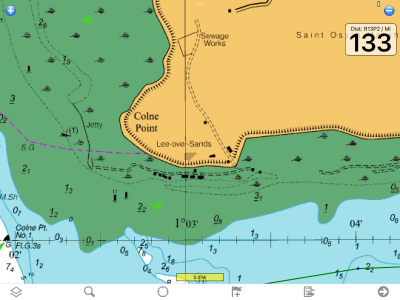
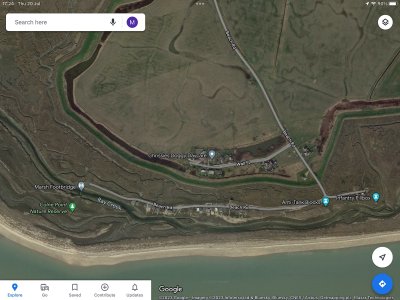
I sail out of Brightlingsea and have only ever had Bilge Keelers (O'Day 22, Cobra 850, Hurley 22 and currently a Colvic 26). Moorings have varied between drying, full tide and pontoon and have never had any issues. There are always arguments for and against in the old Lifting Keel/Bilge Keel debate and it really is horses for courses. It is true that you will sacrifice accommodation for performance if you opt for a lifting keeler, equally you will get afloat quicker with a lifting keeler than you will with a bilge keeler hence giving you more usable time from a drying mooring. If you are going to lay a mooring in Ray Creek (which is where I guess you are talking about!), I would probably go for a Bilge Keeler with moulded in keels (NOT a Westerly Centaur!) and would lay the mooring as close to the centre of the channel and definitely in the lee of Second Beach to offer some protection from the prevailing South Westerlies!
 
I keep my Hunter Delta lift keeler in a creek that dries to soft mud. Not had any jamming issues in 14 seasons - have dried out on various surfaces.

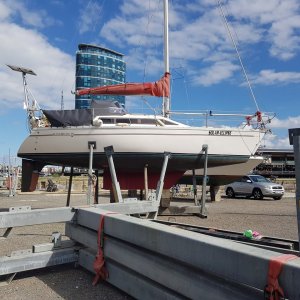
When raised, the keel is flush with the bottom of the hull. When dried out, the boat sits upright to the slope of the beach.

The keel weighs 750kg and is bolted down when sailing - so performs like a fin keeler. The compromise being it takes a big spanner, a bit of time and 120 swings on the hydraulic pump to raise. It has "presence" in the cabin when raised.

It floats in about 18inches but I usually wait til half keel (1m draft or so) can be lowered if leaving early on a tide.

Many boats in the creek don't anti foul as the mud seems to stop any fouling - possibly helped by brackish water.
 
You forgot the Roman River Mike...although to be honest I cannot think of any moorings up there other than a fishing boat right in the entrance. Then of course you have Ray Creek round the back of Second Beach which would have a hard sand bottom on either side with muddy sand as you get further up the creek.
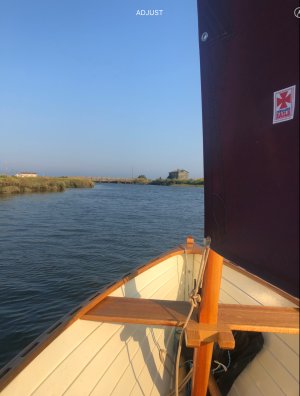
I did think of Roman River, but thought the clue was in the name 🤣. Good shout on Ray Creek, that fits! I sailed up it as far as the bridge near Lee-over-Sands a couple of years ago.
IMG_1699.jpeg
 
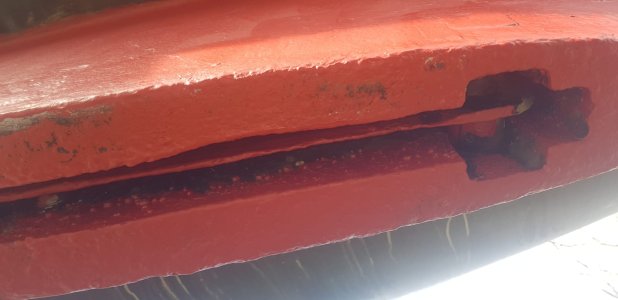
i wouldnt want to have my lift keeler on mud, incase the mud gets packed into the stub keel tight and holding the centerbord in place, there is a through hull inside the boat above the keel to free it but too much hassle.

306261175_10227048290291738_4187559155445072095_n.jpg
 

Attachments

  • WhatsApp Image 20ssd23-03-11 at 15.08.52.jpg
    WhatsApp Image 20ssd23-03-11 at 15.08.52.jpg
    82.8 KB · Views: 9
Thanks guys, all very useful.
A supplementary question if I may in my ignorance: is it viable to moor more than one vessel to a swinging mooring? For example, a lift or bilge keeper, a motor boat of some description for pottering about and possibly a sailing dinghy for the grandchildren, if thats not being too greedy? I know there are multi-vessel visitor buoys eg. in the Alde.
I assume the issue would be how heavy duty the mooring is and how they sail around each other. Perhaps a bilge keeper would be less suitable in this instance as it would ground before the other craft?
 
Hi all,

just reposting this as I think it got overlooked earlier in the conversation. Thanks.

A supplementary question if I may in my ignorance: is it viable to moor more than one vessel to a swinging mooring? For example, a lift or bilge keeper, a motor boat of some description for pottering about and possibly a sailing dinghy for the grandchildren, if thats not being too greedy? I know there are multi-vessel visitor buoys eg. in the Alde.
I assume the issue would be how heavy duty the mooring is and how they sail around each other. Perhaps a bilge keeper would be less suitable in this instance as it would ground before the other craft?
 
A lot is going to depend on the ground tackle and sinkers that you are planning on using! ultimately if you have a motor boat and a bilge keeler rafted alongside each other but allowing enough scope for the motor boat to dry and not dangle from the side of the bilge keeler, then you should be OK. However, it will all depend on what sort of ground tackle and sinkers you are planning on laying!
 
A lot is going to depend on the ground tackle and sinkers that you are planning on using! ultimately if you have a motor boat and a bilge keeler rafted alongside each other but allowing enough scope for the motor boat to dry and not dangle from the side of the bilge keeler, then you should be OK. However, it will all depend on what sort of ground tackle and sinkers you are planning on laying!
Thanks Cobra, that makes sense. Some hard post-season thinking needed about what’s going to work best (and get used) there.

regards
Prologica
 
Perhaps the answer is leeboards. I see Cygnet is for sale lying at St. Osyth - she probabiy needs some spend beyond the purchase price, but has a new rudder and they are building new leeboards.

Peter.
 
Top