
Do I have a problem with my VHF Aerial?

davidpbo

Well-Known Member
Joined
14 Aug 2005
Messages
4,886
Location
Boatless in Cheshire. Formerly 23ft Jeanneau Tonic
myweb.tiscali.co.uk
Doing some basic checks prior to taking the boat up the Clyde.

I decided to check the D.C resistance between the pin and screen of aerial & cable at the mast foot (10M) I was expecting a very low DC R of around of around an Ohm or two, certainly low 10s of ohms with high Z at RF frequencies which I cannot measure, I have no RF test equipment. I am getting 3 MOhm. With a previous aerial there was coil in the base of the aerial between the core of the cable and the screen which gave a reading across it of the order of 1Ohm.

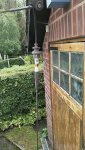
I have opened the plug at the bottom of the mast and the base of the aerial, below is a picture of inside the base (Yes, there is a cover which is removed.) which does not ring alarm bells with me. My intention was to check continuity in the cable but I couldn't recall how the cable is connected in the base. Brain kicked in and found the connection info on the Glomex Web Site but does anyone know what the D.C. R ought to be? I can at least disconnect the aerial and check cable resistance.

Should I be worried about the readings, the radio appeared to work ok last year. If I needed to, how do I disconnect at the aerial end to check its continuity and that of the cable please? I thought it just pulled out having undo the smaller of the nuts but an initial gentle pull made me doubt this. It is a Glomex 1m wip aerial.

IMG_20210703_122941.jpg
 
Last edited:
VHF antennas may show open or short depending on design. The only sure way is with a VSWR meter if you can borrow one.

Are you in a location where radio check is possible?

IIRC the Glomex base connection has the inner core folded over before inserting and securing with the screw-in ferrule. If you have undone that, the cable should pull out. It may be a bit wedged in from being compressed. I think the worst that would happen is the core breaks and you'd have to fish out the bits and strip back a bit of cable to make new connection.

Where are the bits to cover base of antenna? Hope they are just removed for testing.
 
Well inland no other set to hand. As it was the head is fine, good condition, 0.8-1.0 Ohm. Cable was ininitially 3M Ohm but when cut back a few inches dropped to 1 or 2 Ohms. As the boat is outside my garage, I have the un-used cable from when the antennae was replaced probably 15 years or so ago and am an experienced installation audio visual tech its a no brainer. I have soldered the cores together I might solder the screens as well then tape. It is a straight run untilt it exits at the bottom but that is grometted do there is probably a big enough hole. It is not too far from the mast foot which can come off if necessary and I may even have some monel rivets to replace it with.
 
As said you cannot easily check with a meter because you are checking induction not normal resistance. Use a VSWR meter with radio connected and antenna in location or fitted away from anything close.

it all depends on design, some have balance coils built in to change wavelength and shorten length or increase gain
 
My Glomax has 10 kilohms across the plug at the base of the mast, which I believe is correct and has been whenever it works well. That’s DC, resistance, with a multimeter from earth to centre pin (so not 50 ohm impedance that you’d expect at radio frequencies). I had to replace the PL259 plug last month as being outdoors during the lockdown the earth shielding had corroded away at the plug and made it unusable.
 
Last edited:
As said you cannot easily check with a meter because you are checking induction not normal resistance. Use a VSWR meter with radio connected and antenna in location or fitted away from anything close.

it all depends on design, some have balance coils built in to change wavelength and shorten length or increase gain


If you don't have the gear or knowledge, the basic test and visual inspection I did is considerably better than nothing and should not be discouraged because the better equipment is not available.

In my case coupled with experience with the previous aerial the continuity check indicated that there may well be a problem.

Simple first line investigation both visual and electrical gave an indication that the aerial was probably not faulty but the cable was.

Re-termination may have cleared that fault temporarily but the screen was fragile. I was able to replace the cable without cost other than a couple of hours time . I now have a cable which unplugged gives a high R reading and plugged at the aerial end and gives a reading of an ohm or two with it plugged in.

i am happy the radio is more likely to work than it was. I will probably buy a VSWR meter and learn how to use if I continue sailing.

I will do a low power check with the marina once the mast is back in position at 30 degrees or so before I winch it to vertical. That is I think all I can do
 
My Glomax has 10 kilohms across the plug at the base of the mast, which I believe is correct and has been whenever it works well. I had to replace the plug last month as being outdoors during the lockdown the earth shielding had corroded away at the plug and made it unusable.

Interesting, that would have me looking at it.
With a previous aerial I was expecting a high resistance between core and screen because I didn't realise to there might be a connection. I can't remember what the actual resistance was.

Having taken the aerial to bits there was a coil of no great length and thick wire between core and screen. I ask on here and was told the resistance should be low but that the impedance at VHF frequencies would be high.

I was surprised at the reading of 3M I got initially, when I took the case off the aerial and saw the coil I did think it may be similar to the previous one. When I measured the R at the aerial input connection and it was 1R or so I was happy (Rightly or wrongly) what I should have done is disconnected one end of the coil which may have been easy and made sure it went open circuit but the whole of the aerial was in good condition especially considering it had been used for probably 15 years and that without a rubber coer over the bottom aerial cable entry point cos I didn't know there was one until I pulled the replacement cable out of the packet.

The resistance between core and screen of my aerial today was certainly very low measured directly where the connection was made.

The radio was working when we last used the boat nearly a year ago,, I don't know whether the high resistance was there then and it still worked allbeit maybe not as well as it should or whether a fault has developed since last August.
 
Last edited:
You are refering to two separate potential problems, 1st, antenna which will often give low resistance due to Internal coil and 2nd coax which should have infinity between core and screen with antenna disconnected from it, when tested together can give either good or bad result with out being able to tell which. Most issues are bad connection, water / moisture in coax or corroded screen.
 
The question a valid one re resistance measured at the plug at the radio indicates all owners should check the DC resistance of a known (presumed) good antenna so they will know in future. ol'will
 
You are refering to two separate potential problems, 1st, antenna which will often give low resistance due to Internal coil and 2nd coax which should have infinity between core and screen with antenna disconnected from it, when tested together can give either good or bad result with out being able to tell which. Most issues are bad connection, water / moisture in coax or corroded screen.

Yes, but without that initial contnuity check I would not have gone on to investigate. The initial visual examination of the mast bottom plug looke fine. It was only when I disconnected the arial at the top, shorted the pin and screen at the bottom and re-measured the R and still got 2M Ohms when it should be no a couple of ohms at most that it became apparent there was a fault in the cable or connection (Sorry did not mention that test before) As it was, it was both, cable was degraded despite being tinned and core broke where it entered the pin when I dismantled the plug, the cable I think maybe came with the boat so at least 20 years old, the aerial I had replaced. A visual inspecton of the aerial connection (it is a solderless push in one) looked fine and gave a reading of an ohm or less core to screen which is what I expected given the presence of coil.

Where are you, David?

I am south Manchester/Cheshire border and I have a vsr meter and some other appropriate equipment to check the aerial resonant frequency.

Feel free to send me a PM.

Thank you for the offer, time does not allow at the moment. We are launching at Largs I am sure there will be some assistance around there if I have a problem and need to thow money at it, but I will bear it in mind for the future.

We were supposed to be going up Thursday, then getting ready to go and having a relaxing weekend, well that has not happened, losing 4 or 5 hours to this yesterday did not help and that was with the mast horizonal all be it at 8ft, 2 ladders and all necessary tools to hand.
 
Last edited:
Thank you for the offer, unfortuantely time does not allow at the moment. We are launching at Largs I am sure there will be some assistance around there if I have a problem and need to thow money at it, but I will bear it in mind for the future.
My next visit to The Clyde will be during w/c 19th July. If you still have concerns/issues feel free to let me know and I will travel carrying my vsr meter and a nanoVNA. Good luck with sorting it out.
 
The question a valid one re resistance measured at the plug at the radio indicates all owners should check the DC resistance of a known (presumed) good antenna so they will know in future. ol'will


Not always the case and this could be one of the exceptions looking at the picture.

Antennas should exhibit a value that matches the radio which is about 50 ohms at RF frequencies. Some antennas if cut to the correct length will match this without any help and these will when tested with an Ohm meter show infinity as the centre core goes straight to the antenna element and the ground may or may not be connected to the base.

Some antennas need some help to match the transmitter and to obtain this match have a transformer/balun in the base and in this case there will be a DC electrical
short between the centre core and ground. bur=t at RF frequencies it appears as a match.

||The OP 's antenna with careful inspection should show which it is and to me it does look as if there is no balun fitted in which case there should not be a DC short. The OP can check this and one thing I would do is disconnect the wire on the screw and carry out further checks to see where the short is.

A balun would appear as a coil of brown/yellow copper wire. with 3 connections one of which I believe is a common earth,one to the centre core and one to the antenna.
 
Just to add to above to save confusion, the 50ohms resistance is impedance not normal resistance so cannot be measured with a normal meter
 
I regret not removing the screw to see if the near short at the aerial disappeared.

I also regret not trying it with an audio impedance meter out if interest but that only outputs 1k Hz so not really much use.

I cannot imagine that I did not take an R reading when I installed to to this and hopefully would have mentally clocked if it was different to its predecessor.

The gold is a coil of copper wire around the insulated armature. 2M R on the cable would not have contributed to my radio's performance and the visual inspection of the aerial and it's connection point did not show anything, although I did not look too hard when I got the reading I expected.

Do they have Coastwatch around the Clyde?
 
Last edited:
Top