
Maine Sail
Well-Known Member
I designed and installed a fuel polishing system for our boat when we installed a new fuel tank. Since installation the tank has been spotless.
It turns the fuel at about 72 GPH, on a 35 gallon tank, and filters down to 2 micron. It passes through a Racor 900 and uses a Carter fuel pump. I have it set to come on when ever the engine runs as well as a second switch to turn it on without the engine.
The polishing pick up was designed to be at the absolute lowest part of the tank and picks up within 1/8" of the bottom.
These are the tapping layouts with rough dip tube lengths:
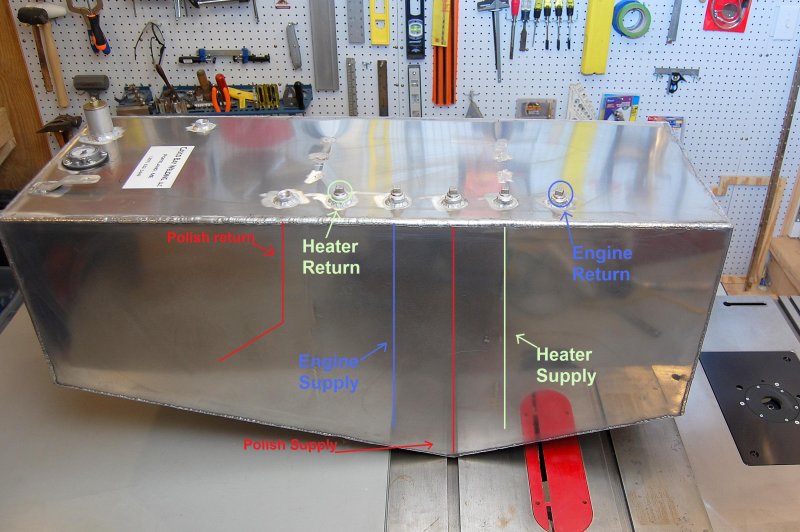
The polish return comes into a baffled chamber with a return dip tube so the return fuel is deposited back into the tank below fuel level. This has 100% prevented any foaming with the high turnover system.
The pump and polishing filter:
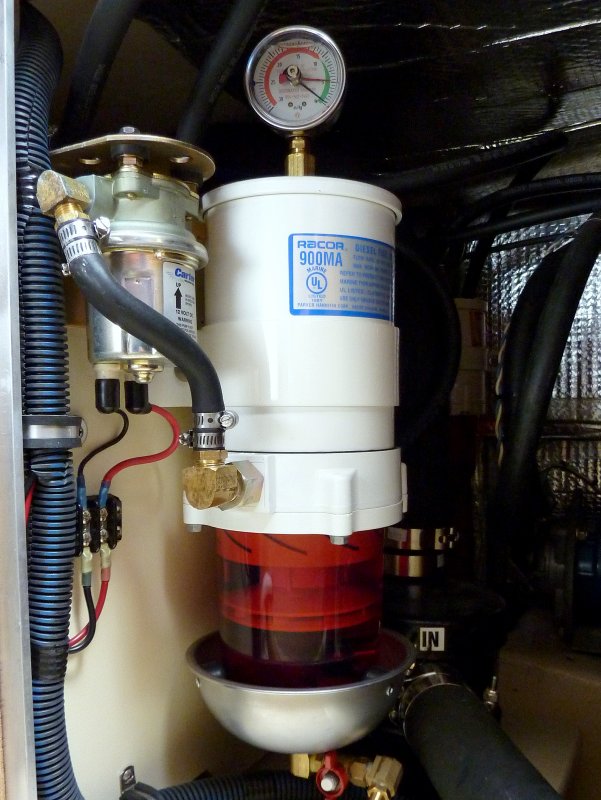
I think I have about $340.00 USD into the parts for the polishing part of the system, and that is going with an expensive filter housing.
It turns the fuel at about 72 GPH, on a 35 gallon tank, and filters down to 2 micron. It passes through a Racor 900 and uses a Carter fuel pump. I have it set to come on when ever the engine runs as well as a second switch to turn it on without the engine.
The polishing pick up was designed to be at the absolute lowest part of the tank and picks up within 1/8" of the bottom.
These are the tapping layouts with rough dip tube lengths:
The polish return comes into a baffled chamber with a return dip tube so the return fuel is deposited back into the tank below fuel level. This has 100% prevented any foaming with the high turnover system.
The pump and polishing filter:
I think I have about $340.00 USD into the parts for the polishing part of the system, and that is going with an expensive filter housing.


