Diesel warm air heating

I have a system still to be installed .. and I find such threads interesting.

Of course like everyone - we all make plans of how to install - where pipe runs etc ... which inevitably get amended ..

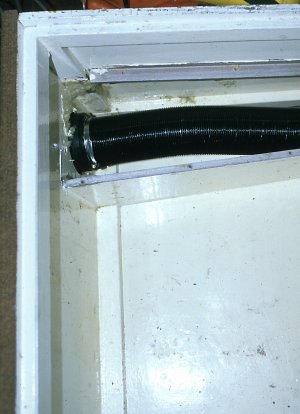
But considering under bunk / in locker runs - it has been my mind to insulate the ducting ... to preserve max heat to outlets ... but to protect any content I may place in locker / underbunks - I propose boxing in .. with sheet that has multiple air-holes for circulation ... this way - I keep all dry in the locker / underbunk - but also keep any items from contact with insulation / ducting. First I thought metal grills - but they will heat up over time and defeat their primary purpose. So it comes down a fire-proof composite material or plywood with fire-proof insulation on one side.
The air is hot but well below the ignition point of plywood by the time it gets to the cabin area, and the hot air wont be in direct contact with plywood or similar outer insulation. (The exhaust pipe is another matter). I think you are over thinking things unless you store fuel against the ducting. A few holes in plywood might give some better heat leakage to dry the lockers, but I suspect a non ventilated piece of plywood insulation would be just warm enough on the outside in order to keep a locker dry

In metal equipment cabins outside on dry land we used to use 40W bulbs, though now 100W anti-frost heaters are used. 40W is 1% of a 4KW heaters output and I expect more like 5% loss passing through a large locker, though I dont know if anyone has done measurements as its mostly suck it and see and past experience except on big commercial heating stuff
 
I have a system still to be installed .. and I find such threads interesting.

Of course like everyone - we all make plans of how to install - where pipe runs etc ... which inevitably get amended ..

But considering under bunk / in locker runs - it has been my mind to insulate the ducting ... to preserve max heat to outlets ... but to protect any content I may place in locker / underbunks - I propose boxing in .. with sheet that has multiple air-holes for circulation ... this way - I keep all dry in the locker / underbunk - but also keep any items from contact with insulation / ducting. First I thought metal grills - but they will heat up over time and defeat their primary purpose. So it comes down a fire-proof composite material or plywood with fire-proof insulation on one side.
Plain ply will be fine, it won't get hot enough to damage that.
 
My just acquired new boat has an Eberspacher warm air heating system, it has 5 outlets and it seems to work well.

I've never previously had the luxury of this but I'm a bit concerned that the ducting (black flexible aluminium) runs around the boat through the lockers and under the saloon seating completely exposed.

There's a lot of potential storage space around the ducting but I can't help thinking it should be either boxed in somehow and / or insulated as anything stored around it - plastic crates, toolbag, spares etc is going to get hot and / or damage it.

Any insight welcomed - I've seen webasto / eberspacher wrap round insulation advertised which I guess would keep the heat in but it wouldn't protect it from damage I suspect ?
Make sure you let it do it's "shutdown sequence" when you turn it off at the controller: they really don't like just having the power supply turned off. And if you have the fancy controller with a 7 day programmer get ready for some serious instruction reading - never met a less easy to understand system. Mine has this and I wish it had the basic on-off/temperature controller.
 
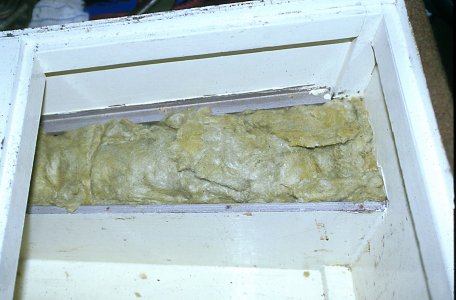
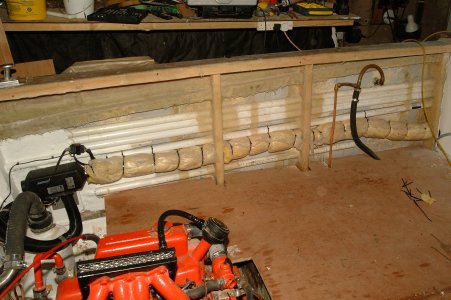
Another well proven method. Loft insulation, plastic sheet and cable ties.
I used wool pipe wrap from Wickes.

Apparently I worried unnecessarily that standard loft and pipe insulation might not be safe at the temperatures that the ducting can potentially reach (well above boiling - 120C or 130C do I recall from the literature?).

Plain ply will be fine, it won't get hot enough to damage that.

Ok .. I put it down to working in an indsutry that heat is an enemy ... we avoid all manner of setups that can contain and allow heat accumulation.

I am pleased to hear that confident statement on the compatibility with ply.

My ducting is in contact with ply in numerous (8 or more?) places where it passes through bulkheads (including one just about a foot or less from the burner), and has been for what I guess is upwards of 40 years. That, though, is with no insulation on the ducting either side of the ply, which allows some of the heat at the contact point to be drawn away, and I was a little concerned that my adding insulation might increase the surface temperature of the ducting to a dangerous level for the ply.

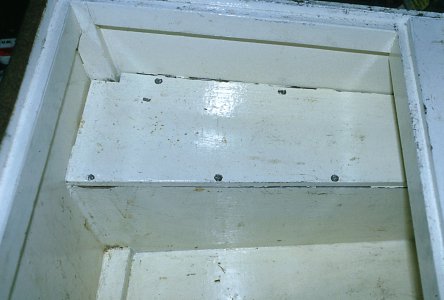
I have a couple of places where I want to box in the ducting, somewhat as LustyD shows in post #23 (and I see that's not just ply but painted, too), to make the space its in more usable for storage, and am pleased to see that is not problematic.

So this has been a useful thread for me.
 
Apparently I worried unnecessarily that standard loft and pipe insulation might not be safe at the temperatures that the ducting can potentially reach (well above boiling - 120C or 130C do I recall from the literature?).
Sheeps wool, and most natural fibre is good to very high temperatures so no issues there. It’s technically less insulating than the modern stuff but is dirt cheap and easy to install and has been very effective for us.
 
Sheeps wool, and most natural fibre is good to very high temperatures so no issues there. It’s technically less insulating than the modern stuff but is dirt cheap and easy to install and has been very effective for us.

That's good news, as I loathe handling the glass fibre(?) loft type stuff.

I am amused to ponder why sheep might have evolved to have very high temperature resistant fur, when they seem to spend much of their time standing around on mountains in sub-zero temperatures, strong winds and torrential rain or snow! :unsure:
 
That's good news, as I loathe handling the glass fibre(?) loft type stuff.

I am amused to ponder why sheep might have evolved to have very high temperature resistant fur, when they seem to spend much of their time standing around on mountains in sub-zero temperatures, strong winds and torrential rain or snow! :unsure:

Look at the material used in Firemans coats for decades ..... until the advent of lighter better composite materials - Wool was the main part.
 
Sheep did not "evolve" naturally... they have been bred over several millennia and the properties of the fleece were one of the characteristics that breeders succeeded in modifying.

True, but still hard to see that high temperature resistant wool was one of the qualities the breeders were seeking to foster.

It still could have been natural selection - perhaps the sheep without it tended to catch fire before they were old enough to breed? ;)
 
It’s not a special property, most natural materials are hard to burn. Wood has a surprisingly high resistance to heat too.
 
I was very impressed with TLX Gold when I used it in a vaulted roof construction. It's thin blanket but has a u value the same as 35mm of Kingspan/Celotex. It's easy to cut with scissors so I reckon a retrofit job with duct tape would be fairly easy without having to unclip a load of ducting, usually tie wrapped with cables and pipes around the boat.

TLX Gold

A 1.2m by 10m roll is about £160 and this should provide around 38 linear metres if cut to the circumference of a 100mm duct (ie 31.4cm widths). So £4.20 a metre to cover your ducts.
 
Top