Diesel fuel tank replacement and pipe work advice...

aquaholic

Well-Known Member
Joined
17 Jul 2004
Messages
1,151
Location
London
Visit site
So the engine is now out and I need to look at the fuel delivery side of things, I have had the boat on the hard for two years, and I know she had been sitting for 5 years previous to that so I suspect the diesel is infected with the dreaded bug. I have decided that i would prefer to replace the tank as there is no way of properly inspecting or cleaning it. I think it also makes sense to replace the fuel lines at the same time.

So a few questions if you dont mind:

1, Any suggestions on where to get a new tank? would like to keep to a horizontal one, plastic or metal?
2, Fuel lines, can i replace them all with hose as opposed to a mix of copper pipe and hose?
3, do the fittings have to be pressed on or can you use another connection method...clips etc?

Forgot to mention that the VP2003 is being replaced with a VP2003T

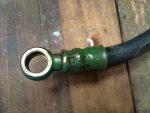
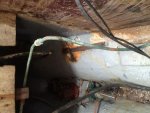
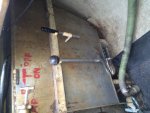
Have attached a few photos to give an idea
2016-04-16 14.13.08.jpg2016-04-16 14.53.34.jpg2016-04-16 14.53.43.jpg2016-04-16 14.53.48.jpg
 
Apart from the problems with the tank or its plumbing.

I would strongly suggest that the two operating levers (for the bilge pump?) be tied with a lanyard of such a length that will allow them to be used while still secured to the boat. They do have a habit of going walkabout overboard or down the bilges when they are most needed...
 
I've just had a new tank fitted. Find a stainless fabricator who comes recommended by a boatyard engineer with a good reputation, and do as he suggests. If you can't have a bottom drain, make sure there's an inspection hatch.
We replaced all the copper pipes with flexible fuel lines. Not certain which connectors were used.
 
I've just had a new tank fitted. Find a stainless fabricator who comes recommended by a boatyard engineer with a good reputation, and do as he suggests. If you can't have a bottom drain, make sure there's an inspection hatch.
We replaced all the copper pipes with flexible fuel lines. Not certain which connectors were used.

Thanks Paul, would prefer to have flexible fuel lines,
 
Plastic is the preferred material for fuel tanks. Tek Tanks are the best known makers of custom tanks and expect you will find prices competitive with stainless. The downside with stainless is that it is difficult to get perfect welds whereas plastic can be constructed consistently well and is very durable. If you have a custom tank you can have fittings exactly where you want them. For flexible fuel lines a local hydraulic hose supplier such as Hyphose or Pirtek will make them up for you.

BTW are you sure it is a good idea to fit a 2003T? Firstly that is far too much power for your boat and you will never be able to run it at the correct revs and power output. Second it is a horrible engine and has a reputation of being hideously expensive to repair when things go wrong - usually with the turbo or the oil cooler. Running the engine in the way you will have to will only make turbo problems more likely. Does not seem to me a good idea to go to all this work and expense to fit an obsolete, inappropriate engine to your boat.
 
The only snag with plastic is that the tank walls need to be much thicker than if made with stainless. If space and capacity is a problem, plastic might not help.

While that is true of fabricated tanks which are usually 9mm to achieve the necessary rigidity and enable welding, it is not so with rotationally moulded tanks. The latter method is used for standard shape tanks and for production boats where the volume production cover the cost of tooling and wall thickness is typically 3mm. Moulding tanks allows for shapes that maximise the space available as the shape is not limited to flat panels.

However for a custom made tank I would accept the minor loss in capacity in return for the long life and reliability of fabricated plastic - but that is personal choice based on poor experience with fabricated metal (including stainless) tanks.
 
The only snag with plastic is that the tank walls need to be much thicker than if made with stainless. If space and capacity is a problem, plastic might not help.

In practical terms, supposing you have a tank that holds 1000 litres in the shape of a cube. The surface area of material is 6 square metres. If you add 5mm thickness of material you will be reducing the volume by 30 litres. Is that a big loss compared to the original 1000?
 
In practical terms, supposing you have a tank that holds 1000 litres in the shape of a cube. The surface area of material is 6 square metres. If you add 5mm thickness of material you will be reducing the volume by 30 litres. Is that a big loss compared to the original 1000?

Of course not, but some of us are struggling to get the most that we can into a very tight space where a 1000 litre capacity is only a dream.
 
We got a Tek Tanks custom-made plastic tank for Kindred Spirit, so I'd endorse Tranona's recommendation there. Although (touch wood) we haven't had any problems with Ariam's stainless one either.

Personally I prefer correctly-rated hoses over copper tubes - no vibration concerns, often fewer joints, feels equally robust to me.

Tek Tanks recommend against a bottom drain for reasons of possible leakage, which makes sense to me. The alternative is a dip pipe from the top right to the lowest point of the tank, which you can attach a pump to (could even permanently install one of those brass hand-pumps if you like to regularly check).

Fitting a new tank without an inspection hatch would be bonkers, obviously.

Pete
 
Of course not, but some of us are struggling to get the most that we can into a very tight space where a 1000 litre capacity is only a dream.

I am in a similar position because my tank is shaped like a flat wedge that only takes 49 litres. Above it is the floor of the lazarette and I have toyed with the idea of fitting a new tank with a larger capacity.
Unfortunately, due to the shape of the lazarette and the rapidly narrowing aft sections (Centurion 32) the options are two. Either have a custom-made tank extending the sides outwards but keeping the top as it is, just under the floor of the storage space; the gain would be minimal. Option 2 is to have a deeper tank and to forego any hope of storage.
I chose to retain what I have and to carry two 20-litre jerry cans when I am on a long passage (e.g. crossing over to Sicily).

p.s. For me a 1000-litre tank would not be a dream but a real nightmare if I had to fill it! :p
 
Going back to the Ops original question, although the pipework is definitely past its sell by date, not sure I would necessarily look for a new tank without taking the existing one out and inspecting.. There is no reason why an inspection hatch could not be cut and once cleaned the tank inspected both internally and pressure tested.

I did this with my leaky stainless water tank and the repairs to the faulty seams, plus making the inspection hatch and adding some additional mounting brackets came to around £200, compared with a new Tek Tank of over £700. Get the impression that the OP is on a limited budget and a new tank, either stainless or plastic is going to cost at least £600!
 
We got a Tek Tanks custom-made plastic tank for Kindred Spirit, so I'd endorse Tranona's recommendation there. Although (touch wood) we haven't had any problems with Ariam's stainless one either.

Personally I prefer correctly-rated hoses over copper tubes - no vibration concerns, often fewer joints, feels equally robust to me.

Tek Tanks recommend against a bottom drain for reasons of possible leakage, which makes sense to me. The alternative is a dip pipe from the top right to the lowest point of the tank, which you can attach a pump to (could even permanently install one of those brass hand-pumps if you like to regularly check).

Fitting a new tank without an inspection hatch would be bonkers, obviously.

Pete

Interesting that you say that Tek Tanks advise against a drain in the bottom of a tank. Is this because of lack of confidence in their own tanks? After all, tanks have had bottom connections for ever, and the best fuel tanks definitely have sumps and drains on their bottoms.
 
Interesting that you say that Tek Tanks advise against a drain in the bottom of a tank. Is this because of lack of confidence in their own tanks?

I think it's a requirement of some ISO or similar standard. They will fit a bottom drain if you insist, but in that case they won't certify it as standards-compliant.

Pete
 
Interesting that you say that Tek Tanks advise against a drain in the bottom of a tank. Is this because of lack of confidence in their own tanks? After all, tanks have had bottom connections for ever, and the best fuel tanks definitely have sumps and drains on their bottoms.

The leak potential does not come from the construction of the tank but from the fittings which have to hold back a head of fuel. Bottom connections have fallen out of use primarily because the shape of hulls in many designs is such that there is insufficient depth to have a bottom take off and tanks are almost always below the level of the engine. Top take off is mostly satisfactory and removes most of the threat of leakage from failed fittings.

The upshot of these changes is potential for a significant increase in capacity by using rotationally moulded plastic tanks that conform closely to the space available, which is often long and flat. So my modern 33' has a capacity of of 150l which as you will appreciate is 3 times that of a similar size boat of 40 or 40 years ago.

Accept that in old deep hulled boats with deep tanks, sumps may be possible, but not convinced with modern fittings and good filtration they are intrinsically "better".
 
Answering the original questions, yes absolutely take out the old metal tank and pipes. I debated whether or not to and and very glad I did, one rusted badly on the outside, the other was fine but for how long?
New fuel lines in rubber are much better. It also gives you a chance to clean underneath where everything has been and remove a lot of old boat smell.
 
The stainless steel tank in my boat is more than 30 years old. It has a bottom drain and the outlet is also from the bottom, with a 25 mm upstand. Water in the tank bottom over many years led to galvanic corrosion of the brass drain plug, causing it to leak fuel past the threads. I took the tank out to fit a better drain plug but other than that it was in perfect condition, no deterioration at all that I could see.

In the motor-sailer I have two mild steel tanks, one of which is currently in the workshop being refurbished. I imagine it was installed when the boat was built in 1973. The exterior was never painted and is quite pitted. Internally it is like new, no corrosion whatsoever. It was built in 1/4 inch plate, so a bit of pitting is no problem. I expect it to last for many years yet.
 
I have just fitted a pair of Tek Tanks plastic diesel tanks and took the opportunity to replace the fuel pipe with copper pipe and new filters etc. Might as well do the lot if the budget allows. Very pleased with the tanks so far. Tek Tanks made mine to a custom size - if standard ones fit, that saves a chunk of money. I have dip pipes and these seem to work well. I also have large clear plastic inspection hatch (make sure you ask for it to be clear) which means you can shine a torch in and see the diesel level which i like. The only glitch is their Wema senders seem to be incompatible with my VDO gauges so I need to do some diagnosis to work out what is wrong.

Puggy
 
The stainless steel tank in my boat is more than 30 years old. It has a bottom drain and the outlet is also from the bottom, with a 25 mm upstand. Water in the tank bottom over many years led to galvanic corrosion of the brass drain plug, causing it to leak fuel past the threads. I took the tank out to fit a better drain plug but other than that it was in perfect condition, no deterioration at all that I could see.

In the motor-sailer I have two mild steel tanks, one of which is currently in the workshop being refurbished. I imagine it was installed when the boat was built in 1973. The exterior was never painted and is quite pitted. Internally it is like new, no corrosion whatsoever. It was built in 1/4 inch plate, so a bit of pitting is no problem. I expect it to last for many years yet.

Of course metal tanks can last well, but if they do fail - like my stainless water tank after only 5 years. it can be disastrous. It was already a replacement tank for the original plastic one (not sure why that failed because I did not see it), but it was the second forward water tank and was rarely used until I filled it for my long trip back across the med. It promptly emptied its contents into the bilge over the first couple of days in heavy weather. It had been foamed in. and it took me a week of intermittent work to get it out. series of pin holes in one weld at the forward end. As described above had it repaired and modified. Re-installed in such a way that it is easy to get out.

Think that is more important in a way than material. So many tanks are poorly installed and access for cleaning and inspection so difficult.
 
Top