Diesel engine advice

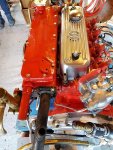
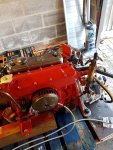
What is the acceptable maximum running hours before a diesel engine should be replaced. I'm looking at purchasing a 30 year boat fitted with an engine with 2850 hours on the clock. Cosmetically the paint on the top cover is flaking off and there is some surface rust. Your views and comments would be most helpful. Thanks.

Oh dear, if the paint is flaking it's time for a new engine!

Wild guess, but 50,000 if used under a steady moderate load and maintained to a real high standard, with top of the range oil and filters. but 5000 if abused with head warping, crank bending overheating.
 
My 4-107 Perkins is a mid 50's lump and will see me out long before it gives up.

My engine literally looks like scrap rust lump ... but purrs like a kitten.

Diesel engines are strong workhorses built like proverbial ... on a boat - they rarely get pushed like car / truck engines ...

I would want to see it running and listen / observe it .... I am not so sure of anothers "block and exhaust manifold should be at ambient temperature; if they're even slightly warm, come back another day " ..... mine runs warmer than ambient .. I can still put hand on though.
What Stemar is referring to is the temperature of the engine of a boat you are looking to buy. He is warning about the possibility that the seller has pre-warmed the engine so that it will start easily when examined by the prospective buyer, (I assume !)
 
Typical yacht usage is around 100-150 hours a year so those hours are about right. Difficult to wear an engine out mechanically - life of 8-10000 hours is not unusual. Marine engines die from lack of hard use, long periods of no usage and poor maintenance. Cooling systems and electrics are the most common things that go wrong.

The engine (Volvo 2030) in my last boat did over 3500 hours in 13 years, most of it in the first 8 years as a charter boat and was running as well at the end as it was when new with no major replacements other than an alternator.

What engine is it?

About half of all main block wear is caused by internal corrosion, and has no relationship with engine hours. Block corrosion does relate to some extent to the number of stop start cycles, and to the type and quality of the engine oil, as cheap oils turn acidic fairly quickly increasing the corrosion of most parts like the rings, bearings and gears.
The other fact is that using an older diesel at idle or low power, (Often below 1500 RPM), is very bad news, unless the engine is a very modern common rail injection and ECU & TCU turbo diesel. Those expensive engines are sort of OK at low power and idle, BUT still need a clean out every 100 hours with an hour at near max continous RPM. For a car or truck in the UK that is just not possible in speed terms, but for a boat it is no problem.

Modern marine diesels, (Except Bukh and Beta marine diesels), are rather too sensitive to being damaged by an overheating incident, or a seriously silly cold start foul up. I don't do cold starts as they result in a lot of extra long term wear, so I always fit a Wolverine heat pad (12V or 230V), or pads around the sump and some real small ones on the sides. so if the alarm bells goes or I fork up in a big way at anchor, (Tin can on the pointy end of a CQR), I can start the old BMC and then open the go lever as required, even if the engine bay is well below zero.

I would be real careful of thinking that the condition of a marine diesel relates to hours, it's far more complicated than that, so if you are buying a new boat or engine, ask the owner not to change the oil and to make sure the new oil has at least 50 hours on it. Then run the engine for at least 10 mins and pump 200ml of used oil into a Blackstones, or a UK engine oil lab sample bottle, (I use Blackstones oil lab in the US), Ask a real good marine engineer to do a compression check and finally ask a person who has the same type of engine and knows his art from his elbow about how an engine should sound, what they think., AND look for oil leaks after a good test run, as some can be expensive to fix. Finally a diesel, particularly and old one like my BMC will puff a bit when first cold started, BUT should run perfectly clean with no visible smoke that smells of burnt oil at idle and under a moderate load.
If you are buying a good used or recon engine, make sure you can return it for a refund within 14 days, and do not pay cash, use a credit card or Fleabay etc. About 75% of the recon diesels for sale, need to be fully rebuilt again if you don't want a smoker, dripper, iffy cold starter or even a fully seized up donkey.

The UOA below is a typical case where a diesel was sold as fully rebuilt. The figures for water, coolant and fuel contamination are real good, so the top end looks good. Iron, the general wear rate indicator that tracks hours is OK, BUT I did inform the lab analyst that the main bearings might have been changed so he was thinking the high Lead was sort of interesting (4 times normal), BUT when I got that report I knew the bottom end rebuild was no good or had not been done, so I sent the block to the local crank specialist for a check regrind and new everything (Full timing chain kit and new oil pump). Final bill for parts and labour near 1000 quid, but I will be happy as now I know its as good as new, rather than a 60 year old classic marine diesel)
 

Attachments

Last edited:
The rough rule of thumb to translate engine hours to the equivalent mileage on a road vehicle is to multiply the engine hours by 40, working on the basis that a road vehicle will average out at 40mph. So your engine is roughly equivalent to a car/ truck that has covered 114,000 miles. Next to nothing for a diesel. This is only a very rough guide as marine diesels are not subject to rapidly varying loads like a road vehicle accelerating, stopping and going up and down hills.

The minus side of this as already pointed out is that it will have spent much of its life standing idle in a cold damp salty environment, which is an ideal breeding ground for corrosion. Engines in leisure boats are also potentially less likely to have been regualrly maintained. So it's swings and roundabouts.
 
Is there any known correlation with yottie engines between the life expectancy of a fresh water cooled engine, and a raw water one?
Asking for a friend.....
 
Raw water cooled engines are much more subject to corrosion in the cooling waterways, obviously, but a purpose built marine engine should allow for that in the designers choice of materials. Depends also on the amount of care the owner takes to drain and flush it each winter at lay up. Any other engine really should be indirectly cooled via a heat echanger which introduces its own problems. Directcooling an industrial engine can lead to all kinds of problens with dissimilar metals in salt water, leading to electrolytic corrosion as well as oxidation. A good conversion will include anodes to minimise this. Many dedicated marine raw water cooled engines have anodes for the same reason. Silting can be a problem for both types. A direct cooled engine can get clogged with silt and sand, leading to overheating. The same can happen to an indirectly cooled engine if the heat exchanger gets clogged up so the engine still overheats.

Both engine types will benefit from being laid up with anti corrosion oils and ant rust misting in the upper engine.
 
Raw water cooled engines are much more subject to corrosion in the cooling waterways, obviously, but a purpose built marine engine should allow for that in the designers choice of materials. Depends also on the amount of care the owner takes to drain and flush it each winter at lay up. Any other engine really should be indirectly cooled via a heat echanger which introduces its own problems. Directcooling an industrial engine can lead to all kinds of problens with dissimilar metals in salt water, leading to electrolytic corrosion as well as oxidation. A good conversion will include anodes to minimise this. Many dedicated marine raw water cooled engines have anodes for the same reason. Silting can be a problem for both types. A direct cooled engine can get clogged with silt and sand, leading to overheating. The same can happen to an indirectly cooled engine if the heat exchanger gets clogged up so the engine still overheats.

Both engine types will benefit from being laid up with anti corrosion oils and ant rust misting in the upper engine.

Keel cooling with a hull plate, pipes or even what I'm going to use, a car radiator bolted to the inside of an alloy hull with 2 small fans, just like a car uses to good effect, is far better than some suck and spit or direct attempt to corrode the main block, (If the anodes are duff), or fill it with tiny white worm shells until it suffers from local overheating issues.
 
Is there any known correlation with yottie engines between the life expectancy of a fresh water cooled engine, and a raw water one?
Asking for a friend.....

Not much, as suck and spit heat exchangers and double pump systems are more likely to suffer a serious overheat incident than a simple direct sea water cooled, although you also argue the opposite with electrolysis damage when the zinc anodes fail or local heating with worms if it's not used every month.

The real big diesel killer is owners that fail to remember what my father said to me one day many moons ago, IF IN DOUBT READ THE INSTRUCTIONS, as I'd just put the thermostat in without its gasket, so the big difference is in real good preventative and routine maintenance. That mind set combined with not using too low or even redline power settings, running a engine once a month and avoiding cold starts by using heat pads on the block, should result in the 3 million miles one local bus did before a full rebuild. If you really love your old marine diesel, get a UOA done at least every year to see if something unpleasant is brewing. So the example attached is the first oil sample after I purchased a seriously old BMC 1500D, and the sample was taken before I even started the rebuild. Net result was the need for a full bottom job which I do not have the gear to do.
 

Attachments

Last edited:
Thanks for the responses. The engine is a Thornycroft T80 35hp.
AWWE !!
They are real good diesels:

The Thornycroft Type 80 is a 4 cylinder, 4 stroke, vertical, inline 1.415L diesel engine. Based on the Mitsubishi K4 engine block, Thornycroft marinized this in two versions. The Type 80D was Heat Exchanger cooled, and can be found in Yachts such as Moody, as well as small motor cruisers. The Type 80E was Keel Cooled for Inland Canal use. From the MS-01-80 Thornycroft leaflet, the ratings are as follows: 1500RPM 15.5BHP 3.54LPH, 2000RPM 21.3BHP 4.76LPH, 2500RPM 26BHP 5.9LPH, 3000RPM 29BHP 6.9LPH

That block is the same as the one used in my last yacht for a 4 cylinder Vetus diesel, it's a real class act that is far tougher than a modern marine diesel like a Yanmar, and will last 10 times longer. It was developed for use as a truck reefer engine, so designed for some biblical hours as no one wants their frozen food to melt!
 
Yep, never inspect a warm engine and I don't like trying to inspect one that has new engine oil in it either.

Also be very careful about so called reconditioned engines with a 3 months warranty. To correctly recondition an old diesel so that all the parts are within design spec limits of a new one, will result in a bill of around half the cost of a new one. So in my case I bought a good sort of reconditioned, (Top end only), BMC 1500D for 2k including delivery. The bill for the new everything bottom end job will be around 1K, and the top end job I did of upgrading to a new 70A alternator, spin on filter conversion kits, new lift pump, paint and new wiring with homemade instrument panel cost around 500 in parts. So 3.5K total. A new Beta or Greenline 38 (Very good engines) would cost around 8K.

Final installation for my self righting, compartmented and hopefully unsinkable boat, (If the central side lockers are stuffed with old lifejackets and bags of pasta), will involve another bill of around 500 for the lift and engine mounting plates upgrade. So 4K final cost. Then I will still be left with having to do the cooling system, which like many lifeboat systems is a bit different, as my design is good for ice, drying out or a failed inside radiator cooling circuit, (Same as a car and good for aft cabin heating), as I will be able to change over to direct sea water suck and pump overboard if the aft cabin gets too warm at max continuous.

You really should get a local expert on the type of engine fitted to a potential new pre abused boat to fully test the engine. Otherwise it's very easy to be fooled into buying a low time engine that looks good with nice new oil and runs well (After it was warmed up before you arrived), in a nice clean engine bay. Then find out the hard way that it was badly overheated resulting in a leaking head gasket and warped head, even before you then notice the oil leaks from the main crank oil seals, caused by some clown using a solvent additive to shift the oil sludge.
 
Last edited:
Top