Diesel 3 seasons old with bug-help !!

jmuir1

Active Member
Joined
14 Nov 2010
Messages
56
Visit site
Hi
In yard engine tested and running fine prior to launch decided to dip and polish the fuel, around 200 litres. Unfortunately was unable due to diesel bug and inline filter blocked immediately with obvious muck in the bowl of the filter housing.
Should I dispose of fuel and put new diesel in tank and treat (marine 16) or filter old fuel and return to tank and treat. Could pump out and dispose of the bottom fuel/stuff.
Was lucky I guess an initial trip from yard to sea is down a river!!!
any ideas advise appreciated.
 
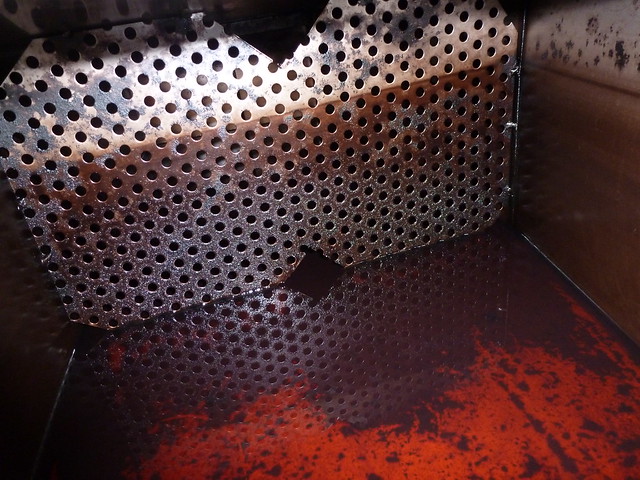
A few years back I found the tank was like this:

P1000697 by Roger Gaspar, on Flickr

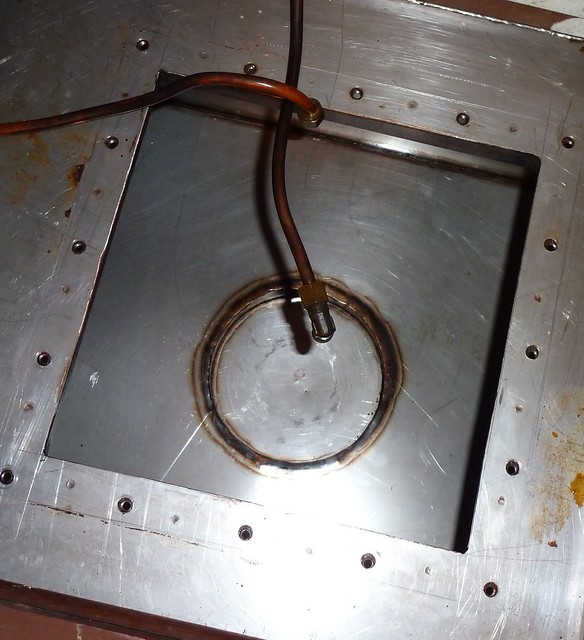
Not desperate but I drained and manually cleaned the tank:

P1000806 by Roger Gaspar, on Flickr

Image1 by Roger Gaspar, on Flickr

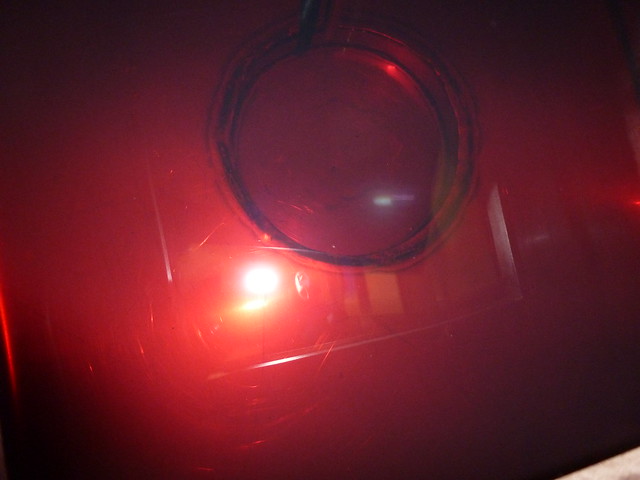
I then installed a 'polishing system' - a solid state 12v pump and a Racor filter sucking at one end of the 'coffin' shaped tank and exiting at the other end. Before I finished fitting the polishing system, I used the dirty fuel to go through the polish system filling it back into the tank. If it didn't work I could always do it again. But, here at one go:

P1010044 by Roger Gaspar, on Flickr

So it was easy to save the fuel.
 
Hi
In yard engine tested and running fine prior to launch decided to dip and polish the fuel, around 200 litres. Unfortunately was unable due to diesel bug and inline filter blocked immediately with obvious muck in the bowl of the filter housing.
Should I dispose of fuel and put new diesel in tank and treat (marine 16) or filter old fuel and return to tank and treat. Could pump out and dispose of the bottom fuel/stuff.
Was lucky I guess an initial trip from yard to sea is down a river!!!
any ideas advise appreciated.
I have just had similar out in Portugal, despite using M16. I took out the fuel level sender to gain access, got my Pela oil change pump and fitted a clear tube on a stick to it. Wife pumped and I "hoovered" all the crap out. I had about twenty ltrs in a bidon and i could see the crapon the bottom of it. I have some 5 micron filter media which I put in to a funnel. I filtered it. It was good, about 15 ltrs went back in the tank. All good. So empty. Clean and filter the stuff and use again. Diesel fuel is not like petrol which loses important fractions by evporation
 
Thanks for replies, I don’t think my pela pump would suck this up so ordered a fuel transfer pump from Amazon and will start filtering, filter funnel with mesh initially and then decrease the filter size and then will add M16 and finally polish fuel. Been gathering all the bits to tackle problem. Will likely dispose of the fuel at the bottom of tank
 
The active bug lives in the water at the water / fuel interface near the bottom of the tank. So without water you will be without fuel bug. Keep it dry and this will keep it clean.

I install a polishing system, thoroughly grease the filler cap threads, and always polish after fuelling.
 
The active bug lives in the water at the water / fuel interface near the bottom of the tank. So without water you will be without fuel bug. Keep it dry and this will keep it clean.

I install a polishing system, thoroughly grease the filler cap threads, and always polish after fuelling.
Thanks
my job on Monday is to filter most of fuel starting with a simple funnel and mesh then use my polishing rig 30 micron then 10 micron. I will bit the last 1/4 on the bottom of tank. Going to cut a larger inspection hole and fit cap from tek-tanks which is specifically for this. I can then check tank easier than through the hole where the fuel sender fits. I will then finally treat with M16 and will keep polishing rig on the boat!!!
 
Thanks
my job on Monday is to filter most of fuel starting with a simple funnel and mesh then use my polishing rig 30 micron then 10 micron. I will bit the last 1/4 on the bottom of tank. Going to cut a larger inspection hole and fit cap from tek-tanks which is specifically for this. I can then check tank easier than through the hole where the fuel sender fits. I will then finally treat with M16 and will keep polishing rig on the boat!!!
I have been using a polishing rig for 15 years, indeed since my first power boat and I have never added any fuel treatment, and I have never had a fouled fuel filter. I would also use every last dreg of the fuel. If its heavily contaminated simply use the rig to move it to a second drum, then filter it again, or a third time if necessary. The bit you chuck out should be literally a dieselly sludge. I would be happy with its going back to the tanks clear and bright via the 30 micron. Any water is removed by the coalescer part of the Racor. Also when you set your rig up always draw the fuel through the Racor to the pump, because the pump pulverises water droplets into tiny particles that can then pass through the coalescer.

Unfortunately I left my old faithful polishing rig only last boat when I sold her, so now it's time to put a new one together.

My soon to be mine Grand Banks has got a fantastic fuel valve manifold to draw and return fuel from its three tanks, so I am looking forward to establishing a built in polishing set up and I will use the installed Racor 900 pre filters so I will just need the transfer pump, some copper tubing, and a few more valves and some tee fittings.
 
A few years back I found the tank was like this:

P1000697 by Roger Gaspar, on Flickr

Not desperate but I drained and manually cleaned the tank:

P1000806 by Roger Gaspar, on Flickr

Image1 by Roger Gaspar, on Flickr

I then installed a 'polishing system' - a solid state 12v pump and a Racor filter sucking at one end of the 'coffin' shaped tank and exiting at the other end. Before I finished fitting the polishing system, I used the dirty fuel to go through the polish system filling it back into the tank. If it didn't work I could always do it again. But, here at one go:

P1010044 by Roger Gaspar, on Flickr

So it was easy to save the fuel.
What pump did you use and would you recommend it ? My last rig had a Holley, which was brilliant, and which I found on Ebay for a few quid, but they are ~ £250 new.
 
The active bug lives in the water at the water / fuel interface near the bottom of the tank. So without water you will be without fuel bug. Keep it dry and this will keep it clean.

I install a polishing system, thoroughly grease the filler cap threads, and always polish after fuelling.

Actually not 100% correct.

There are various forms of Micro Organism in fuels ... and one type in particular does not follow the water interface : SRB ..... Sulphur Reducing Bacteria. This form can be anywhere in the fuel - generally away from water interface.

Best way to sort out contaminated fuel ?

Add good dose of Enzyme Based Additive to tank.
Leave to do its work for a few days.
Syphon out all you can from tank - fuel, debris etc. to containers.
Leave to stand and settle.
Decant fuel from containers - leaving rubbish behind.
Dose the fuel in the containers again
Leave to stand.
Decant fuel from containers leaving small amount in bottom.

This last fuel you can filter ....

While containers are standing - you can try cleaning tank ...... steam cleaning is excellent for large tanks with good access ... but if not - then a sprayer with fresh fuel / Additive ... then pump out. This can be added to containers before decanting etc.

There is usually no need to waste the fuel ... sensible husbandry is all it needs.

Once fuel has been settled / treated / decanted - put it back in tank ... with a recc'd dose of additive .... new fuel filters etc.

But what would I know ? I only work with the stuff every day .......
 
Actually not 100% correct.

There are various forms of Micro Organism in fuels ... and one type in particular does not follow the water interface : SRB ..... Sulphur Reducing Bacteria. This form can be anywhere in the fuel - generally away from water interface.

Best way to sort out contaminated fuel ?

Add good dose of Enzyme Based Additive to tank.
Leave to do its work for a few days.
Syphon out all you can from tank - fuel, debris etc. to containers.
Leave to stand and settle.
Decant fuel from containers - leaving rubbish behind.
Dose the fuel in the containers again
Leave to stand.
Decant fuel from containers leaving small amount in bottom.

This last fuel you can filter ....

While containers are standing - you can try cleaning tank ...... steam cleaning is excellent for large tanks with good access ... but if not - then a sprayer with fresh fuel / Additive ... then pump out. This can be added to containers before decanting etc.

There is usually no need to waste the fuel ... sensible husbandry is all it needs.

Once fuel has been settled / treated / decanted - put it back in tank ... with a recc'd dose of additive .... new fuel filters etc.

But what would I know ? I only work with the stuff every day .......
And without being cynical - it is a part of your profession and thus likely a significant financial reward to sell additives. Indeed you promote doing this four times in your response.

As I said 15 years, no additives and no problems, I just keep the fuel dry.

I do find it particularly interesting that professionals avoid mentioning the key entry point for any water into a tank in the first place, apart from when refuelling - the deck filler cap. Just saying.
 
What pump did you use and would you recommend it ? My last rig had a Holley, which was brilliant, and which I found on Ebay for a few quid, but they are ~ £250 new.
ASAP Compact Electric Fuel Pump 12 Volt

Lot more expensive now. It was a few years back. Very effective. Yes, I would recommend it. Got it in 2013. Still working.
 
Last edited:
And without being cynical - it is a part of your profession and thus likely a significant financial reward to sell additives. Indeed you promote doing this four times in your response.

As I said 15 years, no additives and no problems, I just keep the fuel dry.

I do find it particularly interesting that professionals avoid mentioning the key entry point for any water into a tank in the first place, apart from when refuelling - the deck filler cap. Just saying.

I blend fuel and superintend its transportation across oceans.

Additives - I have never sold Additives retail - not sold to any other party to provide for retail ........... my additive work is and was industrial in TONNES ... not milli-litres as you would use. I have no financial or advantage or gain in providing the advice to dose fuel. In fact Micro Org dosing has rarely been an operation for us ... the main being CFPP, Cloud Point, Cetane Booster for GasOil (diesel to you) and H2S in Fuel Oil. So I suggest that your post falsely accuses me.

You are a very lucky person .... let us know when your luck runs out ...

As to Key Entry Point ............... of course if you have a poorly fitted deck filler cap - that can be ... but most water in fact as a boater myself - is condensation based inside tank and of course the change of air via breather ... all it takes is warm moist air in via breather .... night time cool down ... moisture condenses out ... doesn't take many cycles before you have measurable water in tank bottom.

I do not agree with your system but - that's my choice.
 
could someone tell me what a fuel polishing rig is please? Weird images come to mind....

Attempts to create a Filtering Setup to 'clean' up fuel.

Basically a pump that draws from the tank, to a filter system and then to a receiving tank. Some reckon they can circulate on the existing tank .....

Its a term that as usual is not exactly fitting for the matter.

Most setups I have seen and read of - the filters mesh size is inadequate. As to whether its an apparatus that merits ? I leave that to individuals ..... personally I ran tests in the lab I owned years ago and results were poor and that was with a 2 micron system.

But yer takes yer choice ...
 
could someone tell me what a fuel polishing rig is please? Weird images come to mind....
I think people miss quite the term. They really mean fuel filtering system. The fuel polishing systems I was involved with on commercial tanks were quite sophisticated but even then I am not convinced they were that successful. Unless you can creat a velocity across the bottom of a large tank you don't move any deposits towards the point of extraction by the pick up pipe. I think some of it comes down to tank design on sailing boats.
If the tank has a good slope on its bottom down to a low point then the natural movement of debris will be to the low point where is can be removed by a pumped system. If you don't have this design then you need to be able to access the tank to vacuum the bottom of the tank manually. On commercial 100,000litre tanks we had agitators in the bottom of the tanks and 24/7 fuel filtering but even so we found it necessary to bring in annual fuel polishing by an external contractor. They vacuumed the bottom of the tank and ran the fuel through high performance filtration. So in summary, on yachts they mean fuel filtration system
 
My lab test consisted of two 200 litre drums, one filled with 'expired' samples. (FYI - Expired - that is samples that had been stored past the clients required stated period - usually 90 days).

To this we added a small amount of known tested contaminated diesel based domestic heating fuel.... also time expired. This is slightly heavier grade than ULSD and typical Red - idea was to try create the very slight increase from having dead micro suspended in the fuel.

We circulated to create a homogenous mix.
Next we tested to see the actual contaminated results. We also micro-pore checked for particle size. The results showed that engine would run, but a typical engine fuel filter would clog after a reasonable period. Its a while back - so actual numbers I would have to search archives. But what we were doing was to create a fuel that would work - but also as many find - would clog filters after a period.

Once we had base results - we then circulated again to start from similar mix and then diverted the flow to the double bank filters ... first being 5 micron and second being 2 micron. Reasoning being to remove larger and give the finer filter chance to survive longer. Flow was returned to the second drum - this to make sure we only filtered contaminated fuel.

Once full drum had been transferred via filters - we opened up the filters and were surprised at the lack of contaminates - we expected to see much more.

Second drum was circulated and tested. The results were only a slight improvement on the base unfiltered.

We discussed the findings and our conclusion was that the pump had basically 'mashed' the contaminates and allowed more to pass the filters. Lab tests of course were not forced pressure - meaning the filtration was by gravity.
We changed position of the filters to be before the pump - in the suction side. This had a slight improvement as now the contaminates were being sucked to the filter before being 'mashed' by the pump. We concluded this would be more in line with many of our engines where any inline or lift pump has less 'mashing effect'.

The overall assessment though concluded that static settlement of contaminates - particulates, was the best solution. Aided by gravity slow filtering of the cleaner fuel..... syphoned off.

Its up to you to believe or not. I have no commercial interest in any yottie fuel !!
 
I blend fuel and superintend its transportation across oceans.

Additives - I have never sold Additives retail - not sold to any other party to provide for retail ........... my additive work is and was industrial in TONNES ... not milli-litres as you would use. I have no financial or advantage or gain in providing the advice to dose fuel. In fact Micro Org dosing has rarely been an operation for us ... the main being CFPP, Cloud Point, Cetane Booster for GasOil (diesel to you) and H2S in Fuel Oil. So I suggest that your post falsely accuses me.

You are a very lucky person .... let us know when your luck runs out ...

As to Key Entry Point ............... of course if you have a poorly fitted deck filler cap - that can be ... but most water in fact as a boater myself - is condensation based inside tank and of course the change of air via breather ... all it takes is warm moist air in via breather .... night time cool down ... moisture condenses out ... doesn't take many cycles before you have measurable water in tank bottom.

I do not agree with your system but - that's my choice.
Perhaps one should not underestimate, nor be so condescending. This site is for practical boat owners, and the advice given for fuel polishing is perfectly valid. But clearly some on here will be professionals, that does not mean their experience nor practices are necessarily superior.

Especially where others may have gained their knowledge and experience. In my case I am a Royal Navy Trained Marine Engineer having served upon Type 42 Destroyers and Type 22 Frigates, and the RN does not use additives either, plus they used seawater displaced tanks so were very used to getting water out of the fuel by centrifuge and coalescer filtration. Oh yes and we used to replenish in hundreds of tonnes.

The theory that most water comes in via condensation of cold tanks accounts for about a tablespoonful or less per annum on a typical tank. The air in the vent line does not gush in and out as the tank and its content change in temperature, and where over ambient ranges of just a few degrees a day the expansion and contraction factor is minimal.

I will stick with my simple polishing techniques. As to what others do that is entirely up to them.
 
Last edited:
Perhaps one should not underestimate, nor be so condescending. This site is for practical boat owners, and the advice given for fuel polishing is perfectly valid. But clearly some on here will be professionals, that does not mean their experience nor practices are necessarily superior.

Especially where others may have gained their knowledge and experience. In my case I am a Royal Navy Trained Marine Engineer having served upon Type 42 Destroyers and Type 22 Frigates, and the RN does not use additives either, plus they used seawater displaced tanks so were very used to getting water out of the fuel by centrifuge and coalescer filtration. Oh yes and we used to replenish in hundreds of tonnes.

The theory that most water comes in via condensation of cold tanks accounts for about a tablespoonful or less per annum on a typical tank. The air in the vent line does not gush in and out as the tank and its content change in temperature, and where over ambient ranges of just a few degrees a day the expansion and contraction factor is minimal.

But what would I know !

Before coming ashore - I was 17yrs Senior Ships Officer (Deck / Nav) on Tankers mainly ......... ranging from 900 tonne coasters up to 440,000 tonne ULCC's. Most of those years spent on vessels of 'old school' cargo ballast tanks. Since then ashore working with major International Oil Traders and their ships.
Quality and Quantity is my business.

As you know - Centrifuge - is the marine engineers setup for fuels / lubs etc. on board and far out performs any other non additive methods.

As regards water in a small yottie tank - I will differ with you having observed water collection in such small tanks by way of condensation. Its worse when a boat is not used as then fuel draw does not keep it down to minimal qty. I am not saying you get litres of water ... if that was the case - you'd never get the engine started. But there's enough for Micro that likes water interface.
 
Before coming ashore - I was 17yrs Senior Ships Officer (Deck / Nav) on Tankers mainly ......... ranging from 900 tonne coasters up to 440,000 tonne ULCC's. Most of those years spent on vessels of 'old school' cargo ballast tanks. Since then ashore working with major International Oil Traders and their ships.
Quality and Quantity is my business.

As you know - Centrifuge - is the marine engineers setup for fuels / lubs etc. on board and far out performs any other non additive methods.

As regards water in a small yottie tank - I will differ with you having observed water collection in such small tanks by way of condensation. Its worse when a boat is not used as then fuel draw does not keep it down to minimal qty. I am not saying you get litres of water ... if that was the case - you'd never get the engine started. But there's enough for Micro that likes water interface.
I would clarify that I routinely purge polish my tanks at least once each month for around an hour each side, with the draw taken from the low point drain, and once they are cleaned following my taking ownership, I rarely see any signs of anything in my filters or polishing filter. I do draw through the filter, and not pump first.

Also my boat experience is with motorboats, where the tanks are perhaps better isolated from colder outdoor temperatures, as they generally do not sit hard up against external bulkheads, nor are they located in cold and damp lazarettes. I also prefer to keep my tanks just below half over winter as this means if I need to work on or internally inspect a tank I can do so by simply transferring one to the other.
 
Top