
Cummins 4BT Engine Question

CT115

Active Member
Joined
3 Jan 2005
Messages
51
Location
Essex
Visit site
I have a Cummins engine it is a 4BT (A) M 150 hp @ 2800 rpm with a High Output (HO) rating.

The engine if fitted in a 13m Dutch steel displacement motor boat and is believed to have done about 1500 hours. We have owned the boat for two years and it has been serviced by a highly competent, but not Cummings trained, engineer

This year it has done 400 hours; 300 hours at around 1500rpm when used in inland waterways and the rest at between 2000 and 2200rpm.

A couple of months ago we finally traced an oil leak to the pipe used to remove oil from the sump.

This was cured by putting PFT tape round the sealing bolt in the end of the pipe.

We then removed the dip stick with the engine running and there is oil blowing out.

There is no leakage with the dip stick in place.

Should I be checking sump pressure and if so how. Is this likely to indicate piston ring wear?

Any advice greatly appreciated.
 
I have a Cummins engine it is a 4BT (A) M 150 hp @ 2800 rpm with a High Output (HO) rating.

The engine if fitted in a 13m Dutch steel displacement motor boat and is believed to have done about 1500 hours. We have owned the boat for two years and it has been serviced by a highly competent, but not Cummings trained, engineer

This year it has done 400 hours; 300 hours at around 1500rpm when used in inland waterways and the rest at between 2000 and 2200rpm.

A couple of months ago we finally traced an oil leak to the pipe used to remove oil from the sump.

This was cured by putting PFT tape round the sealing bolt in the end of the pipe.

We then removed the dip stick with the engine running and there is oil blowing out.

There is no leakage with the dip stick in place.

Should I be checking sump pressure and if so how. Is this likely to indicate piston ring wear?

Any advice greatly appreciated.

Hours and duty cycle SHOULD have no effect on the base engine causing normal wear of power/cylinder. I have a 4BT 150 in a crabber which has accumulated some real decent hours, way over 10,000 despite being a high output rating.

However sounds like engine has not had a good start in life. Oil pan tappings are NPT NOT BSP and will leak if incorrect fitting is used, I wish people would read up on their engines before diving it.

Before doing a blow-by check it is worth checking how much oil is in the pan, with low profile oil pan excessive lube oil is whipped up by the crank. Correct procedure when engine was new is to calibrate dip stick.

Out of interest what is your running lube oil pressure, this is effected dramatically if crank is dipping.

Blow by measurement is simple if you get hold of manometer and I can give you heads up on how to test and numbers you should be seeing.
 
Hours and duty cycle SHOULD have no effect on the base engine causing normal wear of power/cylinder. I have a 4BT 150 in a crabber which has accumulated some real decent hours, way over 10,000 despite being a high output rating.

However sounds like engine has not had a good start in life. Oil pan tappings are NPT NOT BSP and will leak if incorrect fitting is used, I wish people would read up on their engines before diving it.

Before doing a blow-by check it is worth checking how much oil is in the pan, with low profile oil pan excessive lube oil is whipped up by the crank. Correct procedure when engine was new is to calibrate dip stick.

Out of interest what is your running lube oil pressure, this is effected dramatically if crank is dipping.

Blow by measurement is simple if you get hold of manometer and I can give you heads up on how to test and numbers you should be seeing.

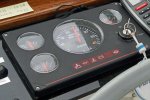
DSC06547mp.jpg

The oil pressure between 1400 and 2400rpm remains constant at about 45psi.
Oil in sump is kept up to top mark.
My engineer assumes that the dip stick was calibrated by the boat manufacturer in Holland when the engine was fitted in about 1991.
 
View attachment 54622

The oil pressure between 1400 and 2400rpm remains constant at about 45psi.
Oil in sump is kept up to top mark.
My engineer assumes that the dip stick was calibrated by the boat manufacturer in Holland when the engine was fitted in about 1991.

Lets go back to basics.

You are saying that lube oil is coming out of dipstick tube and I understand your concerns, what about breather which comes out of tappet cover what activity are you seeing coming out of 5/8 tube? Do you have a 'puke' bottle on the end of the pipe?

I do not want to any more than 10 liters of lube oil in your system, not a DROP! Owners can be so anal about checking lube oil levels constantly topping up, let the engine find its own running level then check it regularly. Your engine should go 300 hours with no measurable consumption once it has been allowed to settle.

Some more basics 4B has 14 gallon/minute oil pump whereas 6B is 20 gallon/minute pump. 4B has fewer plates in the oil cooler and the shorter Fleetguard LF3445 lube filter. Smart move is to use larger Fleetguard LF 3349 from 6B, due to market economics there were always a greater population of mechanical 6B engines therefore LF 3349 can be purchased from factors for about £6 whereas LF 3445 can be over £15 and not normally stock item. A simple case of better is less expensive as well as keeping a bit more oil out of that darn pan.

Just occurred to me no mention of blow-by.........No chance that somebody in their wisdom has plugged the breather? This will certainly cause dip stick tube to become a Vesuvius.

Good luck
 
Top