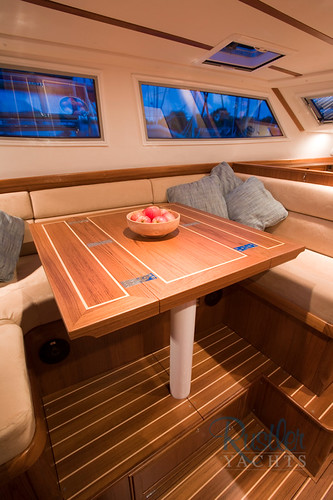
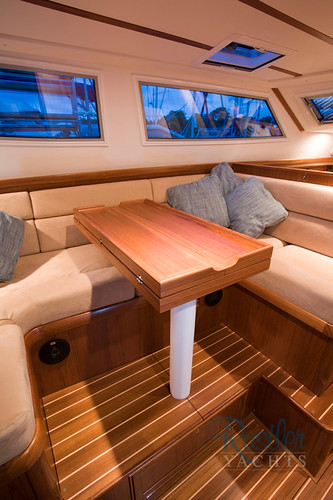
Counter hinges on table

dgadee

Well-Known Member
Joined
13 Oct 2010
Messages
4,682
Visit site
Building a table (bit slow - but after 12 months nearing completion) which uses counter hinges. I couldn't really find any information on these and surmised that, since they have a section which holds each side of the hinge level, they would hold up the opened leaf of the table. However, there is a bit of a droop - are these supposed to be used so that the edges of the leaves fit against each other? I left a gap between the two leaves. The table leaves are quite heavy.

table1.jpg


table2.jpg


table3.jpg


If they can't hold the load on their own I can either move hinges or just add some weight bearing strip in two or three locations.

Sorry for poor quality of images and also table might look a bit rough to you, but it is like Chippendale in comparison with what was originally there.

Good ply is pretty hard to come by. You can see that any sanding at all of the surface takes you down to the lower plies.
 
I can't image counter hinges holding a table leaf level all on their own. They pull the top surface inwards, something lower down needs to push outwards to provide the support. For a lightish leaf, the thickness of the timber is enough provided the two leaves fit together tightly.

For mine, I made a router jig that cut the rebates for both sides of the hinge in one go, and I clamped the two parts of the table firmly together before doing it to make sure there was absolutely no gap.

I also made the table such that the fiddles on the top, when turned over, rested against supports on the underneath, thus putting the lower outward force a couple of inches below the hinge's inward force and giving a completely droop-free tabletop.

Pete
 
I can't image counter hinges holding a table leaf level all on their own. They pull the top surface inwards, something lower down needs to push outwards to provide the support. For a lightish leaf, the thickness of the timber is enough provided the two leaves fit together tightly.

For mine, I made a router jig that cut the rebates for both sides of the hinge in one go, and I clamped the two parts of the table firmly together before doing it to make sure there was absolutely no gap.

I also made the table such that the fiddles on the top, when turned over, rested against supports on the underneath, thus putting the lower outward force a couple of inches below the hinge's inward force and giving a completely droop-free tabletop.

Pete

Very interesting indeed - I couldn't find anything on how to fit these, though looked through all kinds of old furniture books etc. Have you any pictures?
 
I used counter hinges on our fridge lid when I made it. I am not sure they are designed to hold the weight of the table leaf up. How about some folding out supports underneath, or some pull out sliding leaf supports?

I also used a router to cut the recesses out to fit them in flush.
 
I used counter hinges on our fridge lid when I made it. I am not sure they are designed to hold the weight of the table leaf up. How about some folding out supports underneath, or some pull out sliding leaf supports?

I also used a router to cut the recesses out to fit them in flush.

That would work as well - perhaps a bit more fiddly to open up the table, though.

I thought about using a router but didn't see how I would be able to do the corners without a chisel, so just used chisels for all the fitting.

This sounds like an article for PBO from someone. There really isn't anything out there I could find on designing and using them.
 
They are designed to allow a heavy counter to fold back against itself flush, as in the boozer, but not to present a knuckle. As the others have said, they will not support the flap by themselves, again, as seen in the pub.

The solution is to have sliding, square support rods under the fixed section - as seen on a number of boats. This may be what you meant when you said:

".......just add some weight bearing strip in two or three locations."

Looks a nice job.
 
That would work as well - perhaps a bit more fiddly to open up the table, though.

I thought about using a router but didn't see how I would be able to do the corners without a chisel, so just used chisels for all the fitting.

This sounds like an article for PBO from someone. There really isn't anything out there I could find on designing and using them.
Like fitting hinges to doors with a router you have to finish the corners with a chisel. Its much easier to chisel the corners out level when the rest of the rebate is cut perfectly with a router though... Of course its perfectly reasonable to do what you did and cut the whole rebate with a chisel.

You probably know that you can get 'corner chisels' for cutting the corners out of routed hinge rebates. e.g. http://www.axminster.co.uk/axminster-the-corner-chisel-prod21407/
As far as I know they don't come in the acute angle you need for a counter top hinge.
 
My hinges had rounded ends so the whole thing could be done with the router. But yes, for some other fittings with square corners I had to finish off a few small bits with a chisel. If you use a relatively small router cutter then the bit you cut out with the chisel is tiny.

My table flaps are solid without pull-out bars, but as I described, that's due to the design of the table where the fiddles line up with the crosspieces underneath to form a continuous support when the flaps are open. I don't have any photos, but could draw a diagram later if my explanation isn't clear. This works because the fiddles are quite high, designed to hold a mug when heeled well over.

Pete
 
Very interesting indeed - I couldn't find anything on how to fit these, though looked through all kinds of old furniture books etc.

I didn't do any research on how to use these hinges (I didn't even know what they were called) - but without meaning to be rude, the mechanics of the situation were bleedin' obvious :) Just think of the leverage applied when someone puts their elbows on the edge of the table, and where it's applied to a few millimetres of brass in the middle of the hinge. Clearly they can't be expected to provide a rigid connection all on their own.

Pete
 
I used counter hinges on our fridge lid when I made it. I am not sure they are designed to hold the weight of the table leaf up. How about some folding out supports underneath, or some pull out sliding leaf supports?

I also used a router to cut the recesses out to fit them in flush.

under support needed as the hinge is not designed to support the leaf & polished ones would look much nicer.
those screw slots need aligning ;)
 
"My table flaps are solid without pull-out bars, but as I described, that's due to the design of the table where the fiddles line up with the crosspieces underneath to form a continuous support when the flaps are open. I don't have any photos, but could draw a diagram later if my explanation isn't clear. This works because the fiddles are quite high, designed to hold a mug when heeled well over."

Yes, a sized diagram would be very useful.

The hinges had me confused because they do seem to be designed to hold a horizontal weight but clearly in practice they let the table droop. Depth of edges of my table is only about 1.5" so I would probably need under-bars if your diagram doesn't seem to fit with my table design.

I actually have a friend who taught furniture design/making and had asked him how to use them, but he never had and they don't seem to be utilised outside the pub much. His students all did hand cut dovetails and I think he would be appalled by my workmanship ...
 
I agree and it's what I said as well. I wasn't mentioning the screw heads!

PS My son still thinks I am mad lining them up.

I built a Stitch and Tape Canoe, with about 20 brass screws on each gunnel, inside and out, with all screws lined up.

Would have just annoyed me if they weren't lined up.
 
"My table flaps are solid without pull-out bars, but as I described, that's due to the design of the table where the fiddles line up with the crosspieces underneath to form a continuous support when the flaps are open. I don't have any photos, but could draw a diagram later if my explanation isn't clear. This works because the fiddles are quite high, designed to hold a mug when heeled well over."

Yes, a sized diagram would be very useful.

The hinges had me confused because they do seem to be designed to hold a horizontal weight but clearly in practice they let the table droop. Depth of edges of my table is only about 1.5" so I would probably need under-bars if your diagram doesn't seem to fit with my table design.

I actually have a friend who taught furniture design/making and had asked him how to use them, but he never had and they don't seem to be utilised outside the pub much. His students all did hand cut dovetails and I think he would be appalled by my workmanship ...

One still can :p
 
Yes, a sized diagram would be very useful.

Looks like I don't need to - Ex-SolentBoy's picture shows exactly the principle that mine uses. My fiddles are higher (when the table is closed it's almost a shallow "feeding box" rather than a table) so the support is even firmer, but the layout is otherwise very similar. I have the same "dropped kerb" fiddle cutout at the end so that the under-table supports don't conflict with your knees; mine is on an athwartships side so nothing can fall out through it when heeled though.

As I said, my tabletop is completely solid when open, as I'm sure the Rustler table pictured is. Sadly, what I hadn't anticipated is that the mounting of the whole table to the compression post isn't as stiff as it really needs to be (it hinges there as well - small boat needs adaptable space) so it still tilts a little if you lean on the edge :(

Pete
 
Well PRV and SailorBelgianBeerDrinkerMan have said it all really coupled with ExSBoys clear pics...
As yet another wood butcher, a couple of details that might help?

I find the easiest way to fit counter hinges is to lay then in reverse across the two pieces of wood, fit a screw into each flap then cut round with a sharp knife and finish off with granny's tooth hand router or chisels. This way you know the gaps will be parallel.
Three hinges per side is usefully more supportive
My DIY cockpit table is without fiddles and seems stiff enough
It would be ( sorry , will be, ahem) finalised with 15x15 fiddles attached at some later stage once the hinges all loosen up and bed in and start to flop ( second seasons useage)..these can be retrofitted after all the laters of varnishing and aligned then to ensue billiard table levels and rigidity..
If the flaps and main table top are set too close ie without gap then because of the two hinged character of the counter hinge, the wood edges can rub together when opening and remove the varnish, tedious.
My suggestion to the OP if he does not want to add fiddles is to carefully glue a thin wedge of wood along one flap's edge , which will restore a level surface when opened out.
And lastly be aware that sometimes counter flap hinges are imperfectly made and asymmetrical!eg the Screwfix ones.
 
My suggestion to the OP if he does not want to add fiddles is to carefully glue a thin wedge of wood along one flap's edge , which will restore a level surface when opened out.
And lastly be aware that sometimes counter flap hinges are imperfectly made and asymmetrical!eg the Screwfix ones.

I was originally thinking of that - but I don't know if it would work. The pics show a much deeper fiddle than I have, and really that is what I should have designed in.

Can't remember where I got my hinges but they were reasonably expensive and are quite good quality - no movement around joint etc.

I can, of course, always come back to remaking the table at some point in the future with these lessons learned.

Many thanks for all the help.
 
Top