ean_p
Well-Known Member
Not a lot of scope for 'error' , fit to fixing and hit with hammer ! , lots of scope for over expectation though !.....

Not a lot of scope for 'error' , fit to fixing and hit with hammer ! , lots of scope for over expectation though !.....
You should have a feel for when you're hitting something too hard and likely to damage it. If not you're a numpty, that's the only word for it. Actually, there are other words.


Here's the screwdriver bit I bought for mine:What I'd like to see recommended in here is an SDS+ air-powered breaker designed to shift corroded zip sliders on sailing kit bags.
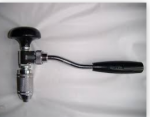
Intrigued to note the 'carpenters brace' recommended, as one o' they surfaced among F-in-L's legacy tools the other day. I've been wondering if I'd ever find a use for it....

Lead mallest are good as they don't bounce, also deadblow hammers.My manual one that I whack with a lead mallet has never failed me in 40+ years. Sometimes it works without whacking it because the tips are hardened steel and the body of the driver provides a really good grip. The trick is to apply torque to the screw then whack repeatedly until it starts moving.

I for one, and others no doubt, would be only too happy to be flown out to carry out further inspection in-situ. If you leave the wine list and the number of the local poissonnerie handy I'm confident the job should take no more than a week or two.Before my thread degenerates into a fist fight and gets banned, may I say thank you to all who have offered advice.
I should have said at the outset that I had tried most of the techniques suggested, except for the hot water (worth a try), and drilling out the screws (a last resort) before I had a go at one screw with a hammer operated impact driver, and reached the conclusion that I would like to try an air powered impact driver.
But, not having acces to one (my boatyard in France won't lend out its tools) I wondered if a 230vac powered one would do as well. They seem fairly cheap and, if I never used it again, I could sell it on eBay and get a good chunk of my money back.
Anyway, thanks again.
Seconds out!
. . . and the address of the local knocking shop?I for one, and others no doubt, would be only too happy to be flown out to carry out further inspection in-situ. If you leave the wine list and the number of the local poissonnerie handy I'm confident the job should take no more than a week or two.
Depending where she's berthed I might already know it.. . . and the address of the local knocking shop?
My Makita one has all those adjustments but I still get on better with a manual one for screws. Just the way it is I guess…?Not to disagree with the lean towards manual impact, heat, leverage on a brace/screwdriver, drilling out etc…
But my (Worx 20v) brushless impact has 3 torque settings - plus the option to ‘jockey’ the power a bit with the trigger.
On the lowest setting, it wouldn’t shear the head off a starling (I chose a starling because they’re leaving the nastiest guano on our deck at present!)… But it does provide plenty of little impacts - if one believes in slow/steady percussion.
The better cordless ones aren’t ‘all or nothing’.

My Makita one has all those adjustments but I still get on better with a manual one for screws. Just the way it is I guess…?
To the OP: a decent hot air gun can get things very hot. I high wattage soldering iron held on the screw gets the screw hotter than the surrounding metal initially.
Thank you for the suggestion but the problem with using heat is that there is a thin Tufnol backing pad (see post #1) interposed between the winch and the mast which would not stand much heating.My Makita one has all those adjustments but I still get on better with a manual one for screws. Just the way it is I guess…?
To the OP: a decent hot air gun can get things very hot. I high wattage soldering iron held on the screw gets the screw hotter than the surrounding metal initially.
Fair enough. I’m very surprised they don’t move with an impact driver and a hammer though.Thank you for the suggestion but the problem with using heat is that there is a thin Tufnol backing pad (see post #1) interposed between the winch and the mast which would not stand much heating.