Connecting ST50 instruments to SeatakNG

laika

Well-Known Member
Joined
6 Apr 2011
Messages
8,307
Location
London / Gosport
Visit site
Oh there's a converter for that! everyone choruses. Hmm yes but the small print says it only supports ST60s and ST40s and perusal of forums shows that whilst everything works ok with ST50+, there may be problems with older ST50s. Raymarine aren't prepared to go out on a limb with older (unsupported) systems and say what will/won't work. No it's not down to connectors (I'm coming to that) but older seatalk 1 commands not being supported. My needs are simple: I have ST50 depth, log (/sea temp) and wind transducers.

Question 1: Does anyone have ST50 (not 50+) wind/log/depth working with a seatalk-seatalkng converter

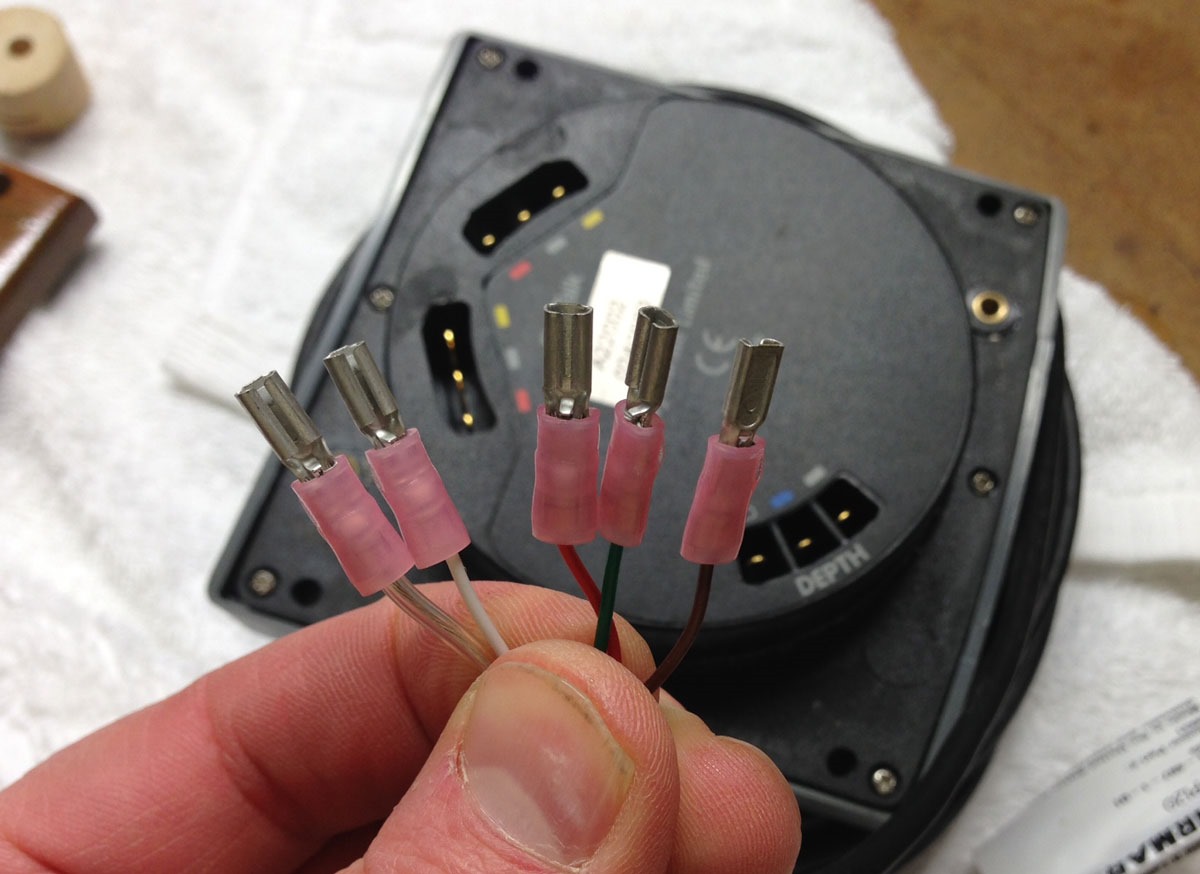
Question 2: If so how are you doing the physical connection? I'm loathe to lop the end off the (expensive) converter cable to wire to my round pin set-up until I know it'll work. I was going to rig up a flat-connector male to round connector cable but looks like those flat connectors only had female connectors with male on instruments or multi-way connectors. Is that correct?

If only the old autopilot wasn't so dodgy I would have tried to skip n2k entirely...
 
Question 2: If so how are you doing the physical connection? I'm loathe to lop the end off the (expensive) converter cable to wire to my round pin set-up until I know it'll work. I was going to rig up a flat-connector male to round connector cable but looks like those flat connectors only had female connectors with male on instruments or multi-way connectors. Is that correct?

With this cable, which should've come with your converter kit: http://www.raymarine.com/view/?id=5535&collectionid=26&col=5558 (leftmost - yellow round plug to flat Seatalk1 plug). The Seatalk1 connectors are 3 female spades cast into a plastic plug. You can use normal narrow spade connectors for that too (like the ones where your wind/depth transducers connect to their display units).

seatalk_conv.jpg
 
Last edited:
With this cable, which should've come with your converter kit: http://www.raymarine.com/view/?id=5535&collectionid=26&col=5558 (leftmost - yellow round plug to flat Seatalk1 plug). The Seatalk1 connectors are 3 female spades cast into a plastic plug. You can use normal narrow spade connectors for that too (like the ones where your wind/depth transducers connect to their display units).


I haven't (yet) bought the converter and the point is that those flat connectors are the mk 2 (st60) seatalk 1 connectors. Mine are the older ST50 round ones. Sure I could cut the end of that nice cable and crimp it onto a stub of a round connector I have, but that would ruin a 20 quid cable which I'd have to eBay with the rest of the kit if it didn't work with my instruments.

Are you saying that regular male spade connectors (i.e. red crimp-on ones) will fit into those flat connectors? In which case there's my answer right there. I've never actually seen one in the flesh...
 
Last edited:
Yep I have all ST50 ( Wind / Speed / Depth / Autopilot linked up to a Lighthouse Plotter and AIS650 + splitter and and have kept the original part of the ST50 Seatalk wiring installation - joined Seatalk to the Yellow ( I think it was that colour ) Seatalk NG adaptor cable by cutting the cable and wiring it up with a chocolate block - attached is the Pin out

all done by the chart table and thus not liable to get wet

Kevin
 

Attachments

Last edited:
Question 2: If so how are you doing the physical connection? I'm loathe to lop the end off the (expensive) converter cable to wire to my round pin set-up until I know it'll work. I was going to rig up a flat-connector male to round connector cable but looks like those flat connectors only had female connectors with male on instruments or multi-way connectors. Is that correct?

I stripped the wires from the Seatalk and "stuffed" them into the Seatalk NG adaptor cable - once that proved it worked then I cut the cable and wired "permanently" using the chocolate block.

Kevin
 
I haven't (yet) bought the converter and the point is that those flat connectors are the mk 2 (st60) seatalk 1 connectors. Mine are the older ST50 round ones. Sure I could cut the end of that nice cable and crimp it onto a stub of a round connector I have, but that would ruin a 20 quid cable which I'd have to eBay with the rest of the kit if it didn't work with my instruments.

Are you saying that regular male spade connectors (i.e. red crimp-on ones) will fit into those flat connectors? In which case there's my answer right there. I've never actually seen one in the flesh...

Oh ok, yours is Autohelm generation :)

Yes, the ST60 type flat connectors are 3mm female spades in a plastic cast and 2.8mm male spade ones will readily mate with them. Eurotek stocks both if you need a few in a hurry (at "marine" prices), otherwise RS components.

Image courtesy of Google image search (depicting the female connectors that go onto the display - you need males as seen on the display in he background):
seatalkinstrumentssm.jpg
 
Excellent. Thanks all. Spade connectors to test followed by cutting and joining it is then.

I have KevinT1's and my dealer's testimony that ST50s work, but I had a remarkably quick reply from Raymarine (previous question took a couple of weeks to be answered) saying that the earlier version of their speed through the water message wasn't converted (and consequently true wind not correctly calculated). Consulting Thomas Knauf's reference this presumably means command 26 vs command 20? We'll see. AT least I could still use wind vane mode on the autopilot on apparent. Not that I've ever used wind vane mode on an autopilot...
 
Correct, yes. It's the smaller (but still standard) size.

Pete

Having just connected up my Paddlewheel simulator to my ST60 Tridata and not realising the ST60 used these small space terminals I only had crimped standard size fully-insulated spade connectors...... but, if you remove the plastic insulation and bend the spade across the middle with pliers, it will fit onto the 3mm terminals. It's a terrible bodger's bodge but out here in Croatia one must use one's initiative!!!!!!!!

Richard
 
Excellent. Thanks all. Spade connectors to test followed by cutting and joining it is then.

I have KevinT1's and my dealer's testimony that ST50s work, but I had a remarkably quick reply from Raymarine (previous question took a couple of weeks to be answered) saying that the earlier version of their speed through the water message wasn't converted (and consequently true wind not correctly calculated). Consulting Thomas Knauf's reference this presumably means command 26 vs command 20? We'll see. AT least I could still use wind vane mode on the autopilot on apparent. Not that I've ever used wind vane mode on an autopilot...

If it doesn't, I have some Raymarine contraptions laying around that convert the log/depth transducer outputs directly to Seatalk1, without going through the display unit first. Not sure if your ST50 displays will then still show that, but I think if they have a slave/repeater mode like my ST60 they might.
 
Well here's a nugget of information that Raymarine don't seem to broadcast. If you cut the wires off the SeatalkNG to Seatalk-1 cable apparently you reveal, in addition to the seatalk wires, a pair of wires which over which NMEA GGA, RMC and VTG sentences will be sent if no connected seatalk-1 devices are detected:
http://raymarine.ning.com/forum/topics/interfacing-an-a-series-mfd-a65-a67-to-a-dsc-vhf-radio-featuring-

No personal confirmation of the accuracy of that but that is the official US raymarine support forum and I can't find any manuals for the E70196 seatalkng to NMEA-0183 converter kit.
 
Well here's a nugget of information that Raymarine don't seem to broadcast. If you cut the wires off the SeatalkNG to Seatalk-1 cable apparently you reveal, in addition to the seatalk wires, a pair of wires which over which NMEA GGA, RMC and VTG sentences will be sent if no connected seatalk-1 devices are detected:
http://raymarine.ning.com/forum/topics/interfacing-an-a-series-mfd-a65-a67-to-a-dsc-vhf-radio-featuring-

No personal confirmation of the accuracy of that but that is the official US raymarine support forum and I can't find any manuals for the E70196 seatalkng to NMEA-0183 converter kit.

Interesting. The older PC/Seatalk/NMEA interface box (E85001) does also convert to NMEA '83 (but not 2k) , might even be the same chip in there.
 
Interesting. The older PC/Seatalk/NMEA interface box (E85001) does also convert to NMEA '83 (but not 2k) , might even be the same chip in there.

No this doesn't do seatalk-1 to NMEA. It's not even a proper N2K to NMEA-0183 converter, just doing those 3 sentences. It seems like a poxy afterthought for people wanting to hook their NMEA-0183-only DSC VHFs to N2K but without even doing the reverse DSC/DSE to N2K conversion.
 
Well here's a nugget of information that Raymarine don't seem to broadcast. If you cut the wires off the SeatalkNG to Seatalk-1 cable apparently you reveal, in addition to the seatalk wires, a pair of wires which over which NMEA GGA, RMC and VTG sentences will be sent if no connected seatalk-1 devices are detected:
http://raymarine.ning.com/forum/topics/interfacing-an-a-series-mfd-a65-a67-to-a-dsc-vhf-radio-featuring-

No personal confirmation of the accuracy of that but that is the official US raymarine support forum and I can't find any manuals for the E70196 seatalkng to NMEA-0183 converter kit.

They aren't another pair of wires: they're just plain old SeaTalk data and +12 volts. The document linked explains that the convertor waits 20 seconds after power to determine if it should operate in SeaTalk mode or start sending those 3 NMEA 0183 sentences instead.

That must be why my ST6002+ displays "no pilot" for a while after power up: it's waiting for the convertor to decide whether it wants to talk SeaTalk or NMEA 0183. Meanwhile the pilot head is desperately waiting to hear from its SPX-5 (on the SeaTalkng bus) and hears nothing until the convertor has finished its deliberations.

Be nice if Raymarine let us turn that behaviour off, given that 90%+ of us will never want to use the convertor in its NMEA 0183 mode, but what's 20 seconds of the boat's network being split in half between friends, eh?
 
To follow up on this in case anyone digs it up and is interested....

The 2.8mm male spade connectors Yngmar recommended worked like a charm. A purist would still lop the end off and solder but that's somewhere a long way down my to do list. The converter happily powers the seatalk-1 bus. Wind and depth are converted through to seatalk-ng. Speed? Hmm..well my log had been on the blink and hasn't been working whenever I've thought about trying to display log speed on my p70. There's definitely a not unreasonable estimate of True Wind being made, but that might be being output from the wind thingy rather than calculated at the p70 (I'll have to investigate).

Heading from the EV-1 *is* displayed on my heading sensor but the one thing notice NOT working is off-course indication on the heading sensor when the AP is on: It just swings wildly. I'l have to have a look at Mr. knauf's reference and try to figure out what might be happening there.

So all in all...mostly working with the ST50s
 
Further update: speed, log, wind and sea temperature all converted fine and displayable on the pilot head. Just that pesky off course indication on the ST50 heading display that doesn't work.
 
Further update: speed, log, wind and sea temperature all converted fine and displayable on the pilot head. Just that pesky off course indication on the ST50 heading display that doesn't work.

What's the problem with the ST50? Are you not getting heading data from the EV-1 but still getting it on the p70?

Just a thought as this may or may not be similar to an issue I had.

I don't have ST50s and not really familar with them but I had an issue with the EV-1 not sending PGN 127250 (heading) even though it was getting heading info through to the p70. Raymarine support helped me get to the bottom of it. Turns out it backs off if there's another source of 127250 on the Seatalk ng bus (in my case coming from the Stowe Dataline).
 
What's the problem with the ST50? Are you not getting heading data from the EV-1 but still getting it on the p70?

Per post before last, heading is converted through fine (1Hz according to Raymarine) and displays ok on the ST50. The problem is when auto is engaged: Instead of displaying the off-course angle on the left-right dial thingy the needle swings apparently randomly.
 
Per post before last, heading is converted through fine (1Hz according to Raymarine) and displays ok on the ST50. The problem is when auto is engaged: Instead of displaying the off-course angle on the left-right dial thingy the needle swings apparently randomly.

OK, sounds like it's not the same issue I had. As I said, I've not got ST50s so aren't familar with them.
 
The problem is when auto is engaged: Instead of displaying the off-course angle on the left-right dial thingy the needle swings apparently randomly.

Old thread but just in case anyone is digging this up...

Last night I upgraded the firmware on the stng-seatalk converter, the ACU, the EV-1 and the pilot head. All were previously ~2014 era firmware. All now the latest (2017-ish iirc). I should have fired everything up between updates to see what was working because I don't know whether it was the ACU update or the converter update, but off-course heading now appears to be working.

So that means that everything (that I care about / have noticed) is working with a new evo AP connected to ST50 (not ST50+ which I believe worked anyway) instruments: data correctly converted both ways.

And to re-emphasise, old rudder reference units work just fine with the new ACUs. Mine must be about 27 years old.
 
Top