Cleat for Genoa reefing line

cpedw

Well-Known Member
Joined
1 Jun 2001
Messages
1,327
Location
Oban
Visit site
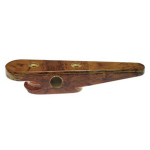
I was searching for a jamming cleat for the reefing line when I came across this Clam Bollard.
cl210.jpg

Has anyone used one? Would it be suitable for the cockpit end of a reefing line?

The Boat is a Bermudan sloop with a 340sq ft Genoa. The reefing line is 12mm braidline.

 
The usual recommendation is to have a standard horned cleat that you can lock the rope around when the boat is moored. The consequences if it comes free when the boat is unattended could be expensive.
The bollard cleat could suffice while sailing the boat but why have 2 cleats?
From the Furlex manual:-
1633811140487.png
 
Last edited:
I use a Harken jamming block attached to the pulpit leg in easy reach of the helm, plus Harken double roller stanchion blocks. Expensive but one of my best investments, although at 20 sqm the jib is small enough not to need a winch. For your size sail I would consider a clutch as suggested by NormanS. which if mounted correctly could be used in conjunction with a winch.
 
Mine’s just inside the aluminium toerail. There’s a turning block aft of it to give a good angle to haul on the line from the cockpit.

Pete
 
Last edited:
I was searching for a jamming cleat for the reefing line when I came across this Clam Bollard.
cl210.jpg

Has anyone used one? Would it be suitable for the cockpit end of a reefing line?

The Boat is a Bermudan sloop with a 340sq ft Genoa. The reefing line is 12mm braidline.
The problem with any form of Clam cleat for a biggish boat as that the rope needs to be pulled in slightly to release from the cleat. So not really suitable for a line under load except on a small boat.
We use a halyard clutch which is ideal. When leaving the boat we coil the spare rope and tie with two half hitches close to the clutch - hence cannot slip in a hurricane (though a properly maintained clutch doesn’t slip anyway).
 
Mine’s just inside the aluminium toerail. There’s a turning block aft of it to give a good angle to haul on the line from the cockpit.

Pete
I managed to pick up a cheap small self tailing winch at some jumble or another and used that via a turning block. When the sail is furled, a couple of extra turns around the winch holds the line in the jammer securely.
 
When I bought the boat, it had a leaver jammer fitted for the furling line. Never gave it a second thought until a stormy night Pollenca, Mallorca when something knocked the jammer open, resulting in a flogging foresail until I could sort things out: expensive sail repair followed….
So I now have a cleat fitted after the jammer to prevent a reoccurrence, especially when I’m not on board the boat.
Whilst a jammer of the type shown by the op is an easy way to secure the line quickly, I’d be wary of it as a standalone set up because it is too easy for the line to work its way out. You’ll also have to ease the tension in the line before it’ll release. I know from my lever jammer that it’s often necessary to use a winch to take the tension off the jammer before it’ll open.
 
I use a fiddle block with a cam cleat, similar to those often used for main sheets and kickers on smaller boats. It is shackled to an eye on the stern rail. Works quite well. By adjusting the angle of pull slightly, I can choose to pull through the cams or just using them to secure the line when reefing is done. (The lower, identical one is for the sliding genoa car).
furl%20adjust.jpg
 
Definitely use a clutch - I like the Lewmar clutches - on the deck adjacent to the toe rail with a block just after of it to give a nice lead to the cockpit. Works well.
 
Top