
Chainplate - deck rot

Trevelyan

Well-Known Member
Joined
26 Nov 2010
Messages
180
Visit site
Hi all,
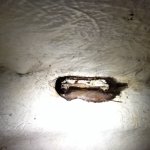
So I went today to re-bed a chain-plate, only to discover the wood in the deck is rotten. The boat is a seal 22 and the chain plate is the U-bolt through the deck type (i.e. the deck takes all of the load, nothing goes down to hull/a bulkhead). Photo below of the mess I found - the area exposed might not be all of the rotten deck, but I thought I'd stop hacking away and think about it first! Picture below
ONE.JPG

You can see one of the bolt holes, the slot corresponds to where the two bolts from the U bolt come down (about an inch and a bit apart). Interesting, the plate that goes across the two bolts underneath isn't much bigger than this!

I need to do a repair of this from underneath, as the seal has coloured topsides (difficult to match) and the chain plates sit in 'cut outs' within the top rail which itself is part of the GRP moulded topsides. Any repair from above would be very messy (I think). Photo of a boat here to illustrate (not mine, photo from web)
picture of seal.jpg

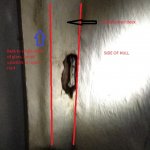
Underneath, the area of deck which is wood-cored is quite easy to get at. From the picture below, on the outboard edge the wood butts the exterior hull and on inboard edge the two layers of fibreglass encapsulating it curve together to go on upwards to form coachroof etc. I think some or all of the wood would be fairly easy to cut out, but how I do get it strong again, particularly on the outboard edge where -if I cut lots away, there is little horizontal glass to glass up to etc.
two.jpg

I've done a few cosmetic-only GRP repairs, what I'm worried about here is of course getting it strong - any pointers please on how to approach this from underneath please

Cheers,

Trev
 
Hi all,
So I went today to re-bed a chain-plate, only to discover the wood in the deck is rotten.

I've done a few cosmetic-only GRP repairs, what I'm worried about here is of course getting it strong - any pointers please on how to approach this from underneath please

Cheers,

Trev

I assume this is just a local reinforcement of the deck with a wooden pad glassed over on the inside

I would chop away the inner glass layer
( ive found that an old wood chisel will do this if the mat is not thoroughly impregnated with resin. It makes a lot less mess to use hand tools compared with attacking with any thing powered)
and remove all the bad wood,

Glass in a new wooden pad or a decent sized new section if its not just local reinforcement.

Make sure the chainplate is properly sealed in to prevent future water ingress

Inspect the other(s). if still sound and the fittings not suffering from crevice corrosion refit them with good sealing.
 
Last edited:
Thanks for the reply. How far away from the chain plate should I go? Obviously as far as is rotten, but in general would letting in a bigger bit of replacement core be stronger, or am I better off trying to preserve as much of the original glass as pos To the inboard side there is a decent horizontal area where I can overlap new and old glass, however the chain plate holes are very close to the hull so there is probably not room to leave any/much of a horizontal 'lip' of the old - should I be worried about this weakening the arrangement ?
 
I would remove the rotten wood ,rebuild the laminate with solid fibreglass and fit a plate washer inside bedded in epoxy putty.It may not be as pretty but it is a lot stronger.With a little bit of care it can be made to look neat enough.
 
Thanks 30boat, a couple of questions if I may:

Plate: I had thought about doing the plate embedded in epoxy trick. Do you think I am better off strength-wise removing as little of the 'lower' fibreglass layer as possible so that the plate extends to overlap some of the existing fibreglass layer (i.e. 'original deck') too, or am I better off cutting out plenty of the existing deck to make sure it is solid

Fibreglass: Should I do this with layers of woven matt or the loose fibre sheet etc? If I am taking out a large area, should be I be replacing the core with something else, or is making it all 'solid fibreglass' ok

Sorry for the daft questions, slightly worried about this one as the rig depends on it!!

Trev
 
Thanks for the reply. How far away from the chain plate should I go? Obviously as far as is rotten, but in general would letting in a bigger bit of replacement core be stronger, or am I better off trying to preserve as much of the original glass as pos To the inboard side there is a decent horizontal area where I can overlap new and old glass, however the chain plate holes are very close to the hull so there is probably not room to leave any/much of a horizontal 'lip' of the old - should I be worried about this weakening the arrangement ?

Just how you tackle this I think depends on the extent of the rot. If its very limited id just out the minimum necessary , fill the void with glass fibre and glass over it on the inside then fit a good sized backing pad inside to spread the load onto the remaining sound wood.

if a larger area is affected you may well have to cut sufficiently far into the sound wood to enable a substantial new section to be fitted in.

I doubt if the inner skin contributes much to the overall strength. I'd expect it to come mainly from the outer grp with the load spread by the glassed in wood.
 
I had two forward chain plates that needed to be redone because they were not attached to a strong point. We made a large metal plate, welded to follow the deck beam and spread the lad over two planks. These were then sealed with 3M 5200 and screwed with three in the deck beam and 3 in each plank.
 
Thanks VicS I think you're right - I just need to keep cutting back until I hit sound wood then call it. The upper deck looks to be about 6mm thick (I think) and the bottom layer is about is 6mm thick too. It is fairly chunky 1960's/1970's stuff. I'm guessing if it is less than say a couple of inches across I can just fill it? I think when it is done I will put a LARGE plate on the inside -say 15cm long
 
Thanks 30boat, a couple of questions if I may:

Plate: I had thought about doing the plate embedded in epoxy trick. Do you think I am better off strength-wise removing as little of the 'lower' fibreglass layer as possible so that the plate extends to overlap some of the existing fibreglass layer (i.e. 'original deck') too, or am I better off cutting out plenty of the existing deck to make sure it is solid

Fibreglass: Should I do this with layers of woven matt or the loose fibre sheet etc? If I am taking out a large area, should be I be replacing the core with something else, or is making it all 'solid fibreglass' ok

Sorry for the daft questions, slightly worried about this one as the rig depends on it!!

Trev
Those are good questions. You should remove all the rotted wood and make good with solid fiberglass.Use alternate layers of chopped strand matt and woven roving starting and ending with CSM.
Make the backplate wider than the repair so it rests on undisturbed laminate. The backplate can be of metal , sheathed plywood or solid laminate(I'd use stainless).Use plenty of sealant. The Seal 22 is a small boat and the rigging loads are small,this repair will be more than strong enough.
 
Ok next silly question - sorry I've never done anything of this thickness before - do I apply subsequent layers straight away, or wait until the previous layer goes tacky or goes off or.... I have read somewhere about heat generation being a problem if you put too much together in one go?
 
Ok next silly question - sorry I've never done anything of this thickness before - do I apply subsequent layers straight away, or wait until the previous layer goes tacky or goes off or.... I have read somewhere about heat generation being a problem if you put too much together in one go?

I would be inclined to suggest don't worry about heat generation. This can be a problem with the (polyester) resin in a pot
but not with epoxy. (much better) I would suggest you just keep adding layers before it goes off provided it does not all fall out on you.
Just a thought that you might find carbon fibre available and not too dear. This has enormous stifness when hardened but is not so easily bent around curves. Use in place of or as well as glass. No problem with either resin.
good luck olewill
 
I would be inclined to suggest don't worry about heat generation. This can be a problem with the (polyester) resin in a pot
but not with epoxy.

Hmmm, sorry to have to disagree, but epoxy in my experience can exotherm wildly if you have too big a volume mixed, or you hold the mixed resin receptacle in a warm hand... My first experiment with epoxy resulted in a made rush outside with a smoking sandwich box sized container with 2" depth of epoxy in it, and it was too hot to touch below the resin level.
 
Ok so my plan is:
-drill grid of small holes 4.5mm bit about an inch apart, to establish spread of wetness.
-drill small holes in the area and/or cut out section of fibreglass then use allan key in drill to break up rotten core.
-taper fibreglass back as far as possible
-the weight of resin you need is about 2.5x the weight of the matt.
-wet the area to be built up
-Use alternate layers of chopped strand matt and woven roving starting and ending with CSM.
-For CSM dab the resin on using a brush, to avoid it coming to bits.
-Rolling in oven paper may help. Large syringes to inject it from above if neccessary.
-use a metal roller to press layers together
-if it starts to go off too quickly, flatten the matt down and clean area/tools with acetone.
-Make template for backplate. Make the backplate wider than the repair so it rests on undisturbed laminate. The backplate in stainless.Use plenty of sealant.

Any last minute pointers please before go go go!
 
Ok so my plan is:
-drill grid of small holes 4.5mm bit about an inch apart, to establish spread of wetness.
-drill small holes in the area and/or cut out section of fibreglass then use allan key in drill to break up rotten core.
-taper fibreglass back as far as possible
-the weight of resin you need is about 2.5x the weight of the matt.
-wet the area to be built up
-Use alternate layers of chopped strand matt and woven roving starting and ending with CSM.
-For CSM dab the resin on using a brush, to avoid it coming to bits.
-Rolling in oven paper may help. Large syringes to inject it from above if neccessary.
-use a metal roller to press layers together
-if it starts to go off too quickly, flatten the matt down and clean area/tools with acetone.
-Make template for backplate. Make the backplate wider than the repair so it rests on undisturbed laminate. The backplate in stainless.Use plenty of sealant.

Any last minute pointers please before go go go!

Looks like a good 'plan :)
 
Top