Neeves
Well-Known Member
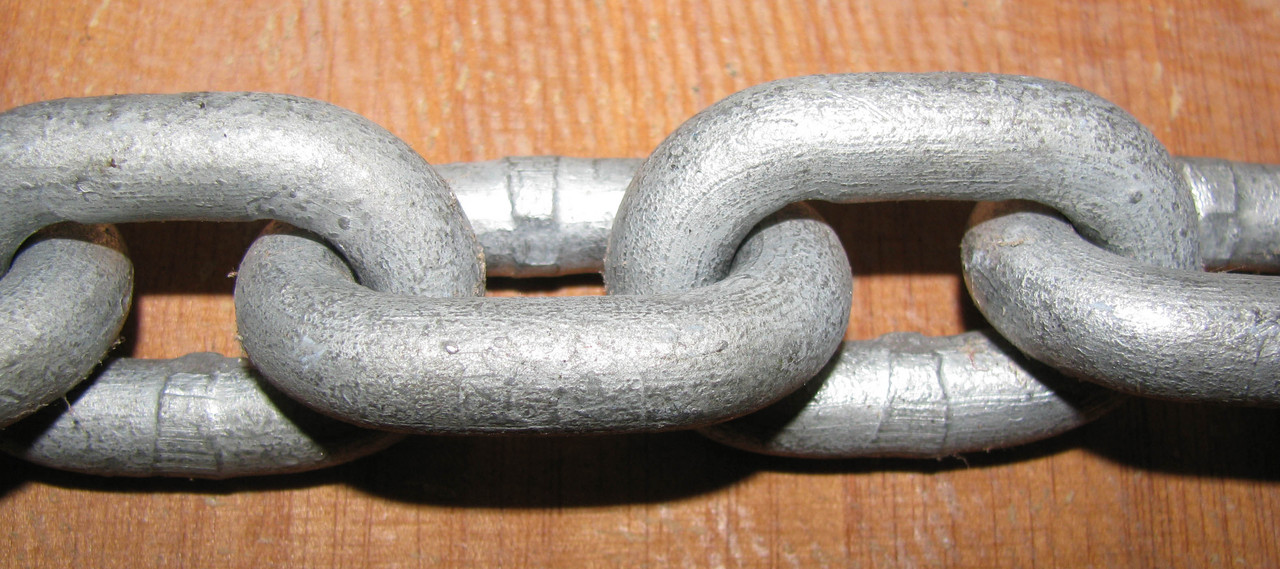
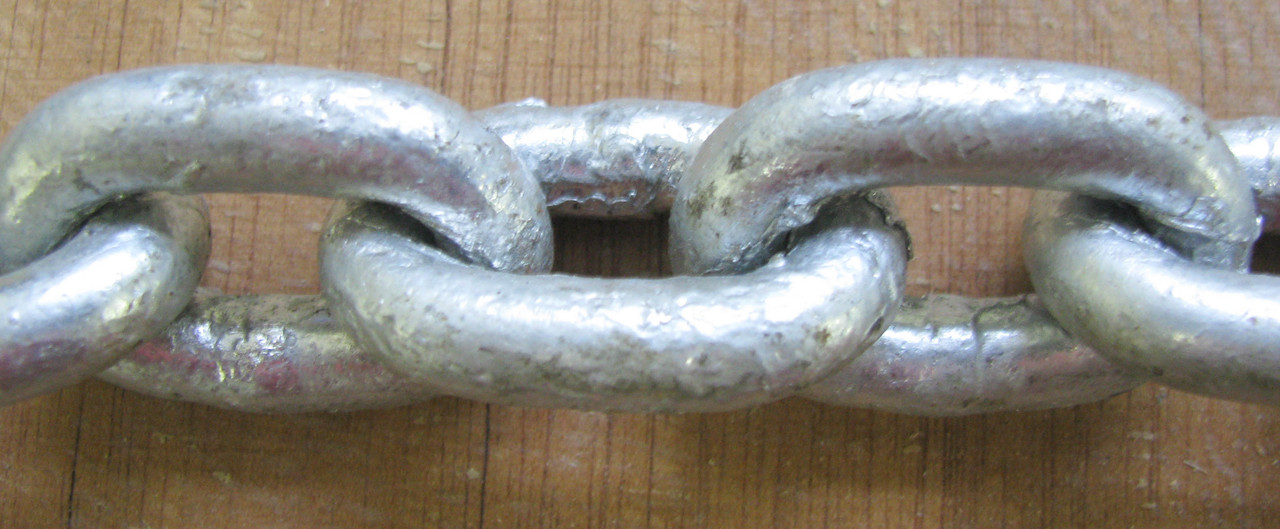
I use a simple test to evaluate abrasion resistance of the galvanised coating.
I hang 200mm lengths of the chains under test from a piece of galvanised rod. I hang the rod, with about 12 samples, evenly spaced, off the transom of our catamaran. Our catamaran is on a swing mooring in 10m of water. The cat is constantly moving. Tides are a mere 2m and I ensure the samples are on the seabed 24/7. I've run a few tests and a I try to use one common sample, so the same chain, in every test. I retrieve the samples weekly and weigh for weight loss and when I see that the gal has worn through to the steel I can compare the samples based on weight loss. After the gal has worn the weight differences become less useful as once thew gal has gone the steel then abrades (except it is corroding and abrading simultaneously).
Abrasion is a function of the gal thickness, the more gal the longer it takes to wear through to the underlying steel, but see below. Once the gal has gone the steel then wears. Abrasion is also a function of steel hardness, the harder the steel the more abrasion resistance and higher abrasion resistant steel is commonly higher strength. As you are using a G70 chain it is over twice the strength of G30 chain and will last longer - it will wear less.
Ignoring the detail, its all in a series of articles in Practical Sailor, but I can remove the gal coating off most HDG chain on their wearing surfaces within a matter of weeks. the test does not simulate wear at the crown but simply evaluates wear caused by the chain sweeping the seabed. I was amazed that in such a short time that sufficient gal would be removed such that the chain,. when left in a bucket of seawater, would commence corrosion - they rusted.
The idea that people complain about a few years for life of chain looks, in actual fact, to be good life!
Most people's experience of chain corrosion is based on using their yacht at the weekend and gal will last 'for ever'. If those same people now live aboard then they will be disappointed because the gal will last much less, maybe a few years maybe more. Americans, on Cruisers Forum, complain of the poor life of Peerless, which may (coincidentally) be the same life as Maggi - I don't know. But my tests suggest that 2 - 4 years is good.
But galvanising is an alloying process and if the steel is inadequately cleaned the gal coating does not adhere well to the substrate - and can flake. Additionally if the galvaniser tries to develop too thick a coating the thick coating will also peel. There are mechanisms that will result in a poor coating and Vyv has a test that idientifies the result (his twisted link test). The gal on Maggi's chain, or the samples I have tested, did peel or fl;ake, again all reported in articles (on chain strength) in Practical Sailor.
Jonathan
I hang 200mm lengths of the chains under test from a piece of galvanised rod. I hang the rod, with about 12 samples, evenly spaced, off the transom of our catamaran. Our catamaran is on a swing mooring in 10m of water. The cat is constantly moving. Tides are a mere 2m and I ensure the samples are on the seabed 24/7. I've run a few tests and a I try to use one common sample, so the same chain, in every test. I retrieve the samples weekly and weigh for weight loss and when I see that the gal has worn through to the steel I can compare the samples based on weight loss. After the gal has worn the weight differences become less useful as once thew gal has gone the steel then abrades (except it is corroding and abrading simultaneously).
Abrasion is a function of the gal thickness, the more gal the longer it takes to wear through to the underlying steel, but see below. Once the gal has gone the steel then wears. Abrasion is also a function of steel hardness, the harder the steel the more abrasion resistance and higher abrasion resistant steel is commonly higher strength. As you are using a G70 chain it is over twice the strength of G30 chain and will last longer - it will wear less.
Ignoring the detail, its all in a series of articles in Practical Sailor, but I can remove the gal coating off most HDG chain on their wearing surfaces within a matter of weeks. the test does not simulate wear at the crown but simply evaluates wear caused by the chain sweeping the seabed. I was amazed that in such a short time that sufficient gal would be removed such that the chain,. when left in a bucket of seawater, would commence corrosion - they rusted.
The idea that people complain about a few years for life of chain looks, in actual fact, to be good life!
Most people's experience of chain corrosion is based on using their yacht at the weekend and gal will last 'for ever'. If those same people now live aboard then they will be disappointed because the gal will last much less, maybe a few years maybe more. Americans, on Cruisers Forum, complain of the poor life of Peerless, which may (coincidentally) be the same life as Maggi - I don't know. But my tests suggest that 2 - 4 years is good.
But galvanising is an alloying process and if the steel is inadequately cleaned the gal coating does not adhere well to the substrate - and can flake. Additionally if the galvaniser tries to develop too thick a coating the thick coating will also peel. There are mechanisms that will result in a poor coating and Vyv has a test that idientifies the result (his twisted link test). The gal on Maggi's chain, or the samples I have tested, did peel or fl;ake, again all reported in articles (on chain strength) in Practical Sailor.
Jonathan
 . You do need to test for strength, lots of people will do it, and if you use Spencers in America - they can test for strength, on site. Bodycote (spelling) in the UK run the process they too might be able to test for strength. I think Gunnebo, they are Swedish, have a licence for Armorgalv though they make no mention on their website.