Bow thruster for Beneteau Oceanis 323 Clipper

non tidal berth in a locked marina ?
You say that like it's easier. Non tidal means you have no control when not moving at reasonable speed, so you're entirely at the mercy of the elements. Locked marina, if it's anything like Port Solent, means buildings and wind tunnels which accelerate any wind and make it unpredictable to boot. Locked also generally means limited space so the fairways are very tight and berths not as wide and forgiving.
 
I don’t know how well a 323 backs up as I only really have experience on a Bav which in my experience with the 2000 or so versions go better backwards than forwards but have you considered reversing into what is a non tidal berth in a locked marina ?
From my own perspective the 323 reverses well and it relatively steerable, as you would expect with a 33ft boat where all the steerage is at the rear. However the wind whistles down this stretch of pontoons through the row of houses and bridge and one more finger pontoon to the left is the end of the row. So not much room to work. I have been blown down there once and getting out was difficult. So I don't hold much hope for me to head down and reverse into wind into the berth.

Maybe you weren't responding to me - but the OP.
 
Last edited:
From my own perspective the 323 reverses well and it relatively steerable, as you would expect with a 33ft boat where all the steerage is at the rear. However the wind whistles down this stretch of pontoons through the row of houses and bridge and one more finger pontoon to the left is the end of the row. So not much room to work. I have been blown down there once and getting out was difficult. So I don't hold much hope for me to head down and reverse into wind into the berth.

Maybe you weren't responding to me - but the OP.
I do want to say - I just need to get better at this. We've not had the boat for very long, these are early days and the great thing about years of experience is it takes years to acquire!! I will get there one way or another as will the OP - I guess
 
  • Like
Reactions: pvb
tonywardle. Practice, practice, practice. Take some tutition.

A couple of years ago I took a couple, who had just bought a slightly larger yacht than my 32ft Fulmar, for 2 days of free tution. The first half day was spent gong in and out of different berths. I showed them how to go into a berth and then they did it, then on to a more difficult berth, etc. It could be described as a crash course - without the crash. Then 1½ days of learning to sail. Definitely information overload for them, but they learnt the basics.

The more you berth, the more experience you will gain and your confidence will rise and you will become calmer as you will start to understand what could go wrong and prepare for that posibility. No one berths perfectly every time, especially in a strange place. I do it singlehanded and if I think a marina berth will be difficult I ask for assistance. It is better to get in with help than damage someone else's pride and joy. Occassionally I will reject the allocated berth, permanent or visitor, so may be this is something you should consider doing with your home berth.
 
Last edited:
Excellent advice, and that’s what I did. I moved marina to get a usable berth and am now much happier. The old marina was full so couldn’t offer me anything other than the awkward berth that risked a grounding. We pay a lot of money for berthing so shouldn’t feel we have to accept what we’re given
 
Just sold my 323 but I can confirm they reverse very easily and with the tendency to weather cock they stay in line very well when reversing into berth into the wind. Different story with the wind on the bow. The stronger the wind the faster you need to go. Mine was twin rudder so probably more difficult than standard single rudder. On the odd occasion I really couldn't get her in due to be single handed in strong wind I just moored somewhere easier and moved her later.
 
tonywardle. Practice, practice, practice. Take some tutition.

A couple of years ago I took a couple, who had just bought a slightly larger yacht than my 32ft Fulmar, for 2 days of free tution. The first half day was spent gong in and out of different berths. I showed them how to go into a berth and then they did it, then on to a more difficult berth, etc. It could be described as a crash course - without the crash. Then 1½ days of learning to sail. Definitely information overload for them, but they learnt the basics.

The more you berth, the more experience you will gain and your confidence will rise and you will become calmer as you will start to understand what could go wrong and prepare for that posibility. No one berths perfectly every time, especially in a strange place. I do it singlehanded and if I think a marina berth will be difficult I ask for assistance. It is better to get in with help than damage someone else's pride and joy. Occassionally I will reject the allocated berth, permanent or visitor, so may be this is something you should consider doing with your home berth.
Of course, practise is helpful. However there are certain situations that defeat even the most experienced people. Ok if you have the alternatives you suggest of going to another berth or anchoring and waiting etc, but if like tonywardle your permanent berth suffers from a strong crosswind you really don't have options. This is exactly why I had a bow thruster fitted. My berth faces E/W with 1.5 boat lengths between rows and I reverse into the prevailing west using a little bit of bow thruster to steer the boat if necessary and never have any problems on my own. However if , like now there is a northerly - anything more than 8 knots the bow gets blown around and it is impossible to keep control without the thruster. Easier going in forwards, but then difficult to get out because difficult to reverse into the wind, or try downwind because of the short distance and closeness of other boats.

So, don't dismiss the use of aids to solve a problem. Boating is not an obstacle course and if you can make life easier then fit the appropriate gear as no point in having a boat if it is impossible to get it in and out of your home berth easily.
 
I have done a fair bit of mooring although my last boat a Westerly 43 was impossible to park astern in a strong cross wind without use of bow thrusters. My present boat a 323 is normally OK to park but as you can see in this video taken in St Vasst late last year the cross current took control -
 
Of course, practise is helpful. However there are certain situations that defeat even the most experienced people. Ok if you have the alternatives you suggest of going to another berth or anchoring and waiting etc, but if like tonywardle your permanent berth suffers from a strong crosswind you really don't have options. This is exactly why I had a bow thruster fitted. My berth faces E/W with 1.5 boat lengths between rows and I reverse into the prevailing west using a little bit of bow thruster to steer the boat if necessary and never have any problems on my own. However if , like now there is a northerly - anything more than 8 knots the bow gets blown around and it is impossible to keep control without the thruster. Easier going in forwards, but then difficult to get out because difficult to reverse into the wind, or try downwind because of the short distance and closeness of other boats.

So, don't dismiss the use of aids to solve a problem. Boating is not an obstacle course and if you can make life easier then fit the appropriate gear as no point in having a boat if it is impossible to get it in and out of your home berth easily.
I have only reversed out of the berth so far. This has been four times to date (lockdown) and each time it has been into the prevailing wind. The previous syndicate owners had a checklist sheet which recommended this but to be very careful as the turn out of the berth is made, not to hit the boat next to us with the anchor (the wind pushes the bow around quickly). I spoke to some other berth holders this week who had said that other berth areas are even tighter - haha. There's no winning - just need to get better, thankfully the marina is good with practising.
 
In the past I have run fore and aft lines to the centre as usual. But also rigged a spring line from the centre fairlead to the genoa sheet winch it makes it readily available to the helm. As we enter the berth, my crew at midships will slip the bowline over the end cleat, using a boathook, and the helm will tighten the spring and snug the boat up to the pontoon. I di this when singleahnded and more space is normaly available from the helm position. Keeping the engine in forward will keep the boat against the pontoon whilst tieing on.....


I find it helps to have a marked, dedicated rope for this so I know, once the bowline is around the cleat on the end of my home berth, exactly how far I am from bumping into the walkway.
It also helps prevent you getting too excited and starting to haul tight when the boat is still well out of the berth.

When I am reversing out of a berth, I tend to use up every available inch of space before attempting to change direction. With a slim, fin keel I would be inclined to reverse all the way to totally clear water if I possibly could.


The site does look snug. If you wanted to indicate your rough position there might be some useful tips to follow.

1617378638249.png
 
I find it helps to have a marked, dedicated rope for this so I know, once the bowline is around the cleat on the end of my home berth, exactly how far I am from bumping into the walkway.
It also helps prevent you getting too excited and starting to haul tight when the boat is still well out of the berth.

When I am reversing out of a berth, I tend to use up every available inch of space before attempting to change direction. With a slim, fin keel I would be inclined to reverse all the way to totally clear water if I possibly could.


The site does look snug. If you wanted to indicate your rough position there might be some useful tips to follow.

View attachment 112708
Hi Doug,

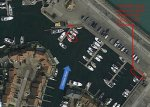
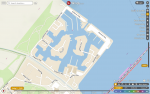
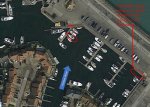
my berth is here - attached. I don't want to usurp the OP's topic but with my limited number of attempts to berth to date. If anyone has any good ideas I'd be happy to try them out
 

Attachments

  • Hythe Marina.jpg
    Hythe Marina.jpg
    237.5 KB · Views: 28
So you’re blown off your berth mostly. I’ll offer some thoughts hopefully without the patronising drivel and examples of ones heroic berthing singlehanded (because nobody wants to sail with them..)!

Doesn’t look like from layout of marina going astern will help, the guy that made a nice job of it in a larger boat was being blown on, he’ll have just put the boat close to pontoon and it’ll drift over if misjudged.

Driving in to your berth...I’d be wary of dropping a bow spring on and motoring against it, depending on angle of rope between boat and pontoon cleat/shape of hull it’ll either work or drag your bow violently into the pontoon and stern into boat next to you.

Assuming boat stops well with burst of reverse, come in a little quicker than you would normally, 2-2.5 knots. Fender mostly opposite side of boat, drive toward berth, boat out of gear when boat lined up for entry, turn in quickly no faffing about, get centre line (winch if no midship cleat etc) on as priority, stop boat quickly.

If you’ve got extra crew, someone on bow that can handle a rope to lasso cleat/or step off assuming you’re close enough, which you should be.

Leaving...put boat in reverse tick over, untie lines until only bow and stern are on slips. They need to come off quick so no bits of hosepipe, loops etc as short as possible.

Drop stern line quick, throttle up, 2/3 power to get boat moving, slip bow line. As soon as bow is nearly clear of neighbouring boat put throttle to tick over, helm over, the bow will blow round nicely and go out backwards.

If you keep too much power on the bost won't turn quickly and will just want to go straight.

Even in very light airs be wary of reversing out, stopping boat and attempting to go out forwards, it's doomed to failure.

Keep at it and don't over think it, good luck!
 
1617438881275.png


That berth would be perfect for me to get out as I have a big kick to port in reverse. Also any breeze would allow me to reverse into the rough position of the Blue Arrow, happy days. I might try that tactic.
As xyachtdave has mentioned, trying to motor forwards too soon is a bum clencher.
I think you have also already remarked..... you have to be careful not to clonk the boat next door with your bow.

.
 
This is a very similar scenario to my new marina berth. I have had difficulty mooring up on every occasion but one (in the 2 months I have been able to use the boat between lockdowns). I'm going to try two different strategies and see which is more useful.

In the past I have run fore and aft lines to the centre as usual. But also rigged a spring line from the centre fairlead to the genoa sheet winch it makes it readily available to the helm. As we enter the berth, my crew at midships will slip the bowline over the end cleat, using a boathook, and the helm will tighten the spring and snug the boat up to the pontoon. I di this when singleahnded and more space is normaly available from the helm position. Keeping the engine in forward will keep the boat against the pontoon whilst tieing on.

Second strategy I'm going to try is to place an pontoon fender at the end of the berth and slowly drive onto it, putting the helm to pin the boat to the pontoon.

If these dont work I'm going to hire a marina manouevering expert to come and teach me for a day - haha

Beneteau Oceanis 323 Clipper "Elizium"
Based: Hythe Marina Village, Southampton, UK
View attachment 112639
Thanks Tony. Looks like a great couple of ideas. It’s the reversing in bit that’s tricky especially in a crosswind. I did eventually manage to get a bow thruster fitted although I only plan to use it when I’m getting into trouble. I’ve not had a go yet as she’s still in the yard at Conwy awaiting access on 12th.
 
I only plan to use it when I’m getting into trouble.
Do you also drive without your ABS on when it's not snowy? Don't let a bunch of lunatics on a forum sway you, you have a tool so use it to your advantage! There is literally no benefit to doing things a harder way than necessary, none at all. You won't get a medal for great parking "the old fashioned way" and nobody will be on the pontoon clapping. What you might get is a few war wounds on the topsides and a slightly later access to your gin.
 
Thanks lustyd. I never thought my first ever post would generate such an enthusiastic and varied response! Many thanks for all the contributions. I even use cruise control in the car (Here’s waiting for another 8 pages of responses!)
 
I suspect if facing a berth like TonyW I would moving to another berth when renewal approaches given this is a closed berth hence backing down fairway past the berth might assist but there is the wind factor which rather opens up a whole host of unwelcome outcomes . RogS it is amazing what turns up but often entertaining and after a while you start to know which forumites add value and wisdom and which to avoid .
 
Every boat is different: from low-freeboard long-keelers which just will not steer astern to modern finkeelers that steer perfectly astern. The longkeeler is manageable, you would not dream of backing 100 metres out of a narrow channel in the longkeeler, but coming in in a crosswind is often actually simpler as you can go as slowly as you like and it will still steer and not be just blown sideways as soon as you go below 1.5 to 2 knots. There is even a similar but admittedly lesser difference between moderate fin-keelers like most Westerlys and Moodys, and newer BenJenBavs etc..

I went from a teak leadmine longkeeler to a modern boat, and in all honesty the old boat was easier to handle. You could turn 360 (starboard circle) with helm over and a series of fwd-reverse without drifting downwind, and it would track and steer at almost zero knots. On the other hand the new boat has a much more powerful engine, is overall faster (in the conditions I want to sail in) and has lots more space and needs Iess maintenance.

If I had the cash spare a bow thruster would make tight marina berths easier, especially singlehanded. What is manageable with 2 crew - one to jump off and take lines, and one with a roving fender, is sometime very difficult on our own.
 
Last edited:
Top