
Best silicone adhesive

I think you have to be careful with silicone sealants. I used some recently on a bathroom project and was very surprised how poorly it adhered to ceramic tiles.
Yes, the 'ordinary' silicone bought at DIY stores has very little strength and poor adhesion, unlike the professional catalysed versions. On top of that it inhibits the cure of some paints and sealants, so best avoided on boats.
 
You need to look closely at the spec sheets, many silicone sealants are just sealants and have little bonding strength. Sealant adhesives I've used are moisture cured one part Polyurethane sealant /adhesives like arbothane 1240 It even repaired a dinghy seam for 6 Months. Arbothane 1245 - ARBO
 
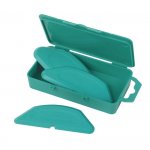
Ive used Arbosil 1096 from Hadlow Marine (on their recommendation). Im doing a full reglaze and servicing all the frames. Absolute bas***d of a job as the PO had bedded, and glazed with Polyurethane adhesive, which was starting to break down from UV. I have to share with you, the absolute revelation (gleaned off Youtube of course) which is a silicone finishing or smoothing tool, and copious amounts of soapy water from an old spray bottle. So much easier to get a good looking bead, and zero mess (first few goes with spit & finger took up half a kitchen roll and 10 cotton rags and a load of white spirit). The tool & soap combo scrapes all the excess off glass & frames. A few quid on Amazon or Ebay though I got mine from Screwfix (#45287)
smoother.jpg
 
This vid has just come out. At 9:10 he says the only place to use silicone on a boat is the windows. He uses Dow Corning 795.
 
+1 for Butyl

Butyl will craze polycarbonate. Acrylic is OK, but as much as I like butyl, this is Dow 795 job. With butly you need to keep pressure on the screws, which will eventually crack the glazing due to differential expansion. With Dow 795 and the proper sealant thickness (no thin spots!) the adhesive bears the load and the glazing can move.
 
Butyl will craze polycarbonate. Acrylic is OK, but as much as I like butyl, this is Dow 795 job. With butly you need to keep pressure on the screws, which will eventually crack the glazing due to differential expansion. With Dow 795 and the proper sealant thickness (no thin spots!) the adhesive bears the load and the glazing can move.
Dow 795 is an American product and expensive/hard to find in the UK. Arbo seem to supply some similar products.
 
Dow 795 is an American product and expensive/hard to find in the UK. Arbo seem to supply some similar products.
True. The point is to look for a product specifically rated for glazing. The combination of flexibility, bonding, and UV resistance is very specific. Must products fail when UV strikes the bond interface through the glazing (Sika does this).
 
Dow 795 is an American product and expensive/hard to find in the UK. .
Which is probably why, when I contacted Dow UK, they recommend Dow 791 when bonding acrylic to anodised aluminium for reglazing my hatches (as per my post #18) and still doing a good job and no uv deterioration after 6 years

Www.solocoastalsailing.co.uk
 
Last edited:
I think you have to be careful with silicone sealants. I used some recently on a bathroom project and was very surprised how poorly it adhered to ceramic tiles.

My experience with silicone sealants is that they adhere to everything except the bit you want!
 
Which is probably why, when I contacted Dow UK, they recommend Dow 791 when bonding acrylic to anodised aluminium for reglazing my hatches (as per my post #18)

Www.solocoastalsailing.co.uk

Yup, not Dow's best, but perhaps what he stocked.

The title of the the thread was "best," not what the local hardware has. BTW, this is NOT a hardware store product in the US either. It is higher priced ($22/tube) and you have to order it. But it is what the OEMs use. Curiously, Amazon UK has 791 but not 795.

There are UK silicone products rated for glazing. Try one of those.
 
Yup, not Dow's best, but perhaps what he stocked.

The title of the the thread was "best," not what the local hardware has. BTW, this is NOT a hardware store product in the US either. It is higher priced ($22/tube) and you have to order it. But it is what the OEMs use. Curiously, Amazon UK has 791 but not 795.

There are UK silicone products rated for glazing. Try one of those.
Why are you suggesting 791 is not the best when Dow recommended it as the one to use?

Www.solocoastalsailing.co.uk
 
Why are you suggesting 791 is not the best when Dow recommended it as the one to use?

Www.solocoastalsailing.co.uk

Read Dow's own literature. Both will work, they are very similar, but 795 is the first choice and the one hatch makers use. A little stronger, I think.

795:
Uses
  • Suitable for most new construction and remedial sealing applications
  • Structural and nonstructural glazing
  • Structural attachment of many panel systems
  • Panel stiffener applications
791:
Uses:
  • General weather sealing joints
  • Glazing and curtain wall weather sealing joints
  • Building façade weather sealing joints
 
I need to re fix my cabin lights/windows.

They’ve only been in 2 years!

The leaks were pretty epic on the last trip, last week.

They are screwed and masticed both below and around.

I’m not saying what I used but would be very interested to hear everyone’s suggestions, please.
True. The point is to look for a product specifically rated for glazing. The combination of flexibility, bonding, and UV resistance is very specific. Must products fail when UV strikes the bond interface through the glazing (Sika does this).
Many years ago I rebonded my 'Windows'.

To ensure uv did not get to the 'adhesive' I simply painted a strip over the top of the acrylic on the outside; no uv could get through the paint to attack whatever adhesive I used.

Sailed the boat for years and sold in immaculate condition for a profit.

If you cannot get the correct adhesive / sealant, this solution worked for me; the paint colour matched the rest of the boat so looked professional.
 
Read Dow's own literature. Both will work, they are very similar, but 795 is the first choice and the one hatch makers use. A little stronger, I think.

795:
Uses
  • Suitable for most new construction and remedial sealing applications
  • Structural and nonstructural glazing
  • Structural attachment of many panel systems
  • Panel stiffener applications
791:
Uses:
  • General weather sealing joints
  • Glazing and curtain wall weather sealing joints
  • Building façade weather sealing joints
You can’t get 795 in the UK (annoyingly). 895 is the nearest equivalent we could find. It’s 795 beefed up apparently.

Difference in price/availability with 791 here (£8 Screwfix) and 895 (£20 specialist supplier) suggests there is a difference.

We used 895 to bond large (2300mm long!) acrylic windows recently and was a dream to use.

Next I’m going to renew the bead/fillet of silicone on the remaining acrylic windows and plan to try 791 and compare.
 
Top