BEP battery manager and charging setup

ColinR

Well-Known Member
Joined
23 Oct 2001
Messages
583
www.victoriashadow.co.uk
I was trying to track down a problem with the VSR on my BEP battery management the other day which led me to having a closer look at the way charging and battery separation is setup. The charging wire goes from the alternator to the house batteries, so they start charging first and the VSR connects the starting battery when the voltage reaches 12.8v so it charges as well. Wouldn’t it be better for the alternator wire to go to the start battery to charge it first? The VSR sense wire is shown going to the start battery connection in the installation diagram. I asked BEP about that and they said it doesn’t matter which battery it goes to as its dual sensing. Don’t get that.

Having the alternator wire connected to the house batteries means that there is a connection from the house battery to the alternator and then from the alternator to the starter motor even when the battery switches are off. I discovered that with the positive leads disconnected from both house and start batteries, it was still possible to press the start button and it would engage the starter motor. The only way it could get power was back down the alternator wire. Is this normal? I didn’t let it turn over like this, just pressed the button momentarily and it engaged.

Any insights welcome!
 
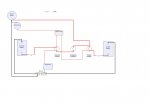
I think what you are describing is similar to this set up from https://marinehowto.com/category/electrical/ where the alternator is wired directly to the domestic busbar and the split diode or VSR is installed between the domestic and engine busbars. The article refers to...

In the image below we can see a cruising boats foundation wiring with a 500Ah AGM HOUSE bank and a 125Ah AGM START/RESERVE bank. As can be seen all charge sources feed the house bank and the ACR parallels in the start bank when 13.0V or 13.6V is attained.
 

Attachments

  • D796D4A7-7AB6-46F0-A0AB-B1CEF2C4D3DA.png
    D796D4A7-7AB6-46F0-A0AB-B1CEF2C4D3DA.png
    305.9 KB · Views: 0
I was trying to track down a problem with the VSR on my BEP battery management the other day which led me to having a closer look at the way charging and battery separation is setup. The charging wire goes from the alternator to the house batteries, so they start charging first and the VSR connects the starting battery when the voltage reaches 12.8v so it charges as well. Wouldn’t it be better for the alternator wire to go to the start battery to charge it first? The VSR sense wire is shown going to the start battery connection in the installation diagram. I asked BEP about that and they said it doesn’t matter which battery it goes to as its dual sensing. Don’t get that.

Having the alternator wire connected to the house batteries means that there is a connection from the house battery to the alternator and then from the alternator to the starter motor even when the battery switches are off. I discovered that with the positive leads disconnected from both house and start batteries, it was still possible to press the start button and it would engage the starter motor. The only way it could get power was back down the alternator wire. Is this normal? I didn’t let it turn over like this, just pressed the button momentarily and it engaged.

Any insights welcome!
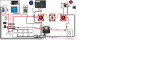
Your wiring is incorrect.

If you try to start the engine as above you will burn the alternator wire out.

If the link between the starter and the alternator were to be removed, it would be OK. It would also be OK if you just put the output from the alternator to the engine battery. I would do the latter, this is simply a case of removing the wire from the alternator to the domestic battery, leaving the short bridging wire from the alternator to the starter motor in place.

In terms of charging, BEP are correct, it doesn't matter which battery the alternator is connected to. The relay will close when the set point is reached on either battery (that's what dual sensing means).
 
Last edited:
I was trying to track down a problem with the VSR on my BEP battery management the other day which led me to having a closer look at the way charging and battery separation is setup. The charging wire goes from the alternator to the house batteries, so they start charging first and the VSR connects the starting battery when the voltage reaches 12.8v so it charges as well. Wouldn’t it be better for the alternator wire to go to the start battery to charge it first? The VSR sense wire is shown going to the start battery connection in the installation diagram. I asked BEP about that and they said it doesn’t matter which battery it goes to as its dual sensing. Don’t get that.

Having the alternator wire connected to the house batteries means that there is a connection from the house battery to the alternator and then from the alternator to the starter motor even when the battery switches are off. I discovered that with the positive leads disconnected from both house and start batteries, it was still possible to press the start button and it would engage the starter motor. The only way it could get power was back down the alternator wire. Is this normal? I didn’t let it turn over like this, just pressed the button momentarily and it engaged.

Any insights welcome!

It definitely seems to be wired incorrectly

The alternator output should either go to the house battery, to make that the first priority, or to the engine start battery ( via the starter motor main cable) to make the starter battery the first priority. Not to both!

Lucky you did not press the starter button for long or the smoke would have escaped from the connection to the house battery. If the smoke escapes from anything it's usually ruined.

A dual sensing VSR will close whichever connection sees the volts rise above the closing voltage. This allows one battery to be the first priority for charging from the alternator and the other from other sources eg wind solar or shorepower. In practice the volts usually rise pretty quickly so the second battery is soon connected as well.

Most people will probably choose the engine start battery for first priority from the alternator and the house battery first priority from the other sources.

The snag with older VSRs was that if they had a small almost fully charged battery as the first priority and a much larger more heavily discharged battery in second place they could chatter because they soon saw the closing voltage at the small battery, then closed only to see the larger battery drop the volts and open again briefly only to repeat the cycle over and over. This does not happen with decent modern VSRs because they incorporate a bit of electronic jiggery-pokery that prevents it happening..
 
Your wiring is incorrect.

If you try to start the engine as above you will burn the alternator wire out.

If the link between the starter and the alternator were to be removed, it would be OK. It would also be OK if you just put the output from the alternator to the engine battery. I would do the latter, this is simply a case of removing the wire from the alternator to the domestic battery, leaving the short bridging wire from the alternator to the starter motor in place.

In terms of charging, BEP are correct, it doesn't matter which battery the alternator is connected to. The relay will close when the set point is reached on either battery (that's what dual sensing means).

thanks, its good to get some feedback on this. I was thinking of doing exactly that, moving the wire from the alternator to the start battery instead of to the house batteries. Another thing I wondered about; the black wire on the BEP goes to the common negative. On the house batteries this negative wire has a shunt for a NASA battery monitor. Does it matter if the black wire goes to the battery side of the shunt or the ground side? The negatives from the house and start batteries go to the same point on the engine block.
 
thanks, its good to get some feedback on this. I was thinking of doing exactly that, moving the wire from the alternator to the start battery instead of to the house batteries.

No need to move it Colin. you can remove the wire from the alternator to the domestic batteries completely. There is a short wire from the alternator to the starter, the charging current will flow through this wire to the starter, then onwards to the battery via the main starter cable.

Another thing I wondered about; the black wire on the BEP goes to the common negative. On the house batteries this negative wire has a shunt for a NASA battery monitor. Does it matter if the black wire goes to the battery side of the shunt or the ground side? The negatives from the house and start batteries go to the same point on the engine block.

Technically, anything that can put a load on the domestic batteries should be wired through the shunt. In this case it really doesn't matter, so wire it wherever is most convenient.
 
thanks, its good to get some feedback on this. I was thinking of doing exactly that, moving the wire from the alternator to the start battery instead of to the house batteries. Another thing I wondered about; the black wire on the BEP goes to the common negative. On the house batteries this negative wire has a shunt for a NASA battery monitor. Does it matter if the black wire goes to the battery side of the shunt or the ground side? The negatives from the house and start batteries go to the same point on the engine block.

As a general rule nothing should be connected to the battery side of the shunt ( apart from connections to be battery monitor) and the battery itself. Connect it to the other side of the shunt, the starter battery negative or the common negative point.

In reality it probably wont matter much if it is connected to the house battery negative or the battery side of the shunt
 
Last edited:
No need to move it Colin. you can remove the wire from the alternator to the domestic batteries completely. There is a short wire from the alternator to the starter, the charging current will flow through this wire to the starter, then onwards to the battery via the main starter cable.


Technically, anything that can put a load on the domestic batteries should be wired through the shunt. In this case it really doesn't matter, so wire it wherever is most convenient.

its not that thick a wire from the alternator to the starter motor, will it handle the current? I have a Sterling Digital Regulator so the charging rate can be quite high, up to 70 amps I think.
 
its not that thick a wire from the alternator to the starter motor, will it handle the current? I have a Sterling Digital Regulator so the charging rate can be quite high, up to 70 amps I think.

At 70a it needs to be 10mm sq. No need to worry about voltage drop, as the bulk of the cable run will be battery cable. If you think the wire from the alternator to the starter is less than 10mm, shorten the one that goes from the alternator to the domestic batteries and add that to the starter. Using the battery cable would be a good thing, you'll be sure of minimal voltage drop.
 
This is a common mistake when converting from a split-charge diode to VSR charging for multiple banks. The seemingly easy thing to do is remove the split-charge diode, wire directly to a battery and let the VSR combine the banks. This unfortunately creates the parallel (and undersized) starter path you have described which is normally prevented by the split-charge diode.

This problem is not normally found unless you try to start the engine with the battery isolator switched off - cranking in this state will let all the smoke out. ;)
In normal operation (starter battery on), the starter circuit will carry the bulk of the current and everything will seem fine.
 
This is a common mistake when converting from a split-charge diode to VSR charging for multiple banks. The seemingly easy thing to do is remove the split-charge diode, wire directly to a battery and let the VSR combine the banks. This unfortunately creates the parallel (and undersized) starter path you have described which is normally prevented by the split-charge diode.

This should not happen when you remove a split charge diode, if the diode was wired correctly in the first place. The alternator output goes to the diode input, there should be no other connection to the alternator output. If the link wire to the starter was left in place the domestic batteries can still drain the engine battery, but not vice-versa.

The diagram below is the correct way to connect the diode, although this is for an Argofet. Note the lack of connection between the starter and alternator.


So, if fitting a diode (or Argofet type device) the link between the starter and alternator must be removed. If changing from a diode to a VSR, the diode input wire can be connected to either battery bank (assuming a dual sensing VSR).

If fitting a VSR to a "standard" installation where the starter is linked to the alternator, the link wire must be removed if connecting the alternator to the domestic bank, but it's simpler to just leave the link and leave the alternator connected to the engine battery, the VSR takes care of the rest.

This problem is not normally found unless you try to start the engine with the battery isolator switched off - cranking in this state will let all the smoke out. ;)
In normal operation (starter battery on), the starter circuit will carry the bulk of the current and everything will seem fine.

That's all correct, there are some other issues too, depending upon the switching arrangements, which could include ;

If the engine battery goes flat and you try to start the engine, the alternator wire is toast. It would be very easy for the wire to start a fire.

When the engine isolator is on, the domestic circuits are live, whatever the switch position.

When the engine isolator is on, all batteries are in parallel, regardless of the domestic isolator position or the state of the VSR.

etc, etc.
 

Attachments

  • Charging Schematic - ArgoFET.jpg
    Charging Schematic - ArgoFET.jpg
    64.9 KB · Views: 1
This should not happen when you remove a split charge diode, if the diode was wired correctly in the first place. The alternator output goes to the diode input, there should be no other connection to the alternator output. If the link wire to the starter was left in place the domestic batteries can still drain the engine battery, but not vice-versa..

I agree, but unfortunately my boat was 10 years in charter before I got it and the wiring had been patched and botched by so many people (who obviously never talked to each other) in so many places I had a problem very similar to the OP when I came to renew the batteries and charging systems.

When buying my boat I did notice that most other charter boats that I looked at had been treated the same way, but perhaps didn't have exactly the same fault - I haven't seen enough boats to be certain so thought it might be a common issue. I noticed mine when I came to remove the split charge diode. Everything worked so I left well alone for years .... then I found this little gem hiding in the bilges ....

FireHazard.jpg

... since then I've checked everything.
 
When buying my boat I did notice that most other charter boats that I looked at had been treated the same way, but perhaps didn't have exactly the same fault - I haven't seen enough boats to be certain so thought it might be a common issue.

Probably the same person did the wiring on them all :)

I noticed mine when I came to remove the split charge diode. Everything worked so I left well alone for years .... then I found this little gem hiding in the bilges ....

View attachment 77751

... since then I've checked everything.

Good idea to check everything, i'm always find some scary electrics. I wish i had time to put a "rogues gallery" on my website.
 
then I found this little gem hiding in the bilges ....
since then I've checked everything.

Ooh, that's genius!
My boat had 30 years of other owners making their own "upgrades" to the wiring. I'm currently rewiring the charging side, and there's some very clever tinkering (and lots of redundant wire, some of which was only disconnected at one end...) being removed.
 
Ooh, that's genius!
My boat had 30 years of other owners making their own "upgrades" to the wiring. I'm currently rewiring the charging side, and there's some very clever tinkering (and lots of redundant wire, some of which was only disconnected at one end...) being removed.
im very glad to hear that it's not *just* me that has this problem!
 
I'm wondering how the Sterling digital regulator will react to this change. So I make the engine battery the one that is charged first via the starter motor and connect the sense wire from the Sterling regulator to the engine positive as it needs to monitor the battery that is charging first. The engine battery will normally be fully charged. So when I start the engine the Sterling regulator senses a more or less fully charged battery and starts its charging profile based on that, then after a short time the VSR connects the house batteries which will be the ones that really need charging and need a lot longer than the engine battery. Will this work out?
 
I'm wondering how the Sterling digital regulator will react to this change. So I make the engine battery the one that is charged first via the starter motor and connect the sense wire from the Sterling regulator to the engine positive as it needs to monitor the battery that is charging first. The engine battery will normally be fully charged. So when I start the engine the Sterling regulator senses a more or less fully charged battery and starts its charging profile based on that, then after a short time the VSR connects the house batteries which will be the ones that really need charging and need a lot longer than the engine battery. Will this work out?

Yes. That is the way to do it.

The battery sensing really comes into its own when a diode splitter is used because it compensates for the volts drop across the splitter.

With a VSR the sensing should be connected to the battery to which the alternator is directly connected. With, a 1,2,B switch it is connected to the common terminal
 
Top