Beneteau Oceanis GRP problems

ChiPete

Well-Known Member
Joined
17 May 2008
Messages
403
Location
Chichester
Visit site
Hi all,

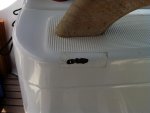
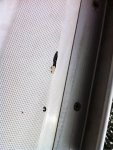
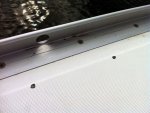
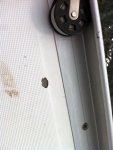
Our Beneteau Oceanis 323 has just celebrated her 5th birthday. I was using a pressure washer to get the worst of winter off the decks and several areas of the deck simply came away under the jet. On inspection, the GRP appears not to be bonded to the layer beneath around the holes and indeed one hole has cracks radiating away from it that means a whole section of the deck may come away. There are also issues in the cockpit with an area on the corner of a seat that's come away in year 3 as well as a hole that's appeared in the companionway in year 2. She has a steel blue hull; I've been told that the blue has been applied very thinly and can expect over time that more white will be seen.

I had accepted the cockpit and companionway issues as wear and tear but now the deck has started to come up and together with the issues with the blueing, I do plan to take this issue up with Ancasta and Beneteau. Before I do I thought I'd see if this is a problem other Beneteau owners have experienced. Should I expect these types of problems with the boat as I've bought at the ''Ford'' rather than ''BMW'' end of the market or do I have perhaps a ''Friday Afternoon Job"? Having sailed on other Beneteaus up to 15 years old which were in excellent condition, I can't believe this is a problem that I have to accept.

Any feedback or advice would be greatly appreciated.
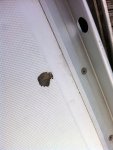
photo1.jpgphoto2.jpgphoto3.jpgphoto4.jpgphoto5.jpgphoto6.jpg
 
Blimey. Looks like someone's been taking chunks out of it with a hammer!

I would be banging on the dealers door if it were my boat.

It might be worth talking to your insurers to see what they have to say about it.
 
I think the cause may be air bubbles between the gel coat and lay up. The gel is then very thin and unsupported and breaks away.

I have an Oceanus and have one or two minute faults looking like that- each the size of a match-head at cormers of the locker tops.

If it was as widespread as yours - I would definitely be seeking redress.
 
Thanks for the responses chaps, the hammer analogy is pretty apt!!

I'll check on the hull warranty, I have a nasty feeling it might only be 5 years. That said, there's no way these issues should be appearing as they are. I think you're right David, it would appear that the deck isn't properly bonded to the lay up - goodness knows how far the problem could spread. Thanks also for the pointer re the insurance route - I'll keep that as a backstop as I'm sure if I claim, my premiums will then rise.

Cheers,
Pete
 
Thanks for the responses chaps, the hammer analogy is pretty apt!!

I'll check on the hull warranty, I have a nasty feeling it might only be 5 years. That said, there's no way these issues should be appearing as they are. I think you're right David, it would appear that the deck isn't properly bonded to the lay up - goodness knows how far the problem could spread. Thanks also for the pointer re the insurance route - I'll keep that as a backstop as I'm sure if I claim, my premiums will then rise.

Cheers,
Pete

I think it is five years, so would get onto them very quickly. I would have thought they will help.
 
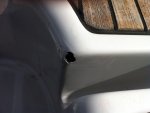
Looking at the teak in photo 6, you appear to be a bit pressure-washer-happy. PWs used close to gelcoat often open up minute voids or air-bubbles in gelcoat. That said, your defects are not minute. The one on the corner in photo 6, and the one near the handrail in photo 2 are classic air-bubble-in-corner-of-moulding defects. These corner areas are difficult to get glass into when moulding, and difficult jobs are often done badly, so these corners often exhibit this chip-off-ability.

The missing gelcoat in the other photos on flat areas though, looks like definite lack of adhesion between gelcoat and underlying laminate. If the boat was mine I'd be getting a surveyor to look at it, in support of a claim against Beneteau. The damage is fixable, but it's a skilled job, and even then you will see the join to the new gelcoat slightly.

I'd also lay off the pressure washer, or use it from further away, and certainly keep it off the teak.
 
I had a similar problem with my Dufour, the deck mouldings had air bubbles between the laminate and the gelcoat.
When I sold the boat thro' Ancasta I declared the faults even though they had been professionally repaired.
The salesman didn't see them as a problem, he said it happened all the time on Beneteau's and other production boats and that they even had diamond pattern moulds supplied by the factory to repair the defects.
So I'd go back to the dealer and ask for them to be repaired.
 
I used to have a 323 & whilst I certainly didn't have that problem we did discover that the hull had been damaged & repaired before being fitted out, the repair itself was not particularly good either!
 
Had the local GRP specialist repairing a couple of small gel coat defects on my boat and in doing so he opened up a small air bubble of the sort you have found. His comment was that they were common - the problem is getting stiff chopped strand matt into the corners of a moulding. Form my own experience of 4 previous british made boats, I know what he says is correct. TBH I would expect better from Benny - they might build cheap and light but they are automated so they wont get the same level of sloppy workmanship that you will get on a hand made boat.

Mind you, nothing in the above would stop me chasing the supplying dealer, and if there are real structural issues as opposed to minor cosmetics then that again is a very different matter.

Inciodentally, I had deck cracks in a Moody and have seen really bad ones in a modern J boat.
 
If you did create small holes with a pressure washer then I suspect frost shattering might be a contributing factor bearing in mind the weather this winter.
 
My Jeanneau has some small chunks missing like that (not that big though) - but my boat is 8 years old now. I ground them out and refilled.

However, if your boat was made using the Prisma injection process (looks like it) then the Benny/Jen group have some form in this issue. I know of one boat which had cracked decks that was replaced, but that was going back a way.
 
That's definately a poor layup technique. As has been said you are breaking through into voids where the glass composite has not been pressed into the corners properly or the air has not been worked out of the layup completely. The gelcoat is unsupported and your aggressive cleaning has exposed this.

I would agree that you need to approach Beneteau. The good news is it's not terminal and is probably only cosmetic. The bad news is some of it is going o be a pain to fix because it's on areas with anti slip texture. The smooth areas can be repaired by simply filling in and building up with colour matched topcoat, sanding back and polishing.

Perhaps a new bloke was on the layup crew. :(
 
Possibly not a bloke at all, as these are low pressure injection mouldings. The whole deck/roof/cockpit, 1 moulding, multi injection points.

That's definately a poor layup technique. As has been said you are breaking through into voids where the glass composite has not been pressed into the corners properly or the air has not been worked out of the layup completely. The gelcoat is unsupported and your aggressive cleaning has exposed this.

I would agree that you need to approach Beneteau. The good news is it's not terminal and is probably only cosmetic. The bad news is some of it is going o be a pain to fix because it's on areas with anti slip texture. The smooth areas can be repaired by simply filling in and building up with colour matched topcoat, sanding back and polishing.

Perhaps a new bloke was on the layup crew. :(
 
Thanks all for your responses and thoughts. I agree that I was a muppet for getting the washer too close to the teak - schoolboy error. I do feel however that the deck should be manufactured to a standard that allows me to use a pressure washer. Bear in mind this was the first time I'd ever used such a device on the boat.

TBH I would expect better from Benny - they might build cheap and light but they are automated so they wont get the same level of sloppy workmanship that you will get on a hand made boat.

Mind you, nothing in the above would stop me chasing the supplying dealer, and if there are real structural issues as opposed to minor cosmetics then that again is a very different matter.

That's my Southerly out the window then :p Re real structural issues, though I haven't mentioned it above, when we had a cockpit canopy fitted last year, it was found that areas of the cockpit side coaming are so thin that the bungey buttons couldn't be supported. When I removed the deck head panels in the aft cabin to investigate, the coaming is indeed so thin, you could see daylight...I'm more than slightly concerned about the structural integrity of that part of the boat.


Altho Beneteau is the manufacturer and may be helpful, your rights are against the dealer who sold it to you.

Thanks for the clarification David, I thought that might be the case but good to have it confirmed.
 
When I removed the deck head panels in the aft cabin to investigate, the coaming is indeed so thin, you could see daylight...I'm more than slightly concerned about the structural integrity of that part of the boat.

Being able to see daylight is not an indicator of poor construction. GRP laminates are translucent and quite normal to see light though them, particularly parts you can see upwards. That part of the boat does not have to take any loads so no reason to make it any thicker or heavier than it needs to be to keep its shape. One of the advantages of resin infusion moulding is that you can control the amount of material used to achieve the required strength. This has resulted in lower weight mouldings - useful above the waterline where weight is not desirable.
 
Looking at the teak in photo 6, you appear to be a bit pressure-washer-happy. PWs used close to gelcoat often open up minute voids or air-bubbles in gelcoat. That said, your defects are not minute. The one on the corner in photo 6, and the one near the handrail in photo 2 are classic air-bubble-in-corner-of-moulding defects. These corner areas are difficult to get glass into when moulding, and difficult jobs are often done badly, so these corners often exhibit this chip-off-ability.

The missing gelcoat in the other photos on flat areas though, looks like definite lack of adhesion between gelcoat and underlying laminate. If the boat was mine I'd be getting a surveyor to look at it, in support of a claim against Beneteau. The damage is fixable, but it's a skilled job, and even then you will see the join to the new gelcoat slightly.

I'd also lay off the pressure washer, or use it from further away, and certainly keep it off the teak.

Pressure washers shouldnt do that surely, i use one on mine with no problem at all and its 25 years old
 
The Beneteau handbook (for the 393) under maintenence of your boat, states the following in relation to general hull maintenance:

"Do not wash with pressure machine using water warmer than 21 degrees C
Do not use pressure excess of 150 Bar. (2175 PSI) when using a high pressure spray wash.
Do not hold Nozzle closer than 10cms (4 inches) to surface of hull

We believe the above points to be pertinent to all GRP boats."
 
Top