

vas
Well-Known Member
morning all,
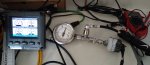
typical VDO oil pressure sender found on car/marine engines.
sitting on my table at home.
Rigged via a 1/4in tee to a NIKE bike pump on the one side and a WIKA 4bar 63mm glycol filled (doesn't show on the pic below for some reason!) gauge on the other.
VDO wired to my arduino board, finalising tuning values to fit it back on the boat (monitoring yanmar 2GMF generator engine).
So, all stone cold sitting from last night, turn test NMEA2000 rig using a bench power supply.
arduino on (arduino powers sender)
Garmin GMI10 on (shows values)
pump a bit to 50psi, arduino (and GMI) shows almost 60psi,
setup leaks slowly (v.convenient) so within the next 5-6mins I notice values dropping but with a shift.
Go and make an espresso, check email, back again say 15mins, pump it again to 50psi, arduino and GMI show 50psi!
Leave it on for 3-4-10h, values remain accurate.
what gives?
OK, I can live with that, but wouldn't mind an explanation. Pretty sure it's not my arduino messing up, nor bench supply or wiring. Will test that by leaving arduino on unplugging the vdo for a couple of hours to cool and connecting it again to check.
Must be that the sender is warming up, resistance changing and stabilising somewhere.
All that is tuned in the 20something C in my office, how far off is it going to be bolted at a 60+C engine block I wonder.
If it's an internal resistance thing that means the current it receives the first few minutes stabilise the thing, fine, if not I may have to check and shift values further to be closer to real. Temp rig the wika on a warm run at 3Krpm that the generator works and tune to that but takes even more time making things cumbersome and slightly pointless. Until recently I valued VDO highly, the more I play with all that the less I rate them tbh.
Now I know all these VDO senders/gauges are only good for giving an approximate indication of what's going on, interested to hear if others had such experiences.
OK, or I should get a 100-300euro worth of a Danfoss or WIKA, or other brand sender but not really worth it, trying to get the best out of what I have here.
cheers
V.
typical VDO oil pressure sender found on car/marine engines.
sitting on my table at home.
Rigged via a 1/4in tee to a NIKE
bike pump on the one side and a WIKA 4bar 63mm glycol filled (doesn't show on the pic below for some reason!) gauge on the other.VDO wired to my arduino board, finalising tuning values to fit it back on the boat (monitoring yanmar 2GMF generator engine).
So, all stone cold sitting from last night, turn test NMEA2000 rig using a bench power supply.
arduino on (arduino powers sender)
Garmin GMI10 on (shows values)
pump a bit to 50psi, arduino (and GMI) shows almost 60psi,
setup leaks slowly (v.convenient) so within the next 5-6mins I notice values dropping but with a shift.
Go and make an espresso, check email, back again say 15mins, pump it again to 50psi, arduino and GMI show 50psi!
Leave it on for 3-4-10h, values remain accurate.
what gives?
OK, I can live with that, but wouldn't mind an explanation. Pretty sure it's not my arduino messing up, nor bench supply or wiring. Will test that by leaving arduino on unplugging the vdo for a couple of hours to cool and connecting it again to check.
Must be that the sender is warming up, resistance changing and stabilising somewhere.
All that is tuned in the 20something C in my office, how far off is it going to be bolted at a 60+C engine block I wonder.
If it's an internal resistance thing that means the current it receives the first few minutes stabilise the thing, fine, if not I may have to check and shift values further to be closer to real. Temp rig the wika on a warm run at 3Krpm that the generator works and tune to that but takes even more time making things cumbersome and slightly pointless. Until recently I valued VDO highly, the more I play with all that the less I rate them tbh.
Now I know all these VDO senders/gauges are only good for giving an approximate indication of what's going on, interested to hear if others had such experiences.
OK, or I should get a 100-300euro worth of a Danfoss or WIKA, or other brand sender but not really worth it, trying to get the best out of what I have here.
cheers
V.


