
Tranona
Well-Known Member
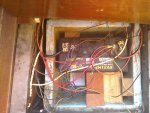
One of the most frequent topics here is about choosing and fitting batteries, particularly in older boats which are going through an upgrade of the electrics. Equally popular is reports of the horrid state of electrics in many older boats, the product of starting with an inadequate original system "improved" over the years by various owners. My project Golden Hind was a perfect example. Even though everything worked it is so bad that I am ripping just about everything out and starting again. Today I completed the fitment of the new batteries. The first photo shows what I started with.
The challenge was to fit a decent house bank and a starter battery into the same space which is approx 50*50cms between the 2 fore and aft engine beds and 2 transverse mini bulkheads just in front of the engine. Keeping them all together makes wiring easier as well as the weight low down. First job was to construct a battery box out of 9mm ply with reinforcing battens underneath. the next phot shows the box which I made at home, made sure it fitted on the boat and then installed all the fittings and trialled the batteries so I knew it all worked out before taking to the boat.
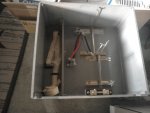
Fortunately grandson visited on Sunday and made light work of humping the 2 house batteries up the ladder onto the boat and lowering them into the box. I had already fitted the start battery and connected to the engine which fired up instantly - and shut down immediately! While all this has been going on I have built a new 12v switch panel and am steadily rewiring the whole boat as well as installing new equipment. This is work in progress and I shall post a new thread when it is nearer completion.
As many know I am replacing the engine, but the new one is not due until June so the plan is to launch and motor round to my berth in the club so that hopefully I can get a buyer for the old engine while I can show how well it runs. I had considered overhauling it and keeping it, but it really is the wrong engine for the boat , badly installed and I am reluctant to spend several £k on a 20 year old engine that will always be a mismatch. I can't complete the full wiring (bus bars, switch cluster battery monitor etc) until the engine is out so I have just done a temporary job to run the engine and get power to the house circuits. That explains the rather untidy wires running across the top of the batteries in the picture of the final installation below.
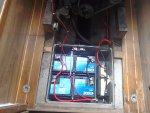
The house batteries are 2*95Ah AGMs normally used on Jaguar XFs and Range Rovers. These in my view are the best value batteries on the market in this capacity range. They were £230 the pair from Tayna. I had 5 of them in my Bavaria and never gave a moments trouble in the 6 years I had the boat, serving as engine start, house and bow thruster/ windlass. From an installation point of view they are lower than any other similar battery which means there is good clearance at the top. The start battery is an Odyssey 34 Ah high performance AGM commonly used in racing cars. Similar to the Red Flash which I have used before and would have bought again except the price has jumped from £180 to £240 in just 6 months - and they were out of stock as well! The Odyssey was £165 from County Batteries. Apart from the long life the big benefit of this battery is that it fits the space which no other battery will, so avoiding building a new box in a different location with all the hassle of running extra wiring.
All the wiring (tinned Oceanflex) and fittings come from 12volt Planet. I made most of the battery cables myself using their heavy duty spring loaded crimping tool - best used with a vice to squeeze the crimps, but works OK with a hammer. BTW I have the protective boots for the terminals which I will fit when I do the final wiring. The best bit of kit I have discovered are Wago splicing connectors. In the last photo you can just see a bank of 3 2 way connectors on the outside of the box above the shunt. These are connections for the automatic bilge pump. I have used the Wagos creating mini distribution blocks, for example linking the 4 different existing cabin wiring circuits to one switch on the distribution panel. More of that later.
Hope some find this useful
The challenge was to fit a decent house bank and a starter battery into the same space which is approx 50*50cms between the 2 fore and aft engine beds and 2 transverse mini bulkheads just in front of the engine. Keeping them all together makes wiring easier as well as the weight low down. First job was to construct a battery box out of 9mm ply with reinforcing battens underneath. the next phot shows the box which I made at home, made sure it fitted on the boat and then installed all the fittings and trialled the batteries so I knew it all worked out before taking to the boat.
Fortunately grandson visited on Sunday and made light work of humping the 2 house batteries up the ladder onto the boat and lowering them into the box. I had already fitted the start battery and connected to the engine which fired up instantly - and shut down immediately! While all this has been going on I have built a new 12v switch panel and am steadily rewiring the whole boat as well as installing new equipment. This is work in progress and I shall post a new thread when it is nearer completion.
As many know I am replacing the engine, but the new one is not due until June so the plan is to launch and motor round to my berth in the club so that hopefully I can get a buyer for the old engine while I can show how well it runs. I had considered overhauling it and keeping it, but it really is the wrong engine for the boat , badly installed and I am reluctant to spend several £k on a 20 year old engine that will always be a mismatch. I can't complete the full wiring (bus bars, switch cluster battery monitor etc) until the engine is out so I have just done a temporary job to run the engine and get power to the house circuits. That explains the rather untidy wires running across the top of the batteries in the picture of the final installation below.
The house batteries are 2*95Ah AGMs normally used on Jaguar XFs and Range Rovers. These in my view are the best value batteries on the market in this capacity range. They were £230 the pair from Tayna. I had 5 of them in my Bavaria and never gave a moments trouble in the 6 years I had the boat, serving as engine start, house and bow thruster/ windlass. From an installation point of view they are lower than any other similar battery which means there is good clearance at the top. The start battery is an Odyssey 34 Ah high performance AGM commonly used in racing cars. Similar to the Red Flash which I have used before and would have bought again except the price has jumped from £180 to £240 in just 6 months - and they were out of stock as well! The Odyssey was £165 from County Batteries. Apart from the long life the big benefit of this battery is that it fits the space which no other battery will, so avoiding building a new box in a different location with all the hassle of running extra wiring.
All the wiring (tinned Oceanflex) and fittings come from 12volt Planet. I made most of the battery cables myself using their heavy duty spring loaded crimping tool - best used with a vice to squeeze the crimps, but works OK with a hammer. BTW I have the protective boots for the terminals which I will fit when I do the final wiring. The best bit of kit I have discovered are Wago splicing connectors. In the last photo you can just see a bank of 3 2 way connectors on the outside of the box above the shunt. These are connections for the automatic bilge pump. I have used the Wagos creating mini distribution blocks, for example linking the 4 different existing cabin wiring circuits to one switch on the distribution panel. More of that later.
Hope some find this useful
Last edited:


 76
76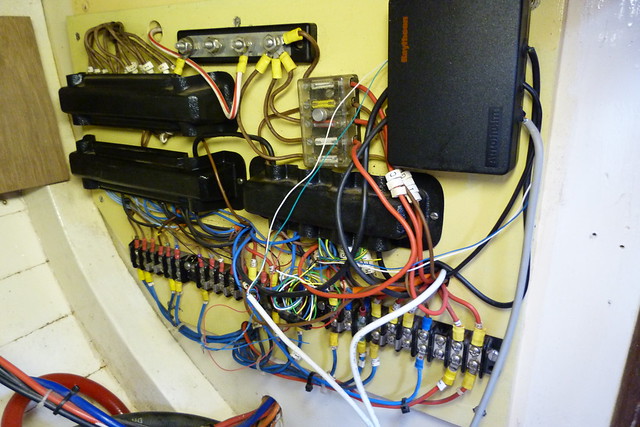 74
74


