Rappey
Well-Known Member
Yuasa Batteries Web site -
Discharge Testers
Discharge Testers
- Apply a current-load equal to half the SAE CCA cold cranking Amps for 15 seconds. For example, discharge a 600A battery at 300A. Observe the voltage during this time and record the voltage after 15 seconds. You will find the CCA in the Battery Specifications section of the Catalogue or on the label. Use an approved, calibrated tester.
- If the voltage after 15 seconds is stable and above 9.60V, the battery is in a satisfactory condition with no faults.
- If the voltage is below 9.60V after 15 seconds and it is unstable, normally falling quickly, the battery should be replaced.
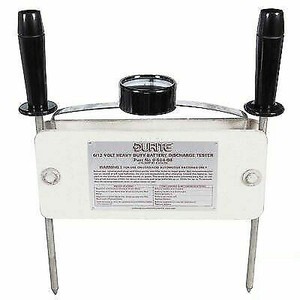
- ‘Drop testers’ have 2 spikes that are pressed into the tops of the battery terminals and a simple voltmeter to check the discharge voltage.
- We do not recommend the use of these testers as:
- They are potentially unsafe to use as most types produce a spark when the spikes are first pressed into the terminals.
- The discharge rate is similar for all sizes of battery, and so they do not give a good indication of battery-condition.
- They give misleading results on discharged batteries.
- The latest generation of testers is digital. Examples are Midtronics and Bosch testers. These will give an immediate decision on about 80 per cent of batteries in service, including flat ones. In the remaining 20 per cent of cases, the batteries need recharging before testing.
- These testers show whether the battery is in a good, charged condition, whether it is discharged or whether it needs replacing.
- Note. This is the preferred method of checking batteries as it does not take any charge out of the battery. It is also easier, quicker and safer.