Basic Electrical Advice - Start Key Switch In the Scheme of Things

Hudson1

New Member
Joined
18 Dec 2019
Messages
7
Location
Brighton
Visit site
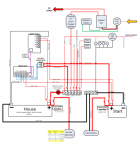
Been putting together a wiring diagram for re-wire overhaul and been researching and hopefully learning as I go. One of the basic missing pieces of the jigsaw for me is "how / where does the ignition switch fit into the wider picture". Where is the best place for it to draw it's power from?
I attach the diagram I've put together so far. It's pieced together almost parrot fashion from various existing advice across the wonderful web world. If there's anyone with electrical experience who could spare time to comment on any of it, what have I got wrong/could do better etc I'd be extremely grateful. I think I'm happy with most of it (although still working out some exact wire gauges and fuse sizes) but the main "blind spot" for me right now is where the ignition switch should fit into the picture. I've had a go in the diagram but it doesn't feel right. Honestly...grateful for all comments, good, bad, ugly or other. Thanks guys.
 

Attachments

Sorry I could not get the PDF to work. However "ignition switch is really the power supply to engine instruments starter relay and alternator excitation. it will normally be supplied by the battery used for engine start. So not from normal domestic supply buses for lights etc. ol'will
 
Sorry I could not get the PDF to work. However "ignition switch is really the power supply to engine instruments starter relay and alternator excitation. it will normally be supplied by the battery used for engine start. So not from normal domestic supply buses for lights etc. ol'will

Why can't you get PDF to work? I'm not having any trouble? (Only joking!)

I've only just switched (two months ago) to Windows 10 and it is an absolute stuff-up....
When they tell you to press Windows Logo/Shift/"S" that's 1970s style:mad::mad::mad::mad:


:mad:CIRCUIT DIAGRAM Annotation 2019-12-19 135331.png
 
Last edited:
but the main "blind spot" for me right now is where the ignition switch should fit into the picture. I've had a go in the diagram but it doesn't feel right.
As mentioned above, the 'ignition' switch would normally be fed from the starter battery as a part of the engine harness. On my engine the harness takes off from the positive post on the starter solenoid and there is a 40A fuse inline for this feed.
 
If I've understood things correctly, the starter battery will be charged via the Smart Bank. Personally, I'd be inclined to wire the alternator directly to the start battery and the domestic through the Smart Bank, which I presume to be a clever VSR. Should it fail, at least the start battery will be charged. Dim lights are an inconvenience, a flat starter battery is a show stopper.

For the "ignition" switch, you need a wire from the start battery isolator switch to the input of the switch, then from the "ignition" terminal to the charge warning light and thence to the field terminal on the alternator, plus feeds to oil pressure and temperature gauges/lights. You also want a wire from the start terminal on the "ignition" switch to the starter solenoid (mine goes to a relay and the relay energises the solenoid)

Incidentally, if you're buying everything, as long as your start battery isolator is below, there's no great advantage to having a key in the cockpit. I have a simple on/off switch for the ignition and a push button for the starter in the cockpit. I'm a firm believer in having the engine start controls to hand in the cockpit, where you can get to them in a hurry, rather than below.
 
If I've understood things correctly, the starter battery will be charged via the Smart Bank. Personally, I'd be inclined to wire the alternator directly to the start battery and the domestic through the Smart Bank, which I presume to be a clever VSR. Should it fail, at least the start battery will be charged. Dim lights are an inconvenience, a flat starter battery is a show stopper.

For the "ignition" switch, you need a wire from the start battery isolator switch to the input of the switch, then from the "ignition" terminal to the charge warning light and thence to the field terminal on the alternator, plus feeds to oil pressure and temperature gauges/lights. You also want a wire from the start terminal on the "ignition" switch to the starter solenoid (mine goes to a relay and the relay energises the solenoid)

Incidentally, if you're buying everything, as long as your start battery isolator is below, there's no great advantage to having a key in the cockpit. I have a simple on/off switch for the ignition and a push button for the starter in the cockpit. I'm a firm believer in having the engine start controls to hand in the cockpit, where you can get to them in a hurry, rather than below.
Thanks that makes sense my old boat the VSR was wired through the starter (primary) battery.
 
Your alternator positive should be connected to the positive terminal of the starter motor. That way, you use minimal cable and the cable from the battery to the starter is heavy gauge, so minimal voltage drop.

You show no engine battery isolator. This needs to be fitted to disconnect all loads from the engine battery, this is also where the "ignition" switch should be fitted. You don't so much need to worry about where the "ignition" switch itself is fitted, it more where the engine harness positive connection goes, that will automatically take care of the switch.

It would also be useful to fit a 3rd isolator switch and to connect it to the load terminal of each of the other isolator switches. This give you an emergency start option should the engine battery go flat and various other emergency features, such as being able to isolate a faulty battery and still use the system that it powered.
 
I may have missed something, but I can't work out how your alternator will charge your start battery?
It would send current into the house battery and the smartbank will send it straight through to the start battery (depending on the state of the start battery i.e if it's fully charged it won't send the current there) Thats certainly my understanding anyway.
 
If I've understood things correctly, the starter battery will be charged via the Smart Bank. Personally, I'd be inclined to wire the alternator directly to the start battery and the domestic through the Smart Bank, which I presume to be a clever VSR. Should it fail, at least the start battery will be charged. Dim lights are an inconvenience, a flat starter battery is a show stopper.

For the "ignition" switch, you need a wire from the start battery isolator switch to the input of the switch, then from the "ignition" terminal to the charge warning light and thence to the field terminal on the alternator, plus feeds to oil pressure and temperature gauges/lights. You also want a wire from the start terminal on the "ignition" switch to the starter solenoid (mine goes to a relay and the relay energises the solenoid)

Incidentally, if you're buying everything, as long as your start battery isolator is below, there's no great advantage to having a key in the cockpit. I have a simple on/off switch for the ignition and a push button for the starter in the cockpit. I'm a firm believer in having the engine start controls to hand in the cockpit, where you can get to them in a hurry, rather than below.
I should have mentioned, she's a smallish fishing boat, there's no below really. In any case I do like your idea with a switch and push button. I'll look into that. Does your switch turn the engine off? Can't see how that works? (Diesel)
Directing the alternator to the house was recommended by the chap that runs the MarineHowTo website. I no very little but all his advice seemed really sound and he certainly seems to know his onions. Anyone who hasn't seen his site should check it out, it's great, at least I think so. Its here >> Marine How To - DIY for Boaters
I then did find a paragraph in the documentation from Merlin about the smart bank and it also said this is most efficient. Its a good point you make though. I'll weigh that one up

Thanks also for explanation on the ignition switch wires from where to where. I think I'll make some additions to my diagram and factor all that in.


1576788613733.png
 
Your alternator positive should be connected to the positive terminal of the starter motor. That way, you use minimal cable and the cable from the battery to the starter is heavy gauge, so minimal voltage drop.

You show no engine battery isolator. This needs to be fitted to disconnect all loads from the engine battery, this is also where the "ignition" switch should be fitted. You don't so much need to worry about where the "ignition" switch itself is fitted, it more where the engine harness positive connection goes, that will automatically take care of the switch.

It would also be useful to fit a 3rd isolator switch and to connect it to the load terminal of each of the other isolator switches. This give you an emergency start option should the engine battery go flat and various other emergency features, such as being able to isolate a faulty battery and still use the system that it powered.
Yes thats it... where does the engine harness positive connection go... thats the question I should have been asking. Ok, so that goes to the terminal on the starter motor, gotcha. I suppose I got a bit hung up on the switch it's self because when I turn the key I want certain things to be live, instruments for example. Sounds like I need some more lines on my diagram! Thanks so much Paul. I'm learning a little bit more each week and hopefully eventually I'll actually know enough to be able to tackle the job.
 
By the way... has anyone else used the Merlin SmartBank and Smart gauge? I researched loads about normal battery monitoring and shunts etc until I came across the Merlin product. Then (again) the chap on the MarineHowTo website influenced me further. He did really extensive testing of it and was basically amazed how good it was. At this point I was sold!
 
Yes thats it... where does the engine harness positive connection go... thats the question I should have been asking. Ok, so that goes to the terminal on the starter motor, gotcha. I suppose I got a bit hung up on the switch it's self because when I turn the key I want certain things to be live, instruments for example. Sounds like I need some more lines on my diagram! Thanks so much Paul. I'm learning a little bit more each week and hopefully eventually I'll actually know enough to be able to tackle the job.

If you fit an engine battery isolator (must have really), the engine harness positive can be connected to the isolator or the positive terminal of the starter motor, whichever is more convenient. Many engines will come -pre-wired with the connection on the starter motor.
 
Last edited:
If you fit an engine battery isolator (must have really), the engine harness positive can be connected to the isolator or the positive termainl of the starter motor, whichever is more convenient. Many engines will come -pre-wired with the connection on the starter motor.
Yes I will take your council on the second isolator, don't know why I left it out really. Then harness to that most likely. Brilliant..thanks again.
 
Top