Baggywrinkle
Well-Known Member
Interesting .... I used the (Cyrix 230) combine function in anger on my last boat when the starter battery was only able to make the relay click. The button was at the helm, pushed it once and hit start again and off it went. Replaced the starter battery a few days later as it wasn't holding charge. It was very convenient. The wiring was of an appropriate guage for an engine start.I like them because they are reliable and work well, but not a fan of the Start Assist function. It's OK if the engine battery is slightly depleted, but not likely to start the engine if it's totally flat or faulty. I prefer the emergency switch in my schematics above as this can be used if the engine battery is totally flat or if a battery is faulty/shorted etc that battery (domestic or engine) can be isolated and the remaining battery used for both domestic and engine circuits to get you home.
I'm cautious about the switch arrangement because on my particular boats, the wiring was exactly like your first VSR diagram. My VSR was a Cyrix with the emergency start button wired up to a button on the helm. The battery isolators were out of the way and when on board, switched on and never touched.
If my incompetent crew were to have access to a combine switch, I can guarantee that at some point I'd get an accidental load dump as they tried to turn the combine off using the wrong switch sequence.
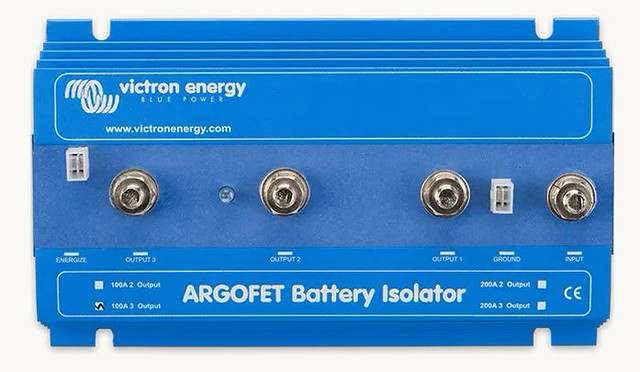
Your Argofet diagram prevents that by bypassing the switches so a load dump is avoided regardless of the switch positions.
Guess the OP has to pick his poison.