Basic Charging Circuit with 1-2-All Switch (with diagram)

OK, here's a diagram of how to use simple on/off switches, together with a diode splitter.

wiring3_zpsacdd1a9c.jpg

This looks like a very neat solution. Do you have a similar diagram for a twin engine setup?

 
Sorry - I didn't get any email reminders to these posts. I need to read through them and take a look at pvb's diagram. Thanks, all, for the discussion.

Re sourcing parts: we're supposed to be leaving India within the next week so importing items isn't an option. Stuff from USA or UK takes a couple of weeks (minimum) and import tax is 30%. I could source the part and get it sent to Male in the Maldives, but I don't yet have a delivery address. In short, I'll make do with what I have at the moment and address a complete solution when I get to Male.

If anyone wants to come out and spend a couple of weeks sailing Esper in the Maldives then maybe I could post the item to you to bring out? ;)
 
Last edited:
OK, here's a diagram of how to use simple on/off switches, together with a diode splitter.

wiring3_zpsacdd1a9c.jpg

I have pvb's circuit (without the emergency switch). To Vic's point in #12, I continue to ponder which battery to sense (I have a Valeo alternator with the splitter mounted on the back of the alternator with a post-diode sensing wire feeding the alternator regulator).

Whichever battery is sensed, the other will probably be undercharged.
If the emergency switch is closed for charging then both batteries will charge well but the isolation of the crank battery is compromised. (As an ex-satellite designer, I loathe possible single points of failure).

QUESTION: Is there a least worst connection for the sense wire (or am I missing something)?

Regards Bob
 
Would love to, but vivere might feel neglected. I've just done some rewiring myself and we are set up exactly as PCB's diagram. We use a fancy sterling low loss splitter, and an alternator controller, but that makes no difference to the basic wiring. You would still have the problem of different battery types being on the same charging regime. I would be inclined to change the start battery to match the domestics, but I know the difficulties you had getting the domestics!

Regards

Neil
 
I have pvb's circuit (without the emergency switch). To Vic's point in #12, I continue to ponder which battery to sense (I have a Valeo alternator with the splitter mounted on the back of the alternator with a post-diode sensing wire feeding the alternator regulator).

Whichever battery is sensed, the other will probably be undercharged.
If the emergency switch is closed for charging then both batteries will charge well but the isolation of the crank battery is compromised. (As an ex-satellite designer, I loathe possible single points of failure).

QUESTION: Is there a least worst connection for the sense wire (or am I missing something)?

Your sensing lead should go to the house batteries, as they are more likely to need charging.

If you have a diode splitter, closing the emergency switch won't make any difference to the charging efficiency.
 
More an anecdote than twopenny-worth but;

Our old bus came with very detailed, complex instructions about which switch to slide where when the engine was on, when the engine was off, when the boat was left, bla bla bla. It always worried the bejasis out of us and we'd often find ourselves padding about starkers in the middle of the night checking we had not forgotten to switch something when the engine went off...

A small fire gave us cause to have the boat checked by an electrician who told us that all the instructions were baloney and our 12BO switch had no bearing when the engine was running or not. Our 12BO switch only controls the input to the batteries from the shore power charger. The engine has two alternators permanently charging each bank via regulators (from the Arc), he said.

We can link the batteries for emergency starting via a difficult to get to procedure which protects it from mistakes.

However, despite the electrician's assurance that the 12BO switch does nothing when the engine is running, I have noticed that the two banks are linked when set to 1+2 because if the engine is on, the charge to the house batteries is higher (off or 1 or 2 it is 'normal') or if the house bank is fully charged from the wind gen, and the 1+2 is then selected, the engines batteries will draw some juice from house.

It seems to works, but something feels a bit out of whack about it all which is partly why we had the whole thing checked by a spark. Charging and batteries are the bane of my sailing life!
 
More an anecdote than twopenny-worth but;

Our old bus came with very detailed, complex instructions about which switch to slide where when the engine was on, when the engine was off, when the boat was left, bla bla bla. It always worried the bejasis out of us and we'd often find ourselves padding about starkers in the middle of the night checking we had not forgotten to switch something when the engine went off...

A small fire gave us cause to have the boat checked by an electrician who told us that all the instructions were baloney and our 12BO switch had no bearing when the engine was running or not. Our 12BO switch only controls the input to the batteries from the shore power charger. The engine has two alternators permanently charging each bank via regulators (from the Arc), he said.

We can link the batteries for emergency starting via a difficult to get to procedure which protects it from mistakes.

However, despite the electrician's assurance that the 12BO switch does nothing when the engine is running, I have noticed that the two banks are linked when set to 1+2 because if the engine is on, the charge to the house batteries is higher (off or 1 or 2 it is 'normal') or if the house bank is fully charged from the wind gen, and the 1+2 is then selected, the engines batteries will draw some juice from house.

It seems to works, but something feels a bit out of whack about it all which is partly why we had the whole thing checked by a spark. Charging and batteries are the bane of my sailing life!

Well yes you can use a 12BO switch to control the output from a charger ..... But the snag could well be the "both" setting. It effectively links the batteries and could result in a dangerously high current flowing in the connecting wiring if it is in the "both" position when the engine is started. Fuses would protect the wiring but blowing them would be a nuisance. Vital I would say that the wiring should be heavy "battery lead" cable than could safely carry starter motor currents.

Obviously in the "both" position the batteries will be charged in parallel from the other charging sources. Wind solar and alternators.

A change over switch without a "both" position would be better
 
I think it was probably me who said about controlling the output with the 12bo as that is the way I have always set my boats up. The output goes to the starter and nowhere else. The diode splitter sends the charge to both batteries and the alternator charge is regulated through a Stirling alternator regulator with the sense taken through from the house bank. As the output only goes to the starter I can't see a problem with high current due to the batteries being paralleled. It would only be in that position in an emergency anyway and I have never had the need to select anything other than the starter battery.
 
I think it was probably me who said about controlling the output with the 12bo as that is the way I have always set my boats up. The output goes to the starter and nowhere else. The diode splitter sends the charge to both batteries and the alternator charge is regulated through a Stirling alternator regulator with the sense taken through from the house bank. As the output only goes to the starter I can't see a problem with high current due to the batteries being paralleled. It would only be in that position in an emergency anyway and I have never had the need to select anything other than the starter battery.


No problem with using the 12BO switch in that way. All your wiring to and from the switch is hopefully heavy battery cable that will safely carry starter motor currents.
 
A great thread and a very simple diagram. While this is topical, and to save me posting another thread, can any of you recommend a good online store for battery leads? I would wish to avoid buying a heavy duty crimper so any of you that can recommend one which crimps terminals that would be fantastic!
 
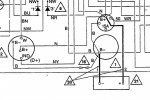
Going back to basics, looking at pvb's schematic: how does that tie in with the circuit diagram for my ignition circuit?

Perkins-Prima-500-Wiring-Diagram-B-.jpg

Here you can see the engine battery goes to the solenoid (I am assuming that this is the same as 'starter' on pvb's diagram), and the alternator goes to the same point.

Also, isn't the alternator (regulator) now trying to charge two battery banks at the same time? Surely what I want to be able to do is tell the alternator which bank to charge. Over 24 hours I might want to charge my starter for 6 hours and then the remaining 18 hours put into the house. I have sealed lead acid starter and open lead acid house.
 
A great thread and a very simple diagram. While this is topical, and to save me posting another thread, can any of you recommend a good online store for battery leads? I would wish to avoid buying a heavy duty crimper so any of you that can recommend one which crimps terminals that would be fantastic!
Might be worth checking Furneaux Riddall although they don't list made up cables on the website.

Merlin Powerstore http://www.powerstore.co.uk/?id=53 list ready made cables.

Any decent auto electrician should be able to make them up for you, but maybe not in tinned cable .
 
Going back to basics, looking at pvb's schematic: how does that tie in with the circuit diagram for my ignition circuit?


Here you can see the engine battery goes to the solenoid (I am assuming that this is the same as 'starter' on pvb's diagram), and the alternator goes to the same point.

Also, isn't the alternator (regulator) now trying to charge two battery banks at the same time? Surely what I want to be able to do is tell the alternator which bank to charge. Over 24 hours I might want to charge my starter for 6 hours and then the remaining 18 hours put into the house. I have sealed lead acid starter and open lead acid house.

The supply for your ignition would be taken from the supply to the starter solenoid.

PVB's circuit would charge both batteries simultaneously and the charge current would be distributed appropriately between them.

If you want manual control then you need manual switching rather than the diode splitter.
 
So how does PVB's solution know when to stop charging the starter but continue charging the house? If the Balmar is installed won't it get confused if it's trying to boost the house and float the starter?
 
So how does PVB's solution know when to stop charging the starter but continue charging the house? If the Balmar is installed won't it get confused if it's trying to boost the house and float the starter?

No, the Balmar sensing lead should be on the house batteries. Batteries accept charge according to their needs. The starter battery will be fully charged most of the time and won't accept much current. The bulk of the current will go into your house batteries.
 
Many thanks for the insight with our system Vics.

It had not been my intention to hi-jack Jamie's thread.

Please excuse.
 
Is it hi-jacking to ask what does 100A@ 24V mean on an isolation switch? Does that mean it can take 200A @12v?
 
Top