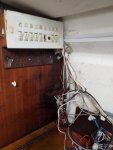
Bad deck leak onto switch panel..help!!

I can't quite get my head around a long-term owner committing this kind of bodge. I understand that you're desperate to get the water off the nav table, but is there really no one around to help you get the lining down to do the job properly?

Your boat of course, but it sounds like a terrible mistake to me - if you haven't been under the lining for 40 years, then you haven't rebedded the deck hardware for 40 years, so it probably ALL leaks.
 
Not budging if done effectively. I injected my decks with resin forty years ago and 28000 miles later the repair has held


TE="Boater Sam, post: 8138173, member: 178021"]
A sad thing to do to a nice old boat. Bodging like this is not looking after her.
Remind me never to buy a boat off you!
[/QUOTE]
 
Not budging if done effectively. I injected my decks with resin forty years ago and 28000 miles later the repair has held


TE="Boater Sam, post: 8138173, member: 178021"]
A sad thing to do to a nice old boat. Bodging like this is not looking after her.
Remind me never to buy a boat off you!
[/QUOTE]
With all due respect to yourself. It would seem that despite all the advice given on here, you are set firmly on injecting foam. Perhaps you can post the results of your success, or otherwise!
 
With all due respect to yourself. It would seem that despite all the advice given on here, you are set firmly on injecting foam. Perhaps you can post the results of your success, or otherwise!
[/QUOTE]
 
O yee of little faith! Hah! Will do. I won't attempt anything till the Spring. Rest of the boat is dry so I will only be injecting into a relatively small area. Plan is to drill a few easily plugged smaller pilot holes first. and see how much water leaks out. The problem with injecting foam is it might not expand into all the voids. The deck is a solid moulding fixed to a solid internal moulding. The leak is exiting from this lateral join. So I will be working carefully.
 
Personally I would carefully cut the headlining out with a Dremel and investigate where the water is coming from. An alternative if you think it might be from the cap rail would be to seal the joint to the hull both inboard and outboard and see if it stops the leak.
 
Personally I would carefully cut the headlining out with a Dremel and investigate where the water is coming from. An alternative if you think it might be from the cap rail would be to seal the joint to the hull both inboard and outboard and see if it stops the leak.
Unfortunately the headlining of this model is of a mould similar to the decking. Cutting it out in this manner would seriously deface the interior. I'll post some images next trip to boat.
 
Unfortunately the headlining of this model is of a mould similar to the decking. Cutting it out in this manner would seriously deface the interior. I'll post some images next trip to boat.

If you cut it out in panels you should be able to replace it without too much cosmetic damage, the bodge you are planning is in the not to distant future likely to seriously compromise not on the internal cosmetics but the structure of the boat as the bulkheads rot away.
 
A good leak detection system is to add some air pressure using a leaf blower or even vacuum cleaner on blow. Tape up any potential leak points such as wash boards. and blow the air in from the outside. You don’t have to make the yacht completely air tight, but simply to reduce the air loss so the interior is slightly pressurised.

Leaks will show up on the outside when sprayed with soapy water.

It is an excellent method of tracing difficult lto isolate leaks such as those from the hull/deck joint. Your electrical panel will not be at any further risk of damage using this method.
 
Last edited:
No idea what your headlining is like but water can wander a surprisingly long way behind either cloth or liner panels so it may not be getting in where you expect. On my boat I found some old deck fitting fasteners that had been put in with sealant were old enough that the sealant had perished so I second VicS's suggestion of re-fastening with new sealant.
I fit deck fittings withour using sealant!! Sealants always seem to fail, and its such a pain to find the leak and reseal it etc.

Instead, I recomend using butyl tape. It always remains flexible, never goes off, and can be reused if needs be.
 
A good leak detection system is to add some air pressure using a leaf blower or even vacuum cleaner on blow. Tape up any potential leak points such as wash boards. and blow the air in from the outside. You don’t have to make the yacht completely air tight, but simply to reduce the air loss so the interior is slightly pressurised.

Leaks will show up on the outside when sprayed with soapy water.

It is an excellent method of tracing difficult lto isolate leaks such as those from the hull/deck joint. Your electrical panel will not be at any further risk of damage using this method.
Ive never heard of that before, but sounds like a great idea. You could apply some bubble leak tester to the suspect areas to enhance your detecting capability (often a weak washing up liquid solution works well)

Worth findng leaks and repairing properly. You wouldnt want the the hull deck joint failing completly and unexpectedly when beating to windward towards the finish line in your club regatta! Just imagine the slagging you'd get in the bar after!! 😜
 
If the head linings are moulded, the leak above could be anywhere and the foam you plan injecting may not get anywhere near the source and you end up with a void full of water until it finds another exit!
 
If you cut it out in panels you should be able to replace it without too much cosmetic damage, the bodge you are planning is in the not to distant future likely to seriously compromise not on the internal cosmetics but the structure of the boat as the bulkheads rot away.
Or replace with an access hatch. Would make future checks so much easier (+ wire drawing and then some).
 
If the head linings are moulded, the leak above could be anywhere and the foam you plan injecting may not get anywhere near the source and you end up with a void full of water until it finds another exit!
Yes. My initial plan is to treat the area above my electrics and navigation area. That's where the water is doing the most damage. At the same time I'll remove the three chainplates and rebed. Possible leak coming from this area.
 

Attachments

  • IMG_20230212_135235132.jpg
    IMG_20230212_135235132.jpg
    1.9 MB · Views: 43
Yes. My initial plan is to treat the area above my electrics and navigation area. That's where the water is doing the most damage. At the same time I'll remove the three chainplates and rebed. Possible leak coming from this area.
I would sort out the chain plates first and see whether that stops the leaks before putting in any foam. Next job the wiring.
 
Unfortunately the headlining of this model is of a mould similar to the decking. Cutting it out in this manner would seriously deface the interior. I'll post some images next trip to boat.
Having seen the photos you posted on another forum, I would say, IMHO, that aesthetics don't seem to be your primary focus, and would advise that you bite the bullet and cut out an access panel in the headlining to facilitate the repair. You can subsequently make good the cutout with a varnished ply cover, or alternatively lay one up in GRP, you could even take a mould off the existing surface so that the panel conforms to the shape of the substrate. That's the course of action I will be taking, in the rehabilitation of a saggy deck problem on the coachroof of my Dufour.
 
Last edited:
Top