Are small pram dinghies the work of the devil ?

Applescruffs

Well-Known Member
Joined
11 Dec 2010
Messages
548
Location
Here there and everywhere
Visit site
I’m on the cusp of buying a 6ft rowing pram dinghy as a tender, I’ve only got about 100 yds to row on the River Blackwater to my boat and would want to tow it to enable me to anchor and reach shore when required

I’ve been told that I will die the first time I take it out as they are so unstable, any advice please as I’m too young to die !!

PS: I’m almost always single handed and prefer to row although I do have a 2hp available.

PPS: I am definitely a fair weather sailor so no heroics in f5 envisaged.P

Cheers

Richard
 
I’m on the cusp of buying a 6ft rowing pram dinghy as a tender, I’ve only got about 100 yds to row on the River Blackwater to my boat and would want to tow it to enable me to anchor and reach shore when required

I’ve been told that I will die the first time I take it out as they are so unstable, any advice please as I’m too young to die !!

PS: I’m almost always single handed and prefer to row although I do have a 2hp available.

PPS: I am definitely a fair weather sailor so no heroics in f5 envisaged.P

Cheers

Richard
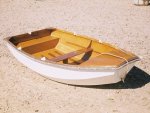
6 ft is very small. Mine is 8ft

Nice full sections to the bilges help with stability ( mine with a double chine hull looks pretty but is unstable)

c9d48597.JPG

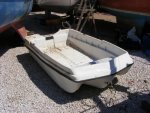
This grotty old thing, which I was given, is very stable

DSCF1200.JPG
 
Last edited:
6ft is a little too small, and likely to be tippy.

New EU rules are coming in that dinghies must have buoyancy chambers, etc, etc.

I row a similar distance to my mooring, and have an 8ft GRP chine dinghy with a proper (pointed) bow. Takes two person and baggage, or three persons.

For towing and cruising, an inflatable is more useful than a rigid dinghy. I use my daughter's Tinker, which rows very easily, takes an enormous load, and can be carried on board semi-inflated, ready for action as a liferaft if needed.
 
Ive got an Avon redstart inflatable, rows like a pig, and an 8ft ‘conventional’ grip dinghy that is getting heavy to pull up the ramp, so I was hoping that the small pram would be OK just for the row to the boat?

The Avon would probably be stowed on board, as you say, for use as a life raft/ emergency

Cheers for the comments so far,

Richard
 
No matter how good your personal hygiene the pram will try to have you bathe. Falling in from one is easier than falling off a log.

Also they are heavy and make really good sea anchors when towing them.
 
They don't have to be unstable; it all depends on the design.

This is Murphy. Two buoyancy volumes. One is the seat at the back and one is at the front in which I can insert a short mast for a dipping lugsail. In the middle there is a wooden seat running fore-and-aft that is supported by a dagger-board case. Both buoyancy spaces have a watertight inspection 'hatch' and also provide a safe and dry place for such things as mobile phone, wallet, etc., when going ashore.

jTdYrZC.jpg


H1rY0Ft.jpg


I have filled Murphy with seawater and it was still afloat (awash) with me sitting inside. I can stand on the turn of the bilge but it still will not flip unless I step on the gunwale.

Murphy is only 2030mm long and used to hang on Davits when I had a Centaur. On my present boat he lives upside down on the fore-deck.

p.s. I guess one could say "It's the work of the Dragon!" ;)
 
Last edited:
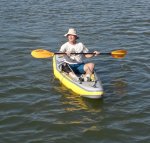
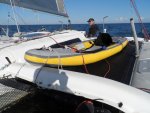
Kayak. Harder to board, but faster and quite seaworthy underway.

I've tested many. The Walker Bay Aris Play is tough, very firm inflatable I've learned to like. Very much like a hard kayak, and built as strong as an inflatable dinghy. Not a toy, but only 14 pounds!
3.%u00252BAiris%u00252Bwith%u00252Bknee%u00252Bbraces.jpg
aris%u00252Bsport%u00252Bon%u00252BF-24%u00252B1.jpg

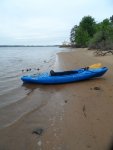
That said, a good hard kayak is better.
warehouse%u00252Bcreek%u00252Bbeach.jpg
 
As long as not wanting to stow aboard a boat less than 40' - that's what inflatables are for - as a general safe - nice to row - a reasonably light grp 8'6 " stem dinghy has proven best for me, but I did have to search far and wide and the builders are bust now like most others.

A Mirror is great to row in sheltered waters and obviously has the advantage one can stick the rig etc on and it's quite a fun sailing boat, but against that there's the weight and maitenence of wood.

Also as tenders will be left ashore ( obviously chained down I hope ) and probably bows up, 4 things;

1, fit a good £14.00 brass socket and bung - always remove the bung when leaving the dinghy as a deterrent to thieves - I paint a big arrow in the bilges to point out the hole to any potential thief - if you can have one of the red caps from a WD40 can in your car, these make perfect sockets for the brass plugs so you know you've always got it with you.

2, if the tender is to be kept ashore, maybe over winter too, bows up; there must be drainage through the aft buoyancy tank /seat which also needs to be very well sealed or the tank will fill.

3, paint the bottom yellow, so if one cocks it up the upturned hull can be seen in waves; this worked out very handy for someone who bought my old tender then capsized it on a windy day in a wide bit of the harbour, the yellow was spotted by a rescue boat.

4, I bolted on 20' of 3mm flexible stainless wire swaged on a hard eye on the boat, with a hard eye the other end so I can padlock it to slip ringbolts for a nip to the shops, garage, club, pub etc; it wouldn't stop pro thieves but will stop the usual problem of local urchins fancying a joyride then casting the boat adrift - taking the brass bung with you helps a lot in this respect too !

My overall advice would be a tender that is slightly on the larger heavy side - say 9' stem or pram bow -- will keep you and your family a lot safer out on the water where it matters.

I have lost count of the times people I've known with £100,000+ boats have tiny lethal cockleshell tenders ' in case it gets stolen ' - well there are usually ways to chain and padlock dinghies in pens.
 
When the small pram tips you out, and assuming that it does not sink, and that the oars dont float away,can you bale it and re-board it?

If you cannot, it is LETHAL.

Try this in August off a sheltered beach or hard. You will find it very educational.

I am devoted to the 9ft Nutshell stem dinghy designed and originally sold as a kit by Malcolm Goodwin. I tried it and it passed. I don’t think a seven foot boat would pass.
 
I am used to lots of sailing dinghies where a ' capsize, get back in and carry on ' is nothing; but I haven't found a standard small open rowing boat one can do this with, pram or stem doesn't matter - it's a matter of the centre / daggerboard to apply weight on, and buoyancy of a mast, both items being absent from small rowing boats let alone transom scuppers etc.

Everyone I know who has capsized a normal 8-10' tender inc self have just been left hanging onto the upturned hull, one good reason I suggested painting the bottom yellow.

Of course it should go without saying the thing should have decent buoyancy tanks, and like a racing dinghy do a capsize test off the slip on a warmish day, as a trail of bubbles from the tank seams is not what one wants to see - ask me how I know ? ( old wooden International 14, and yes an intentional test ) :rolleyes:

A link to the Nutshell and how one rights and boards it after a capsize would be very interesting please.
 
I used a 8ft pram plywood dinghy for many years for access to my swing mooring. (rowing only) That never capsized. The design was a Sabot sailing dinghy. However it has been replaced by a 10 ft ali dinghy which has been capsized twice by people not getting into the dinghy correctly from the big boat. In each case the person ended up in the water and last time we were able to mostly drain it by lifting one side from the big boat. Both types rowed well, however in storm conditions you can't row well against a strong wind and waves. No neither were wet except perhaps with 5 people on board. Gunwhales and bow too low.
Only once has the bigger dinghy been towed froma 27ft boat no problems. Just give it a go olewill
 
I’m on the cusp of buying a 6ft rowing pram dinghy as a tender, I’ve only got about 100 yds to row on the River Blackwater to my boat and would want to tow it to enable me to anchor and reach shore when required

I’ve been told that I will die the first time I take it out as they are so unstable, any advice please as I’m too young to die !!

PS: I’m almost always single handed and prefer to row although I do have a 2hp available.

PPS: I am definitely a fair weather sailor so no heroics in f5 envisaged.P

Cheers

Richard
All very small boats can be capsized.
If you need to every take a second person, a 6ft dinghy is very short, and very vulnerable to capsize while the second person is either boarding the yacht or the dinghy.
The more rounded the hull section, the more it will tip as you move your weight off centre.
A flat bottom hull has a lot more form stability, but more drag when rowing.
A longer boat is less drag when rowing.
You can get away with a small tender if you can bring your yacht to a pontoon to load with passengers and luggage. If that's not the case, get something as big as you can.
There are lots of 10 to 12 ft grp dinghies about.
That is about the minimum for open water, anything smaller, people get very wet at the first bit of wash or wave.

Some tenders are built far too heavy, I had a 13ft dingy which I could easily pull up the the slip.
Some become tippy if you are singlehanded and you are at the stern fiddling with the outboard.
 
Just to add to the discussion, I use a canadian canoe as my tender. They're much more efficient to paddle in a blow or calm conditions, you're facing forwards so can see whats about to hit you, and they create less drag when being towed. My 15 ft plastic job will carry two adults and gear with ease and I find it much easier to get on and off it to/from boat.

Best of all though is having a gentle paddle around the moorings or anchorage during a calm sunset just soaking it all up. Priceless.
 
I bought a ten foot dinghy after a scary experience down the end of C row in an eight foot! It can get a bit choppy there! Now I have moved up a bit I am thinking of an eight footer as it is a bit heavy to handle. I wouldn’t go smaller than that though. On a drying mooring you could always walk out..............:)
 
I am used to lots of sailing dinghies where a ' capsize, get back in and carry on ' is nothing; but I haven't found a standard small open rowing boat one can do this with, pram or stem doesn't matter - it's a matter of the centre / daggerboard to apply weight on, and buoyancy of a mast, both items being absent from small rowing boats let alone transom scuppers etc.

Everyone I know who has capsized a normal 8-10' tender inc self have just been left hanging onto the upturned hull, one good reason I suggested painting the bottom yellow.

Of course it should go without saying the thing should have decent buoyancy tanks, and like a racing dinghy do a capsize test off the slip on a warmish day, as a trail of bubbles from the tank seams is not what one wants to see - ask me how I know ? ( old wooden International 14, and yes an intentional test ) :rolleyes:

A link to the Nutshell and how one rights and boards it after a capsize would be very interesting please.

http://www.barrowboat.com/new/nutshell.htm

Mine has inflated buoyancy bags under the side benches; you will know why! Also handrails as bilge keels.

Righting her from fully inverted without the dagger board in was tricky, and was done by pulling down on a bilge keel. Reboarded over the transom in the normal way. I think a small pram would submerge the transom.

Which is your vintage 14? Am just coming to the end of getting Galatea K478 going again. No way I will trust her vestigial built in tanks!
 
Top