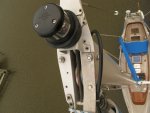
Aquasignal series 34 tricolour/anchor light not all it's cracked up to be

geem

Well-Known Member
Joined
27 Apr 2006
Messages
9,057
Location
European side of the pond
Visit site
My anchor light failed. I went up the mast and took the unit off. Back at the ground I tested the anchor light and it's no good. The tricolour bit works fine. I thought is would strip it down seeing as I was in the Caribbean and miles from anywhere. The unit strips down easily with small bolts holding the sections together but the sections are not sealed against moisture. The actual LEDs are sealed but the unit let's water in.
The terminal block was corroded due to this moisture ingress. The cable is glanded but what's the point when the little black sections have no form of seal.
The unit was made in March 2013 so not old and shouldn't have failed. You would have hoped they would send me a new one.
I emailed Aquasignal in USA since they were closer to me. They said return it to where you got it from! I explained that that wasn't possible as it would leave me with no nav lights. They said buy a new Aqusignal unit in Caribbean then try and sort your warranty in Europe. I asked them why the unit wasn't sealed again moisture and why the terminal block was corroded on a marine light. They didn't like that so have not replied.
Why would I buy another item that it poorly made and clearly doent have good service back up or worldwide warranty? Any advice on a decent LED masthead light welcomed. I had high hopes for this unit but now very disappointed by all aspects of the service back up and unit build quality.
 
Aquasignal isn't one of the cheap and nasty brands either. I've also heard that despite the premium price, Lopolight aren't up to much in the reliability stakes either....I believe there is a thread here on it somewhere...
 
I've had great results with Bebi, which (apparently unlike Aquasignal) are designed to be soldered or crimped directly to the supply cable so that the joint can be fully sealed inside adhesive-lined heatshrink. The light itself is a solid block of resin with the tips of the LEDs poking out.

Unfortunately, they're not made any more :(

Pete
 
Not looked at the LED Aquasignal lights but must admit not impressed with the latest series 40 lights.

My original tricolour was probably their first design type. Quite satisfactory, although not water tight, with no corrosion problems in its 20 year life

The replacement is an invention of the devil. Fiddle-ass thing. Difficult to assemble on the cabin table let alone up the mast. Don't expect any corrosion problems though.
 
My original Lopolight failed after a couple of years. When I took it down I could see no evidence that the cause was water ingress. The replacement appeared to be better sealed against water, with long tails for electrical connection well away from the unit. To their credit, Lopolight replaced the first one FOC and didn't want the old one back, only its serial number.
 
My anchor light failed. I went up the mast and took the unit off. Back at the ground I tested the anchor light and it's no good. The tricolour bit works fine. I thought is would strip it down seeing as I was in the Caribbean and miles from anywhere. The unit strips down easily with small bolts holding the sections together but the sections are not sealed against moisture. The actual LEDs are sealed but the unit let's water in.
The terminal block was corroded due to this moisture ingress. The cable is glanded but what's the point when the little black sections have no form of seal.
The unit was made in March 2013 so not old and shouldn't have failed. You would have hoped they would send me a new one.
I emailed Aquasignal in USA since they were closer to me. They said return it to where you got it from! I explained that that wasn't possible as it would leave me with no nav lights. They said buy a new Aqusignal unit in Caribbean then try and sort your warranty in Europe. I asked them why the unit wasn't sealed again moisture and why the terminal block was corroded on a marine light. They didn't like that so have not replied.
Why would I buy another item that it poorly made and clearly doent have good service back up or worldwide warranty? Any advice on a decent LED masthead light welcomed. I had high hopes for this unit but now very disappointed by all aspects of the service back up and unit build quality.

Worrying information. Is it this type of unit (3343-048) with Quickfit?
http://www.toplicht.de/en/shop/lamp...led-navigationslichter-mastopp-aqua-signal-34
When you say that the terminal block is corroded, are you then referring to where the cable is connected in the Quickfit base? I am not sure this compartment is meant to be totally waterproof (seem to even remember drain holes, but could be wrong). Anyway, the idea is that the light itself should be easily removable from the base, only held in place by the twist of a ring. So it would be difficult to get such a joint totally waterproof.
Still bad with no working world warranty.
I have the series 32 tricolour unit (no anchor light) since maybe five years. No problems to date. (Those three screws must be sealed, or I would be in trouble...)
http://www.ybw.com/forums/images/attach/jpg.gif
 

Attachments

  • tricolour.jpg
    tricolour.jpg
    44 KB · Views: 33
Last edited:
I have an aqua signal steaming & deck light, fitted new in 2011. Neither the steaming or deck light worked this season. Mast is down at the moment so I was able to take the unit off to see what the problem was. I instantly noticed that the deck light had no lens cover and the bulb was badly corroded. The steaming light looked ok although the corrosion from the deck light part had spread up into the steaming light causing a bad connection. I assumed that the lens cover must have dropped out causing the problem. The local chandlery had 2 almost identical units, one made by Aqua signal for £80 and another non branded for £25. The cheaper unit had a sealed halogen deck light. I was stunned to open the Aqua signal to find that there was no lens cover on a brand new fitting so the deck light bulb and fitting is permanently exposed to the harsh elements! I'm not surprised it has failed after only a few years.
 
I also have a 32 series masthead light but with the anchor light. Fine so far (three years or so). Anyone know why they changed the design? Mine performs well and I see several other bluewater cruisers have them fitted. Mine was cheap "old stock" when the 34 series replaced it. Not sure you'll find one now though.
 
I fitted a new series 34 last winter, the anchor light failed mid season, although the tri-colour worked OK.

I complained and was sent a new one free of charge without hesitation.

I haven't had chance to look at the old one, the yard stored it away when they took the mast down, it'll be on the boat in one of the many boxes of stuff on the boat.

I obviously wasn't impressed by the "reliability" and noticed that the new unit is a slightly different design.

Which makes me think, they know about the problem and have tried to fix it.
 
I seem to recall from some years ago it being suggested that the lack of sealing to the lamp cavities(?) on many brands of lights was deliberate - as it was almost impossible to be sure you could keep all moisture out (at a reasonable price and allowing access for bulb replacement), it was best to ensure that moisture could also escape. I would have thought, though, that an LED lamp could be a solid block of resin and hence waterproof.

It's also the case that several brands have no lens to the deck light. Mine has no lens, is years old, and works fine.
 
I seem to recall from some years ago it being suggested that the lack of sealing to the lamp cavities(?) on many brands of lights was deliberate - as it was almost impossible to be sure you could keep all moisture out (at a reasonable price and allowing access for bulb replacement), it was best to ensure that moisture could also escape.

Makes sense - if you're going to waste your battery running a 25-watt heater up there, when you do shut it down I imagine the air in the enclosure will contract a fair bit, and it would need very careful sealing to prevent it sucking in potentially-wet air from the outside when that happens.

I would have thought, though, that an LED lamp could be a solid block of resin and hence waterproof.

Certainly can - even a gang of Fijians in a palm-thatched shack in the jungle can manage that, hence my previous post :)

Pete
 
I seem to recall from some years ago it being suggested that the lack of sealing to the lamp cavities(?) on many brands of lights was deliberate - as it was almost impossible to be sure you could keep all moisture out (at a reasonable price and allowing access for bulb replacement), it was best to ensure that moisture could also escape. I would have thought, though, that an LED lamp could be a solid block of resin and hence waterproof.

It's also the case that several brands have no lens to the deck light. Mine has no lens, is years old, and works fine.

The LEDs are set in resin but the light unit is not sealed from water ingress. If that is the design intent then fine but to have the terminal block corrode to the point where the screws won't turn is very poor.
 
I seem to recall from some years ago it being suggested that the lack of sealing to the lamp cavities(?) on many brands of lights was deliberate - as it was almost impossible to be sure you could keep all moisture out (at a reasonable price and allowing access for bulb replacement), it was best to ensure that moisture could also escape. I would have thought, though, that an LED lamp could be a solid block of resin and hence waterproof.

It's also the case that several brands have no lens to the deck light. Mine has no lens, is years old, and works fine.

I was under the impression that it was to prevent the bulbs from overheating but could be wrong. Maybe it's both reasons.
 
Top