

You are using an out of date browser. It may not display this or other websites correctly.
You should upgrade or use an alternative browser.
You should upgrade or use an alternative browser.
Anyone Seen This News Story (South Atlantic Sinking)?
- Thread starter savageseadog
- Start date

Twister_Ken
Well-Known Member
hardly news. last year

Lady Campanula
N/A
I like the sound of them.
And if a 'growler' or 'bergy bit' opened them up like a can opener, then - allowing more than a bit for the Daily Mail's selective journalese - they probably did well to keep her afloat that long. And no-one died.....
So that's an outcome.
And if a 'growler' or 'bergy bit' opened them up like a can opener, then - allowing more than a bit for the Daily Mail's selective journalese - they probably did well to keep her afloat that long. And no-one died.....
So that's an outcome.

Metabarca
Well-Known Member
The article's got more holes in it than the poor boat. But a lucky escape nonetheless.
Sailfree
Well-Known Member
IIRC it was featured in a quarterly edition of RYA news.
Some people criticise the Chandlers but I did wonder about the wisdom of taking a GRP boat to the Antartic.
I appreciate that the skipper is far more experienced than me or perhaps I am more cautious.
Some people criticise the Chandlers but I did wonder about the wisdom of taking a GRP boat to the Antartic.
I appreciate that the skipper is far more experienced than me or perhaps I am more cautious.
Metabarca
Well-Known Member
Some people criticise the Chandlers but I did wonder about the wisdom of taking a GRP boat to the Antartic.
But they were well(ish) north of the Antarctic. I would have thought you would have to be pretty unlucky to find a growler 300 miles NE of South Georgia in mid-autumn.

AntarcticPilot
Well-Known Member
But they were well(ish) north of the Antarctic. I would have thought you would have to be pretty unlucky to find a growler 300 miles NE of South Georgia in mid-autumn.
I didn't look at the position, but you would indeed have to be unlucky to find ice that far north.
THIS is interesting for maximum sea-ice extent (that is, frozen sea water).
THIS is a compilation of iceberg tracks over about 20 years.
It is clear that sea ice is never going to be found very much north of South Georgia, even at maximum extent, and that icebergs rarely make it that far north either.
However, it is also true that GRP and ice aren't a good combination, and all it takes is one big lump!
Incidentally, small icebergs in the few metre size range would probably not show up on a radar system - the systems the owner thought would warn him of ice danger probably wouldn't.
Last edited:

lenseman
Well-Known Member
- Joined
- 3 Jun 2006
- Messages
- 7,077
- Location
- South East Coast - United Kingdom
Well documented and discussed when it happened:
http://www.ybw.com/forums/showthread.php?t=236761&highlight=Carl+Lomas
x
x
x

30boat
N/A
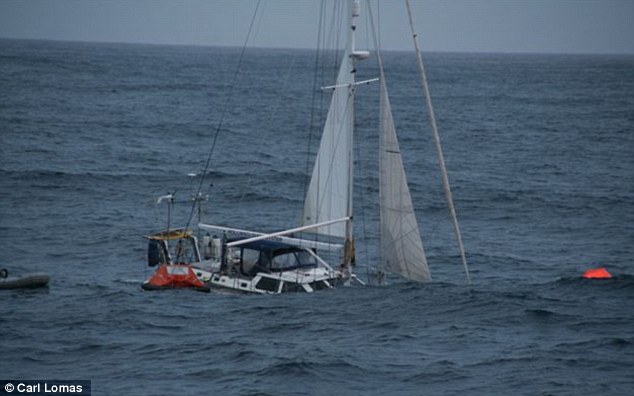
"yacht being torn apart by 20 ft waves and howling winds"???
prv
Well-Known Member
"yacht being torn apart by 20 ft waves and howling winds"???
The picture would have been taken when the ship arrived, rather than when the accident happened.
And/or the Daily Fail is bull****ting again.
Pete
Metabarca
Well-Known Member
Wow, I see the Drake Passage is a bad place to be when there are icebergs about! What are the worst months? November to February?
AntarcticPilot
Well-Known Member
Wow, I see the Drake Passage is a bad place to be when there are icebergs about! What are the worst months? November to February?
No, that's summer down there. Worst is April - November (it should be improving by November; we reckon to get ships into our bases late November/early December, but we don't always manage it). Minimum ice extent is about February - March.
Icebergs aren't seasonal to any great extent, though, so you can encounter them any time of the year. Perhaps a few more in the smaller sizes (but still yacht-sinking size) released when the sea-ice breaks up, but big ones (only the size of a county!) don't notice a bit of sea ice.
savageseadog
Well-Known Member
Made a mistake with this one I'm afraid. The story popped up on something as I was browsing the internet (I assume I'm profiled by Google or some cookies?) and assumed it was a new story and didn't check the date embedded on the page. I hadn't seen it before so my apologies.
Metabarca
Well-Known Member
I thought the icebergs would be released when the pack breaks up: in spring and early summer (i.e. October to December), rather than in winter. Fancy that!
AntarcticPilot
Well-Known Member
I thought the icebergs would be released when the pack breaks up: in spring and early summer (i.e. October to December), rather than in winter. Fancy that!
The April to November is the worst period for sea ice, not icebergs - sorry , maybe it wasn't clear from my first post.
Small icebergs, yes - big ones (tens of miles long) are too massive for the pack to have much effect. And north of the Antarctic convergence (about 60 degrees S), the source of even small icebergs is big ones - they break up and leave trails of smaller bits. The release of bergs from the pack in summer is really only a factor further south.
Last edited:

sighmoon
Well-Known Member
Categorically? Serious question: I'm thinking of taking our GRP tub to Iceland in a couple of years time. We have the big sister of the crash test Dehler:However, it is also true that GRP and ice aren't a good combination, and all it takes is one big lump!
http://www.youtube.com/watch?v=rvxhQO4pw2E
AntarcticPilot
Well-Known Member
Categorically? Serious question: I'm thinking of taking our GRP tub to Iceland in a couple of years time. We have the big sister of the crash test Dehler:
http://www.youtube.com/watch?v=rvxhQO4pw2E
I'm quoting accepted wisdom rather than personal experience. However, I think the reasoning goes that it isn't the one big lump that is bad - it is constant abrasion by smaller, unavoidable bits. GRP is about the same hardness as ice, or perhaps a bit softer, so it is abraded readily by constant small collisions with ice. Wood is also abraded readily, but can easily be protected with sacrificial planking at the waterline. Steel is harder than ice, so you may lose paint - but the steel wont' be abraded. It may get dented, but not worn away.
I note that our RIB's in Antarctica take great care to avoid collision with even brash ice when travelling at any speed.
sighmoon
Well-Known Member
I'm quoting accepted wisdom rather than personal experience. However, I think the reasoning goes that it isn't the one big lump that is bad - it is constant abrasion by smaller, unavoidable bits. GRP is about the same hardness as ice, or perhaps a bit softer, so it is abraded readily by constant small collisions with ice. Wood is also abraded readily, but can easily be protected with sacrificial planking at the waterline. Steel is harder than ice, so you may lose paint - but the steel wont' be abraded. It may get dented, but not worn away.
I note that our RIB's in Antarctica take great care to avoid collision with even brash ice when travelling at any speed.
Getya. Thanks for the thorough answer.
A quick google comes up with ice abrasion resistant epoxy, but this still seems to be intended for steel boats. I'll accept the acepted wisdom.
Last edited: