Antifouling time soon

Jmc1764

Well-Known Member
Joined
17 May 2020
Messages
139
Location
Gillingham Medway
Visit site
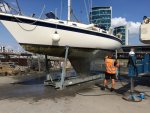
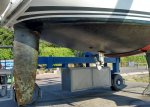
Just a quick question on antifouling, planning to do as soon as the weather gets warmer hopefully around March time, does anyone have a preference or recommendation for a boat moored on the river Medway ? and also I have what looks like a slightly different kind of paint at the water line, is this necessary or can I use the same paint for the whole bottom and the bit that is just above the water line ?
 

Attachments

  • b1a.jpg
    b1a.jpg
    248.4 KB · Views: 44
I'm no expert, on anything, but I think the above, or at, the water line is called the boot top and is primarily decorative. However it does get splashed and does, thus foul. Much depends how far above the waterline the boot top extends - but we would use an anti foul (and as its is decorative (and we like to look smart) of a different colour. The boot top also enjoys more 'wash' and might also benefit from being a hard anti foul.

I cannot help on what is best for the Medway, I'm just a little bit far away, but there are many here who would called the water 'local' an d this be much more useful to you - but ask around where you keep your yacht - you will get lots of answers - and distil the local wisdom. AF tend to be locally successful - but this depends on usage, frequency, and the local waters. Most AF depend own frequency of usage AND the coating thickness applied.

I might conclude by saying - its a bit of a lottery. So don't get too excited about a categorical answer, if its a cold/hot summer and you use the yacht more or less (than you expect) - the result will vary.

We buy 'top of the range' because we don't value repetition, slipping is not cheap, nor is our labour, we'ed rather sail than paint.

Jonathan
 
You can use the same antifoul for the bit above the waterline.

As Neeves said, the effectiveness of antifoul depends primarily on how much you paint on! Manufacturers have recommendations for how much to use. If you spread half a litre of the stuff thinly with a roller, it won't work very well. If you paint on two generous coats with a brush (plus a third coat around the waterline) you'll get much better results.

Although people will recommend specific brands, the reality is that most antifouls basically contain the same ingredients. Specific gravity is a rough guide to how well it might work - more copper gives higher specific gravity.

I use International Micron, which isn't cheap, but I apply it generously and it lasts a full 2 years, in the water all year round. I also apply it in the summer, when it's a more pleasant job, and when liftout charges are low.
 
The Medway is quite a muddy river and this assists in allowing marine growth. As PVB has said apply the most expensive antifouling and applied as recommended by the manufacturer. Using a boat frequently to sail/motor also helps to keep the hull clean.

I should mention that the colour can make a difference. A previous yard manager at Chatham Marina commented some years ago that white antifouling seemed to remain the cleanest. When I used to have a river mooring I found that it was necessary to scrub every few months, but now I am in Chatham Marina it is totally different. There is very little mud in the water, being very deep the water stays cooler in the summer and there is also a natural spring flowing into the basin reduces the salinity, these combined mean I can have a faily clean bottom after 2 years in the water as shown in this photo, Dover White International Micron had been applied.

IMG_1520 1000pix.jpg
 
The Medway is quite a muddy river and this assists in allowing marine growth. As PVB has said apply the most expensive antifouling and applied as recommended by the manufacturer. Using a boat frequently to sail/motor also helps to keep the hull clean.

I should mention that the colour can make a difference. A previous yard manager at Chatham Marina commented some years ago that white antifouling seemed to remain the cleanest. When I used to have a river mooring I found that it was necessary to scrub every few months, but now I am in Chatham Marina it is totally different. There is very little mud in the water, being very deep the water stays cooler in the summer and there is also a natural spring flowing into the basin reduces the salinity, these combined mean I can have a faily clean bottom after 2 years in the water as shown in this photo, Dover White International Micron had been applied.

View attachment 106043

Dover White? It looks black.
 
Just a quick question on antifouling, planning to do as soon as the weather gets warmer hopefully around March time, does anyone have a preference or recommendation for a boat moored on the river Medway ? and also I have what looks like a slightly different kind of paint at the water line, is this necessary or can I use the same paint for the whole bottom and the bit that is just above the water line ?
It is better, if you can, to antifoul at the end of May or into June so it is at its freshest just when the fouling starts to get going. It then lasts longer. I have been having good results (River Crouch) using Micron 350, two good coats lasting 24months.

Www.solocoastalsailing.co.uk
 
  • Like
Reactions: pvb
That was the slime on the hull. The jet washed part shows how little muck there was on the antifouling.

What was your hull looking like after 2 years? Any photos?

Yes, I have photos. The photo below is from July 2019, when the boat was lifted after 2 years in the water. This was before any jetwashing, obviously.

2years.jpg
 
I'm no expert, on anything, but I think the above, or at, the water line is called the boot top and is primarily decorative. However it does get splashed and does, thus foul. Much depends how far above the waterline the boot top extends - but we would use an anti foul (and as its is decorative (and we like to look smart) of a different colour. The boot top also enjoys more 'wash' and might also benefit from being a hard anti foul.

I agree. It's very common to use a hard antifouling around the waterline and an eroding antifouling everwhere else. Not just for wash - it allows the waterline to be scrubbed down regularly.
 
The Medway is quite a muddy river and this assists in allowing marine growth. As PVB has said apply the most expensive antifouling and applied as recommended by the manufacturer. Using a boat frequently to sail/motor also helps to keep the hull clean.

I should mention that the colour can make a difference. A previous yard manager at Chatham Marina commented some years ago that white antifouling seemed to remain the cleanest. When I used to have a river mooring I found that it was necessary to scrub every few months, but now I am in Chatham Marina it is totally different. There is very little mud in the water, being very deep the water stays cooler in the summer and there is also a natural spring flowing into the basin reduces the salinity, these combined mean I can have a faily clean bottom after 2 years in the water as shown in this photo, Dover White International Micron had been applied.

View attachment 106043
Thanks, very useful, I am surprised about colour making a difference but sounds plausible, my hull is black, the paint is coming up for two years, not sure what it is but its done pretty well. I think I will try a lighter colour this time, either light blue or maybe white. I am thinking that a light sanding and then slap iit on top , that way as it erodes I'll know when it needs doing as the black will start to show through. I like that the lighter colour shows the growth easier, it was hard to see in the murky water with a black bottom.
Nice boat by the way, and arh the dream of being in a marina to just jump on the boat any time instead of battling up the medway in a 9ft boat with a 2horse on the back pushing against the tide :)
 
Thanks, very useful, I am surprised about colour making a difference but sounds plausible, my hull is black, the paint is coming up for two years, not sure what it is but its done pretty well. I think I will try a lighter colour this time, either light blue or maybe white.

You'll find that lighter colours usually have less copper content, so may be less effective. Again, specific gravity is a clue. Micron white is SG 1.9 and 58% solids, Micron darker colours are SG 2.2 and 62% solids.
 
You can use the same antifoul for the bit above the waterline.

As Neeves said, the effectiveness of antifoul depends primarily on how much you paint on! Manufacturers have recommendations for how much to use. If you spread half a litre of the stuff thinly with a roller, it won't work very well. If you paint on two generous coats with a brush (plus a third coat around the waterline) you'll get much better results.

Although people will recommend specific brands, the reality is that most antifouls basically contain the same ingredients. Specific gravity is a rough guide to how well it might work - more copper gives higher specific gravity.

I use International Micron, which isn't cheap, but I apply it generously and it lasts a full 2 years, in the water all year round. I also apply it in the summer, when it's a more pleasant job, and when liftout charges are low.

How right. When you press the paint reps at the boat shows (remember them?) it's clear the low priced / low spec paints are little more than "make the boat look nice for sale" jobbies.

Otherwise, brush with at least medium grade paints, attending to the waterline and one foot down where growth accumulates most readily. Resist the temptation to brush hard when afloat - it all comes off. And to borrow a line from Strictly....keep moving! Nothing is so tasty for weed and barnacles as a b oat left parked for long periods.

But you knew that, I guess....

PWG
 
  • Like
Reactions: pvb
Warning ol'will about to waffle on so not worth reading!!!
In conditions totally unlike OP's, antifouling paint is of constant concern. Over many years I have found that a/f lasts about 6 weeks before in water scrubbing is necessary. Seems primarily like tiny krill like animals attached to the hull. After scrubbing they cling to my shirt and wave around like tiny shrimp. Weed would start to grow pretty soon but being obsessive about hull cleanliness I don't let it grow.
So I paint the bottom at the beginning of spring after winter lay over so I get 6 weeks clean, while the water is too cold to swim in. From then on it is scrub before each outing ie club races each Sunday. This may sound weird but I quite enjoy the scrubbing using just mask and snorkel. (plus shirt and hat for sun protection)
In this current weather temps from 20 to 35 degrees I find noticeable slime and build up after 3 days.
Yes the paint disappears in places so needs even more scrubbing. Yes I bought cheap a/f and perhaps did not put enough on. But I do console myself that the in water scrubbing, finishing at the end of the season with sand paper does mean not much build up of a/f over 37 years of this ritual.
I do find the a/f disappears quickly under the bow where the little boat lifts and slams into small waves. But I have never seen need top add more paint at the water line. However the rudder being transom mounted gets lots of sun so lots of growth.
Re my obsession with clean bottom. I went for a sail? on a lovely old 70yo 22ft wooden carvel long keel last evening. I sensed the bottom was pretty weedy and the new owner thought so too. Obviously didn't think it mattered. Well with light winds in a somewhat unusual contrary tide, that boat was like a block of wood. We managed about 300 metres to windward in an hour with maybe 15 tacks. but this only achieved with engine driving slow forward. Steering was mostly achieved with jib backing as rudder was almost ineffective. Anyway new owner new to sailing was delighted with his first outing.
Now I have done a fair bit of teaching sailing mostly in my little boat and I enjoyed it. However I am occasionally dismayed by my own assumptions that people know how to do things. ie I fail to show them. So I passed the jib to this lovely lady on their boat. Attached the halyard and (foolishly stood back) We were still in the pen (slip) Minutes later I look around and she is turning the forestay turnscrew. Oh that is good she is tightening the rig thinks I . Minutes later she has disconnected the forestay by removing the clevis pin. Aagh Nooo Fortunately it had a mast head rig with intermediate forestay lest the heavy mast come crashing down. So husband tries to attach the forestay again. Pretty soon the clevis pin went for a deep 6. had to rig a line from forestay above the swage to the bow to pull the forestay close enough to get forestay into the turnscrew fork and a screw driver through where clevis pin goes. I showed them how to wrap the screw driver in gafffer tape to hold it in place. I have done this on my boat before. I was impressed with husbands calm. essential for their new sailing life. Turns out he is a emergency room doctor at a big hospital so perhaps that helped. So we went off sailing bravely with screwdriver in the forestay. Lovely evening anyway with gentle winds and 25 degrees. ol'will and his adventures
 
I should mention that the colour can make a difference. A previous yard manager at Chatham Marina commented some years ago that white antifouling seemed to remain the cleanest.
That's interesting. I'd been led to believe that white is the worst colour and the darker the better as there's more copper in the dark colours.

I'm on a drying mooring on deep, gloopy mud and have tried everything with a pretty consistent lack of success. Fortunately, my club has scrubbing bays that cost me a fiver a tide and pressure washers that cost a few quid, so I save £80 on the antifoul and spend, maybe, an extra £20 for an extra scrub when needed, including a pint or two when I'm done.
 
I did a survey on Oz AF about 5 years ago and spoke to each of the manufacturers, International, Jotun, Hempel etc. They all said the same thing (with a smile) - colour is irrelevant. Most coloured AF from a manufacturer contain the same level of active ingredients (except pale shades - which commonly contain less active ingredients). They all had conducted panels tests to underline their comments. They also mentioned that there are often self perpetuating beliefs that one colour is better than another - but it is simply another of these unfounded marine beliefs with no technical basis (but made the more 'true' by constant repetition).

If white was better - all commercial vessels would use white - guess what colour none of them use.

We use red - because red is seen much more easily than blue, green, black from a rescue helicopter when you are upside down. This may appear to over dramatise - but if colour is irrelevant and costs the same you may as well use whatever advantage there is from the colour you do choose.

Jonathan
 
I did a survey on Oz AF about 5 years ago and spoke to each of the manufacturers, International, Jotun, Hempel etc. They all said the same thing (with a smile) - colour is irrelevant. Most coloured AF from a manufacturer contain the same level of active ingredients (except pale shades - which commonly contain less active ingredients). They all had conducted panels tests to underline their comments. They also mentioned that there are often self perpetuating beliefs that one colour is better than another - but it is simply another of these unfounded marine beliefs with no technical basis (but made the more 'true' by constant repetition).

If white was better - all commercial vessels would use white - guess what colour none of them use.

We use red - because red is seen much more easily than blue, green, black from a rescue helicopter when you are upside down. This may appear to over dramatise - but if colour is irrelevant and costs the same you may as well use whatever advantage there is from the colour you do choose.

Jonathan

I also use red, but for a different reason, it matches my eyes.
 
Having floated on the Medeway aboard motor boat boats for a few decades, would suggest that the water conditions have great deal to do with how effective or long lasting any antifoul appears to be
Motorboats tend to be afloat 365 days a year far more exposed to the vagaries of water quality/ temperature and perhaps even light conditions than most yachts which appear to spend half of their time ashore on the club car park. Hello MYC.
With around 100 boats or our motorboat moorings and probably as many different qualities of A/F in use , inc Coppercoat, there appears to be no magic formula or size of wallet that solves this problem.
Most motorboats will be slipped once a year to check and renew anodes, jetwash and A/F if required.
It boils down to a £60..00 5 litre tin and the certainty that you will be applying a fresh coat next year or Kings Ransom in two 2.5litre tins and hope that a jet wash will expose enough fresh A/F to last until end of next season.
Might depend on how much you like applying A/F but at least you have something to do while waiting for the tide to come back or booking your lift back in.
Irrespective of which A/F is applied, some seasons virtually no growth, in others , like a marine jungle after a few short months.
The most interesting thing is the sheer variety of what attaches itself to the hull , from long green hair like weed that blocks engine filters, some sort of hard coral, mussels, anenomes, thick slime and barnacles...... always barnacles. :)
 
Top