
Neeves
Well-Known Member
I suspect these commercial paints are a different formulation to the leisure paints due to the different conditions in which they are used.. They have to withstand long voyages for 5 years at speeds usually in excess of 15 knots and up to 30 depending on the ship. These Vessels are operating over the ocean and not sitting for many weeks concentrated within a marina surrounded by hundreds of other vessels. For a long time after it was removed from our market TBT was still in use deep sea. I have no doubt that even now there may be chemicals in these paints that are tolerated for commercial service in order to obtain the required performance, that would not be tolerated in products for leisure boats sitting in shallow water marinas.
The biggest problem is the spring when hulls are cleaned and repainted with fresh antifoul and the old finds its way into the marina as run off. Certainly no place for industrial antifoul.
I don't know about Hempel's Globic but SeaQuantum from Jotun comes in a range of 4 applications.
Vessels that are laid up, not in use.
Slow moving vessels operating within port areas, for example tugs and fuel barges.
High speed ferries, I assume generally operating short routes I also assume, possibly a hard, or harder AF
and
Ocean going vessels, like container vessels (I think Maersk are a big customer).
There was a move to silicone coatings for large commercial vessels - usage seems to have stalled - there have been a few problems
The Ultra produce would appear to be the product for vessels such as tugs - whose 'environment' might be similar to those of leisure vessels and with the same sorts of speeds.
In Australia there are, very, strict rules on run off from power washing prior to replacement antifouling - all run off must be collected - for which the owner pays an evironmental levy. Yards are closed if they do not have management system or break the system. If the requirements are in place and are effective then the composition of the AF should not impact - all and anything should be collected and disposed of safely.
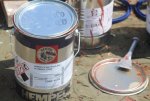
This is what happens in another part of the world, I don't know what restrictions are in the UK.
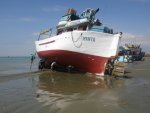
Manta is famous for its tuna fishing, the fleet is huge, and canneries - much tinned tuna makes its way to supermarket shelves in Europe
This one of the many local boats - the 'commercial' boats are a bit bigger
Jonathan