another idiot with mad ideas, new boat build

By the way, there are plenty of berths in this size category with the red 3phase shorepower sockets, but only one of the phases is live, and I'm wondering if you are mixing things up on that point? Sorry if telling you how to suck eggs. I cannot think of any production 18m boats that have a 3ph environment on board so I cannot see why marina operators would provide 3ph power. They do use the dark red 3ph plugs, as I say, but that is not the same thing
Well, of course I didn't try each and every 3ph sockets which I've seen around just for the sake of it.
But I guess you also didn't, did you? On which basis you're saying that "plenty" of them are not connected?
Surely they are the real thing in my marina, and I can think of also a few others where for one reason or another I had to use those sockets, testing them beforehand of course, and they were indeed 3ph.
Re. the reason, it's pretty obvious that it's mainly in case of technical needs (portable industrial air compressors, pumps, etc.).
Do tell, in an emergency, in "small" berths at Port Vauban, there's nowhere to connect a decent pump? :eek: :confused:

Re. whether 2/3rd or 95% is good enough to justify the 3ph choice, each to their own, obviously.
Personally, if I were building a boat like the one (and with the equipment) that Rob has in mind, I would trade 1/3rd of shorepower lack for the other advantages, but that's me.
Anyhow, since your only objection to the 3ph choice is based on this point alone, I suppose you agree that it would make sense from a technical/functional standpoint - which is all I meant, really. :)
 
keel cooling at work is basically the intercooler bolted to the outside of the hull. is this drag inducing?? or is it possible to do keel cooling through the hull.
Absolutely, and not just for the genset, but also for the main engine.
Though it is indeed a matter of how long a piece of string is, to some extent.
With steel trawlers (also commercial ones, built to work 24/7 at any latitude), typically there's a single engine and a huge keel, which surely makes life easier when designing a keel cooling system. I'm not sure if it's a viable solution also on a fast(ish) hull with twin engines.
Worth checking anyway - I would think that the yard you choose should be able to advise, in this respect.
Another thing worth mentioning is that keel cooling does NOT necessarily mean dry stack exhaust (which has pros, but also cons).
Using raw water for cooling the exhaust alone is still MUCH better than having it around the engines and their heat exchangers!
 
Hi Rob,
apperantly I missed an interesting thread,
last 2 months very bussy installing electric stabs,
last 2 weeks very bussy testing them :)

regarding your hybrid setup,
honestly speaking I prefer a genny that can handle the total power consumption,
mono phase for reasons mentioned above...
BUT
i'm very gladd that my system with 2 x Victron invertors can drive my electric stabs during navigation.
so my genny's are only used at anchor, rarely during navigation , only while using the washing machine or the dishwasher,
but my intention is to rewire these aswell, so that I will never need to run the genny while the main engines are running.

but would anyway spec genny's that can drive "all" the 230V loads simultaniously, just for reliability reasons.
no electronics inbetween....
weight, space and price for a bigger genny is no big issue. imho

I also don't fancy these newer Li battery's, this technology is changing so quickly,
what you buy today is very expensive and outdated in a few years time

regarding hydraulic or electric driven systems,
in my situation (retrofitting stabs) there is no better alternative then the electric stabs
and after using them for two weeks, I can only say that we LOVE them.
on performance I'm convinced that they can do at least as good as hydraulics.

but again, I'm not in a good position to give appropriate advice on a new build as in your case,
perhaps you have good reasons to go for a big hydraulic blok,
I'm absolutely no expert on thrusters, my electric thruster is not powerfull enough anyway,
but I know that also more powerfull electric thrusters are available today

but again, perhaps better stick with what the yard feels comfortable with,
hydraulics have a proven to be solid technology.

although our new electric switchboard, (ao for the stabs) was not a big deal,
designed it myself, and had it made and installed by one of my guy's from the company.
a lot of the switching goes automatically,
when I have a genny running, the invertors are completely bypassed with relay's
it just feels good to have this completely separated, and use genny power as a backup when any electronics fail.
one day I'll post a block diagram in my stabiliser thread.

good luck with the project, and keep on posting.
 
I agree every word of that BartW. We are shouting from the same hymn sheet (as we sort of say in UK :D) . I totally cannot see the point in this fine tuning calculation for a genset and relying on batteries for peak loads and/or aiming for 90% loading. Right answer is just get a big FO generator (or two), and be done with it. I see nothing wrong with running the thing 50% loaded lots of the time. Sure, the bores might glaze a bit, pah, like anyone cares; it's peanuts every 10 years to fix so it just isn't a relevant factor on a boat of this high spec/standard
 
Well, of course I didn't try each and every 3ph sockets which I've seen around just for the sake of it.
But I guess you also didn't, did you? On which basis you're saying that "plenty" of them are not connected?
Surely they are the real thing in my marina, and I can think of also a few others where for one reason or another I had to use those sockets, testing them beforehand of course, and they were indeed 3ph.
Re. the reason, it's pretty obvious that it's mainly in case of technical needs (portable industrial air compressors, pumps, etc.).
Do tell, in an emergency, in "small" berths at Port Vauban, there's nowhere to connect a decent pump? :eek: :confused:

Re. whether 2/3rd or 95% is good enough to justify the 3ph choice, each to their own, obviously.
Personally, if I were building a boat like the one (and with the equipment) that Rob has in mind, I would trade 1/3rd of shorepower lack for the other advantages, but that's me.
Anyhow, since your only objection to the 3ph choice is based on this point alone, I suppose you agree that it would make sense from a technical/functional standpoint - which is all I meant, really. :)

You don't have to test red shorepower sockets with your Fluke; you can see just by looking at them. The red 3ph sockets are widely used but many have only 3 functioning pins/holes not 5, with two blocked. You can see in plenty of them that two holes on the socket are blanked off. I'll get you a photo!

Yes I agree (and said so iirc) that 3ph is technically better . My recommendation to build the boat single phase is indeed based on the shorepower issue alone. I really do think that in general cruising you will find too many berths that offer only single phase shorepower, especially in the 16m boat category we are talking about here. Therefore it just ain't sensible to wire a 16m boat so that it can only accept 3ph shorepower, ESPECIALLY when VFDs are ten a penny and tiny these days. You'd have to run gensets in port but that's kinda ludicrous in my book and of course banned in many ports. Your position might begin to make sense VFDs didn't exist, but they do.
 
The red 3ph sockets are widely used but many have only 3 functioning pins/holes not 5, with two blocked. You can see in plenty of them that two holes on the socket are blanked off. I'll get you a photo!
Doh! I never came across one of these fake (sort of) sockets. No need to post pics anyway, I take your word for it of course.
Also because as I said I only fiddled with the red sockets in a few occasions - though when I did, they were always proper 5 holes stuff, and the reason why I checked before using them is that I didn't trust the internal wiring to be properly connected (from experience in other fields, don't ask...).
Anyway, how could you actually come to a conclusion about many 3 vs. 5 active pins there are?
I can't help smiling at the idea of jfm going around all marinas and open the red socket covers to check if two holes are blanked off...
LOL, how geeky is that?!? :D :D
 
Last edited:
.....
My goal for range was for comfortably across the North Sea. Without having to go to Peterhead or Lerwick to do it,

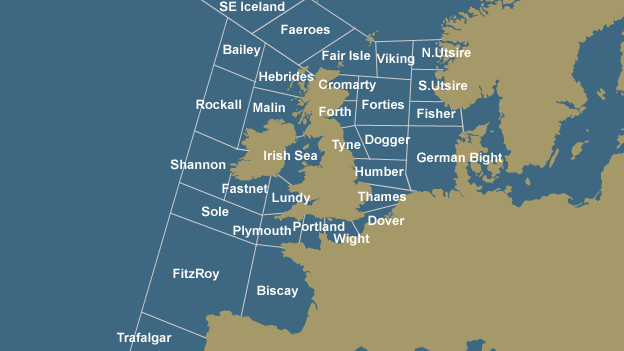
Rob, Looked at this a couple of times and it's really about risk mitigation, hence making the crossing as short as possible... whilst understanding how the weather in the various areas you are to cross will develop during your crossing ... the route you are talking about will take you through at least 4, if not 5 different forecast areas. This makes predicting the weather a bit more challenging.

Couple this with the fact that you'd also be crossing through the area in the NS with highest traffic and a higher volume of offshore facilities, means that you need to be on the ball with communications etc., well up front and announce your precense and course intent to the facilities in an approximate 3NM radius. Get too close to a facility without notifying and the OIM will get twitchy....

Weather areas below...

shipping-forecast-locations.png
 
hmmm, lots to think about...
i wonder if its possible for us to incorporate keel cooling in to the skegs, then they are not totally out in the wind, so to speak.
will discuss in holland with yard and designer....

cheers all
as for the stabs, ref hydraulic or electric, no decision firm yet as to hydraulic or electric. mainly as I am clueless and need to look in to them more. I can see advantages to both systems. but the location and strength issue should not be too different from whichever system is eventually (if) fitted. I am hoping its something i can temporarily overlook, (that will probably come back and bite me)
the powering them whilst motoring is a none issue, as far as I can see. as whilst motoring, hydraulics can run from PTO, or electrics from alternators.
driving them while anchored, is probably better from electric, as run from Gen set. (JFM possibly best man to ask :) do you have PTO on genset, or a back up electric driven hydraulic pump.

will be going with single phase as per JFM, as definitely makes sense. especially as we have the option of running 3phase from single via vfd
 
Rob, Looked at this a couple of times and it's really about risk mitigation, hence making the crossing as short as possible... whilst understanding how the weather in the various areas you are to cross will develop during your crossing ... the route you are talking about will take you through at least 4, if not 5 different forecast areas. This makes predicting the weather a bit more challenging.

Couple this with the fact that you'd also be crossing through the area in the NS with highest traffic and a higher volume of offshore facilities, means that you need to be on the ball with communications etc., well up front and announce your precense and course intent to the facilities in an approximate 3NM radius. Get too close to a facility without notifying and the OIM will get twitchy....

Weather areas below...

shipping-forecast-locations.png

of course, but its still doable. there are times i have sat out there and its been literally like a millpond.
obviously have the other extreme too :(
tbh, i would possibly only do a trip like that once, and then aim somewhere warmer, but its on the bucket list. the off shore facilities are not an issue, they only really start to see there arse inside the 500m zone :) locations can be charted. (If i can't get them in my job somethings wrong)
 
the powering them whilst motoring is a none issue, as far as I can see. as whilst motoring, hydraulics can run from PTO, or electrics from alternators.
driving them while anchored, is probably better from electric, as run from Gen set. (JFM possibly best man to ask :) do you have PTO on genset, or a back up electric driven hydraulic pump.
Rob, just for sake of accuracy, actually electric stabs are always driven by AC 3ph current motors, both underway and at anchor.
Anyway, it's correct to say that you can run them "from alternators" because they are good enough to keep the 24V batteries charged, while they feed the inverter(s), which in turn feed the VFD, and eventually the fins motors.
While anchored, of course it's the genset which feeds the VFD and in turn the AC motors.
With hydraulic systems, typically (and jfm boat is no exception) you have PTO pump(s) on the main engine(s), and a big AC 3ph electric pump for zero speed use.
This pump is - yet again - driven by the genset+VFD.
You might be interested to know that with electric stabs the absorption is somewhat lower at zero speed if compared to similar hydraulic systems.
Though generally speaking, I'd agree with jfm and BartW that it's not worth bothering to "underspec" the genset.
Some folks love the alternative of two genset, with the second much smaller (often called also "night" genset).
I'd rather consider that option, than have two gensets but both "small".
 
Last edited:
Rob, just for sake of accuracy, actually electric stabs are always driven by AC 3ph current motors, both underway and at anchor.

correction MapisM,
CMC can supply a "special" version of the electric motor, (as in mine) which is only 2ph, (no VFD inside)
actually its a bigger model electric motor that runs "under" max capacity, but only 2 phases in use

I'm surprised how low the power consumption is, I have not yet accurate figures,
but here in the port of Toulon, we have the stabs permanently "on" because of the waves from the navette to the opposite island going in and out at 12kn
and I have only 1 x 16 amp connection to shore !
 
correction MapisM,
CMC can supply a "special" version of the electric motor, (as in mine) which is only 2ph, (no VFD inside)
actually its a bigger model electric motor that runs "under" max capacity, but only 2 phases in use

I'm surprised how low the power consumption is, I have not yet accurate figures,
but here in the port of Toulon, we have the stabs permanently "on" because of the waves from the navette to the opposite island going in and out at 12kn
and I have only 1 x 16 amp connection to shore !

As a former electrician, I would be interested to know how that works. I have looked at the CMC website and, in the electric stabs details, they mention 3ph 400V, 3ph 200V and 1ph 200V.

Many years ago, I did work on motors in remote areas which people called 2 phase. In fact, they were single phase motors which IIRC ran at 420 Volts.

Incidentally, the CMC website claims their stabilisers are suitable for vessels of 18m (59') and over.

Did find the following interesting In FAQ:

The Stabilis Electra is “EU Patented n. 2172394”. What does it means exactly?

Since its foundation CMC Marine committed itself to be on the technological cutting edge. This meant the company focused its strategies on a strong R&D approach steadily developed in accordance with the extensive engineering Company’s background of marine system solutions. Thanks to this continuous commitment to R&D process CMC Marine could developed a range of very innovative products. Including the worldwide famous Stabilis Electra, the first and unique stabilization system actuated with an electrically drive instead of a hydraulically. Due to its highly innovative characteristic, the Stabilis Electra, in January 2012, obtained the European Patent (EU Patent N. 2172394).

In practical, the EU Patent assignment means CMC MARINE IS THEREFORE THE ONLY COMPANY authorized to produce, distribute and sell a stabilization system electrically driven within Europe, including the necessary custom protections and that IT IS ILLEGAL for any other fin stabilizers producer produce and distribute in Europe a stabilization system moved with an electrical drive.


Hope that is of interest,

Paul
 
according to espace.net the european patent search tool, they do indeed have a granted patent in a load of countries. .
This statement could be interpreted as threatening behaviour and I doubt their patent attorney would approve. " In practical, the EU Patent assignment means CMC MARINE IS THEREFORE THE ONLY COMPANY authorized to produce, distribute and sell a stabilization system electrically driven within Europe, including the necessary custom protections and that IT IS ILLEGAL for any other fin stabilizers producer produce and distribute in Europe a stabilization system moved with an electrical drive."

They may have a granted patent but that only gives them the right to challenge a potential infringer in a court of law. Fortunately we do have a unified patent registration process but unfortunately the owner of a patent would have to prosecute an potential infringement in each registered country - which in Europe for a small to medium sized company is a non-starter.
 
actually its a bigger model electric motor that runs "under" max capacity, but only 2 phases in use
Aha. Glad to stand corrected B, obviously you know better than myself by now about CMC stuff!
The reason why I said the above is that at the time I spoke with Mr. AC, he told me (or I understood, anyway) that their motors are all 3ph, but that wasn't a problem wherever 3ph isn't available onboard because they handle that through some device in their control box.
Actually, he didn't specifically mention VFDs, but I assumed that it had to be a small dedicated VFD of some sort.
Anyway, considering that - after superyachts where 3ph is standard - they are targeting also boats under 24m, I suppose it makes sense to have developed some specific 1ph equipment...

Anyway, it's good to hear that you've already been able to verify their efficiency claims.
Keeping a whole boat like yours up and running on a 16A connection, with zero speed stabs working (and I guess with no need to use the inverters for peak loads, as Rob was thinking for his new build), is simply amazing.
Don't tell us that you are also running the A/C, because in that case you should ask some energy efficiency expert to use BA as a case study... :D
 
I forgot to mention, B: right now, we are anchored in a rather exposed spot, and our boat is rolling like a pig.
We come here occasionally, because it's a gorgeous spot for snorkeling inside some caves - more about that later on in another thread... :cool:.
Anyhow, there's an SL92 anchored just in front of us (stunning vessel btw), and - you guessed it - she's stable as a rock.
Ok, much bigger and heavier hull, but I can even see the foam along the hull sides, created by the fins movement, so it's pretty obvious that the stabs are doing a great job. And as you know, SL fits CMC as standard.
Bottom line, if on BA the stabs effectivenss is anywhere near what I'm witnessing, well, I can tell you that you have excellent reasons to be happy of your choice! :)
 
As a former electrician, I would be interested to know how that works. I have looked at the CMC website and, in the electric stabs details, they mention 3ph 400V, 3ph 200V and 1ph 200V.
Many years ago, I did work on motors in remote areas which people called 2 phase. In fact, they were single phase motors which IIRC ran at 420 Volts.
Incidentally, the CMC website claims their stabilisers are suitable for vessels of 18m (59') and over.
Did find the following interesting In FAQ:
The Stabilis Electra is “EU Patented n. 2172394”.


Re electric motors,
These are the modern permanent magnet motors, as used in automotive applications, (Robots)
Nothing to do “at all” with traditional AC motors.
Each motor has a dedicated servo controller / processor, for accurate control of speed and acceleration.

CMC is a fairly young company, I have visited them last may.
They are basically a engineering co, with engineers specialized in automation, hydro and fluido dynamics, rate-gyro encoders, mechanics, … but all of them have some experience with boating.
The CEO and owner’s background was application project manager at Rexroth.
CMC used to make (they still do) hydraulic stabilisers and thrusters, but their focus now is on electric systems.

The system in my boat (70ft) is their smallest system, 0,6m2 fins, 3.5Kw motors
Most systems (I’ve seen the list) are installed in 80…100 ft boats
Their biggest customers are Azimuth and San Lorenzo, and then some smaller yards in Italy and Holland.

They have indeed a patent on their stabilizers driven by permanent magnet electric motors , it took them >4 years to get that in place.

more info in this thread on the preparations and discussions about the stab system in my boat:
http://www.ybw.com/forums/showthrea...el-engineering-question&highlight=engineering
 
Re electric motors,
These are the modern permanent magnet motors, as used in automotive applications, (Robots)
Nothing to do “at all” with traditional AC motors.
Each motor has a dedicated servo controller / processor, for accurate control of speed and acceleration.

CMC is a fairly young company, I have visited them last may.
They are basically a engineering co, with engineers specialized in automation, hydro and fluido dynamics, rate-gyro encoders, mechanics, … but all of them have some experience with boating.
The CEO and owner’s background was application project manager at Rexroth.
CMC used to make (they still do) hydraulic stabilisers and thrusters, but their focus now is on electric systems.

The system in my boat (70ft) is their smallest system, 0,6m2 fins, 3.5Kw motors
Most systems (I’ve seen the list) are installed in 80…100 ft boats
Their biggest customers are Azimuth and San Lorenzo, and then some smaller yards in Italy and Holland.

They have indeed a patent on their stabilizers driven by permanent magnet electric motors , it took them >4 years to get that in place.

more info in this thread on the preparations and discussions about the stab system in my boat:
http://www.ybw.com/forums/showthrea...el-engineering-question&highlight=engineering

Many thanks for that. Got some reading to do:)

Paul
 
well, after a hectic weekend, and i am still cleaning up the aftermath in my engine room, and a good chat with the yard and the designer, we are switching to full planing hull, with inset tunnels.
designs to follow.
this is the designers idea, to give him more scope to guarantee the speed i have asked for.
its a proven hull design, along similar lines to the above waterline section we have, mated to the flybridge design we have
currently its in use in fast patrol boats, and has proven history.
details to follow
this will shove the engines further back, in to tunnels, and give me accommodation space, albeit smaller lazaret
 
Top