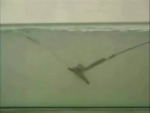
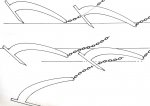
Anchor chain scope

dgadee

Well-Known Member
Joined
13 Oct 2010
Messages
4,682
Visit site
What's the thinking on this? Cat near me told me he had 30m of chain out in 3.5m. Is 8 times ok? Selfish?

Or is scope old hat? This article seems to suggest so - How much anchor chain? - Yachting Monthly

This is reasonably quiet time in south of Greece. I wonder what the August sailors would think of large anchoring swinging circles.
 
Famous world-girdling cruisers of old apparently always used 3:1, even with older anchor designs. I have survived force 9 on 3:1 rope rode with a Fortress. My preference is usually 4:1 but in very shallow water I may use a little more. There are apparently no benefits to be gained in going over 7:1.
 
There was a quite learned analysis in PBO by a Scottish cruising yachtsman some years ago, finishing off with a simple rule - 3 times the depth , plus 10 metres. If I remember, this assumed a mixed rode.
 
4:1 for use usually. Tight anchorage in an unexposed spot and good holding and 3:1 is fine. All chain, Spade anchor of the manufacturers specified size for our boat. Thousands of nights at anchor.
 
A monohull not very near to him said the cat was almost into him yesterday due to "storm winds". Ha. I was out in it and just a normal afternoon beeeze. Too much chain in my view. Should be a crime.
 
I am a very deep sleeper and I also tend to favour empty anchorages.

So it’s 5:1 for me and I sleep like an old dog by the fireside.
 
I do 3 to 1 but in shallow waters it is possibly 4 to 1. If there is space and the forecast is for strong winds I will let out 5 to 1 or possibly more. As LadyInBed says, chain or rope is better being used rather than in a locker.
 
What's the thinking on this? Cat near me told me he had 30m of chain out in 3.5m. Is 8 times ok? Selfish?

Or is scope old hat? This article seems to suggest so - How much anchor chain? - Yachting Monthly

This is reasonably quiet time in south of Greece. I wonder what the August sailors would think of large anchoring swinging circles.
Yes it's selfish especially in small anchorages. And then they take a day away to go up coast to a nice beach and they leave their anchor and three buoys spread out behind to reserve their spot for their return. One 40 ft cat that's been here for more than 6 weeks with circa 20 m plus of chain out in 3 metres of water has a massive swing circle that stops the 4 or 5 usual smaller boats deploying sensible chain lengths from using the area. Ok in the winter when not many boats around but things are getting busy now with more boats arriving and trying to find space.
 
Last edited:
What's the thinking on this? Cat near me told me he had 30m of chain out in 3.5m. Is 8 times ok? Selfish?

Or is scope old hat? This article seems to suggest so - How much anchor chain? - Yachting Monthly

This is reasonably quiet time in south of Greece. I wonder what the August sailors would think of large anchoring swinging circles.

It is old hat to calculate scope on the basis of depth of water and rode deployed.

It depends on the cat - but a modern 'cruising' cat possibly has the bow roller at 1.5m above the waterline so the scope is actually 6:1. You don't mention tide and if the 3.5m is a ball park figure - ignoring tide then at high tide that 6:1 might reduce to 5:1.

It would also depend on the forecast, the holding and their anchor. I find it difficult to condemn 6:1 - in the absence of more information. If it was a charter cat then the 'skipper' might have been something of a novice, to multihulls specifically but also to anchoring, and I'd suggest 6:1 would not be something to complain of (at all). We would give charter yachts some slack - we don't expect them to be experts, they are on their annual holiday, help them - don't be critical - make sure their holiday is a pleasure.

When we anchor we would set at 3:1 and when holding would deploy 5:1 (based on high tide) - for almost any weather (assuming the unexpected) over the period at anchor. If anyone were to complain I might suggest to them that they moved (if arriving after us). If we were the late arrival - we would move - but where we sail - company is very unusual.

Jonathan
 
Last edited:
Or is scope old hat? This article seems to suggest so - How much anchor chain? - Yachting Monthly

NormanS - as you can see this is a long discourse - if its too long - do not read it and complain of length. Reading posts is entirely voluntary.

Our ideas on scope (and catenary) have been set in concrete for decades, honed by our forebears. Much of the lore was based on the CQR or Danforth (from the 1930s), maybe also the Fishermans and slightly more recently the Bruce and Delta from the 1980s. Some, or much, of the lore was based on a mixed rode (because electric windlass were not available and money was tight). Since 2006 we have access to knowledge on better anchors - or anchors with twice the hold vs weight - and the electric windlass commonplace and mixed rodes uncommon. Despite the changes the ideas of scope and catenary have not changed - an iota.

I appreciate that Spade and Fortress were introduced in the 1990s - but neither gained much traction and neither are commonplace, even today, on bow rollers.

The newer anchors, Rocna, Supreme, Excel, Kobra, Spade, Ultra, Knox etc have higher hold and set easily, set in a very short distance (quoted by many as a 'shank' length) and set reliably. Testing by parties totally independent of each other show these newer anchors to have twice the hold of CQR, Delta and Bruce. Testing shows that a deep set anchor, which by definition will have high hold, that list of newer anchors, and high hold is more stable and reliable for a yacht subject to yawing and/or a yawing wind. I omit the Epsilon because there is almost no feedback and I exclude Mantus because it sets shallow and has a hold no better than Delta (I've tested them both).

I know there are many champions of Bruce, Delta and CQR - but you don't read of people trying a Rocna and rejecting it in favour of a CQR. You do read of people replacing a CQR with one of the newer designs.

The high hold of the newer anchors would mean they are more stable at short rode lengths and scope of 3:1

A number of members here have mentioned they have used their newer anchor at 3:1 or near - not many using a Bruce, CQR or Delta recount their 3:1 experiences.

There has been another change and that is in the use of snubbers - and both Geem and Vyv, who have anchored at around 3:1 in strong winds both use a sensibly long snubber.

Elastic snubber usage is increasingly popular and this graph underlines why.

In terms of a veering yacht then upto about 300kg of tension in the rode 10m of 10mm nylon has roughly the same energy absorbing capacity of 30m of 10mm chain at a scope of 5:1. Beyond 300kg of tension chain offers no further 'snubbing' ability - but the nylon snubber continues to offer more snubbing potential.
IMGP0049.jpeg

The catamaran, the subject of the thread, if he was using an elastic snubber of a sensible length (say at least deck length) could have anchored at 3:1 scope and have had plenty of snubbing ability.

There is another factor - when modern anchors set they bury the shackle as well and the shackle is resistant to burial. Being resistant there is an upward force (the shear strength of the seabed) and the shackle angle increases from that defined by the scope - to an angle higher than the scope. The tension angle on the anchor is thus higher than that calculated from the scope - but the modern anchor sets, sets reliably and if tensioned further will set more and more deeply. As the anchor sets more deeply that shackle angle will increase.

This is a Rocna set in the Caribbean. Note how the shackle end of the shank is buried
DSC00357 (2).jpeg

This is a Spade, aluminium, set in soft sand in Australia, note again the shackle end of the shank is well buried and there is no sign of chain. The green cord is attached to the chain
phonto.jpeg

When the shackle and chain is buried the Oil industry describes the attitude of the chain as a reverse catenary. Its not a great example but Bruce, the company sent me one of their videos where they subject model anchors to laboratory testing using a synthetic seabed. If you note the rode it has a slight upward curve,the reverse catenary - the angle to the sea bed is at its greatest at the shackle point

IMG_8686.PNG

I have tried to illustrate the reverse catenary with this summation of an anchor setting. The tow and shackle bury together. As the shackle buries its angle with the seabed increases and the chain describes that reverse catenary.


IMG_5184.jpeg

If you think the reverse catenary a figment of my imagination a huge amount of research is devoted to the topic. Much work on the concept is conducted in Universities in Houston and Perth. The shackle angle, and its increasing progression from the scope angle as it buries is of crucial important to the setting of an anchor.

The idea of deploying more rode to ensure the tension on the anchor is zero degrees is simply out of date - the shackle angle is determining tension angle not the scope.

You can influence the shackle angle - use a smaller chain and a smaller shackle (commensurate with the strength needed.

If it is not clear - modern anchors demonstrably perform with high tension angles, much higher than the scope angle.

There is nothing inherently wrong with deploying a fair amount of rode - but it is unnecessary - if you use a modern anchor (correctly sized) and a reasonable snubber. Our technology has improved but our practices have not been modified for the changes in technology.

Jonathan
 
Last edited:
I'm fairly sure that what Johnathan writes at length is technically correct, but his long and detailed essay, which I have skimmed through looking for relevance, has the effect of making a simple subject seem much complicated than it really is.
Imagine someone new to anchoring trying to digest all that. They would probably decide that it was too much hassle, and choose to go to a pontoon or a mooring.
The amount of scope required is not an exact science. It used to be generally accepted that 3:1 was a reasonable figure. It seems now that with more modern, but not necessarily better, anchors, 3:1 is not enough, and 4:1 or 5:1 is needed. Try to get your head round that anomaly.
I would suggest that 3:1 is fine in deep water, but maybe 5:1 or even more in shallow water. It depends on many other factors, including whether you have an all chain rode, whether the anchorage is sheltered from waves, wind or current, the type of material on the seabed, and the strength of wind expected. Too many variables to give an exact figure, but that's it - it doesn't have to be an exact figure. Just go out and do it and learn.
 
But remember you may be stopping others from doing and learning if you command too much swinging room.
I only need enough swinging room to be safe. If you come to a crowded anchorage, and there's not enough space to anchor safely - tough, go somewhere else. It's just like a car park. If it's full, it's full. Like Johnathan, the vast majority of places that we anchor, are "far from the madding crowd". We're fortunate.
 
I'm fairly sure that what Johnathan writes at length is technically correct, but his long and detailed essay, which I have skimmed through looking for relevance, has the effect of making a simple subject seem much complicated than it really is.
Imagine someone new to anchoring trying to digest all that. They would probably decide that it was too much hassle, and choose to go to a pontoon or a mooring.
The amount of scope required is not an exact science. It used to be generally accepted that 3:1 was a reasonable figure. It seems now that with more modern, but not necessarily better, anchors, 3:1 is not enough, and 4:1 or 5:1 is needed. Try to get your head round that anomaly.
I would suggest that 3:1 is fine in deep water, but maybe 5:1 or even more in shallow water. It depends on many other factors, including whether you have an all chain rode, whether the anchorage is sheltered from waves, wind or current, the type of material on the seabed, and the strength of wind expected. Too many variables to give an exact figure, but that's it - it doesn't have to be an exact figure. Just go out and do it and learn.

I'm of the belief that most of the people here are not new to anchoring and including the new members - are an intelligent lot. Anyone who fines my scripts difficult is free to query - that's what this forum is about.

Jonathan
 
I only need enough swinging room to be safe. If you come to a crowded anchorage, and there's not enough space to anchor safely - tough, go somewhere else. It's just like a car park. If it's full, it's full. Like Johnathan, the vast majority of places that we anchor, are "far from the madding crowd". We're fortunate.

In car parks people don't usually park horizontally across several bays.
 
Point of detail, my recollection is that 3: 1 was the rule of thumb for fisherman anchors.
4:1 became recommended for more modern anchors like the CQR.
When the Bruce became available, it was marketed as one that worked on a shorter scope.

And scope was measured at sea level. You let the anchor out until the relevant marker was submerged. If the wind blew up you let out some more until it was again submerged. And to the next marker for luck, maybe.
 
In car parks people don't usually park horizontally across several bays.

Just note that the scope might actually be 6:1, might not encompass high tide. The cat, which might be a charter boat, might have been equipped with an inadequate anchor, say a copy Bugel. We simply do not have enough information to damn the skipper.

Tell us what the forecast was, what the anchor was, what that 3.5m depth actually means and then we can be harsh or wonder why the skipper had not deployed more rode.

Where we sail we would try to anchor in deeper water as at a depth of 3.5m it would mean being close to shore, close to shore means at low tide the chop/waves stand up and its uncomfortable. We would aim for 5m at low tide, our tides (round Sydney) are a max of 2m (and 10m further north) which converts the water depth from 3.5m to 5.5m add the distance from sea level to bow roller of 1.5m and you have a scope - with 30m deployed of 4:1 - and you wish to damn the skipper....


Jonathan
 
Top