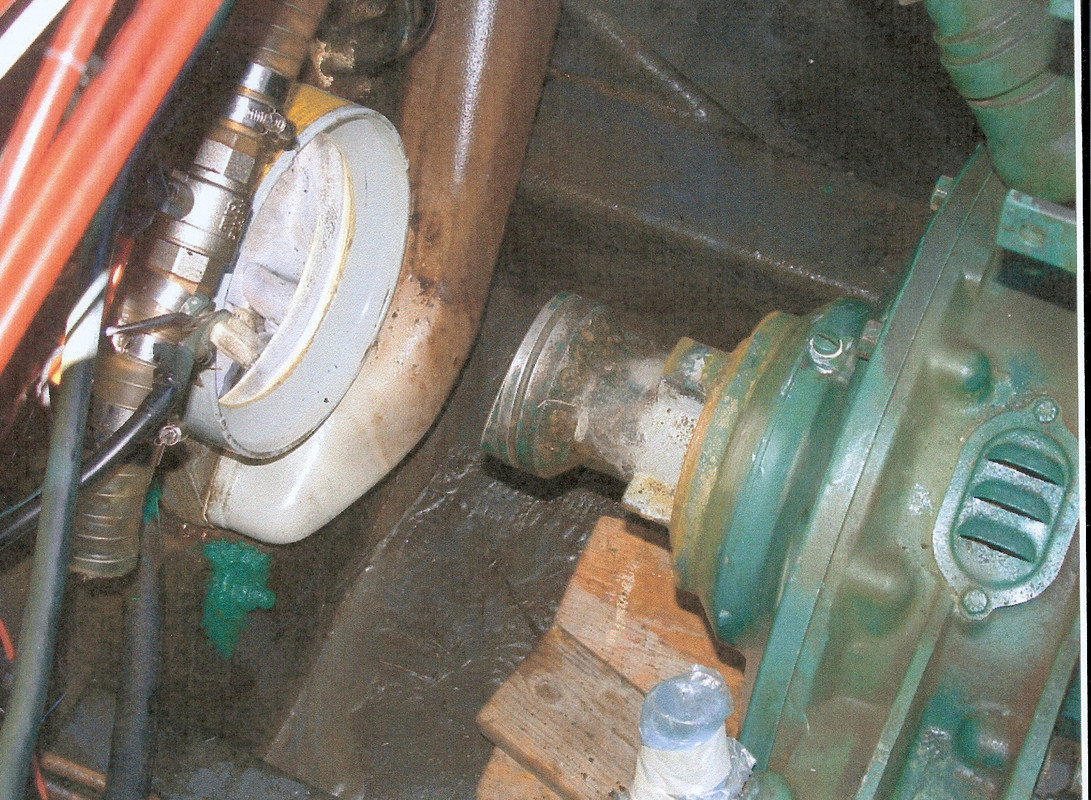
AD41B - water in the flywheel housing :(

crewejd

Member
Joined
10 Mar 2005
Messages
26
Visit site
Hi all,
I have a pair of Volvo Penta AD41's with Duo-prop out-drives attached.

My starter motor gave up the ghost a couple of days ago, and to get it checked out, I removed it last night, and a lot of water poured out of the flywheel casing. The end of the starter must have been fully immersed in it.
As my boat is on a tidal mooring, and this was at low water, I put it back on and refastened the bolts. I'll go and take it off again this evening, and see if more water came into the housing after a couple of tides to see how bad the incursion is.
I'm hoping for at worst, a duff seal that can be replaced when the leg is off, but not too sure, as the diagram I have doesn't make the housing to driveshaft seal very clear.

Can this be fixed with just taking the drive leg off, or is this an engine out job?

Many thanks,
Jeff
 
The water sounds like it has come through the intermediate shaft housing, if so then the bearings will need replacing and there maybe damage to the U/J on the drive. You can pull the shaft out from the outside, there are circlips behind the seal which sits inside the tube that the bellows attach to.
 
My father had this problem with with one of his AD41's. Was only a tiny amount of water ingress, nothing major.... but he ended up drilling a hole in the bottom of the casing to pass it on and stop it filling up.
 
The water sounds like it has come through the intermediate shaft housing, if so then the bearings will need replacing and there maybe damage to the U/J on the drive. You can pull the shaft out from the outside, there are circlips behind the seal which sits inside the tube that the bellows attach to.
Thank you sir, I'll get the boat out leg off, and take a look. I take it that the bearing might be changeable along with the seal, when the leg and shaft is out of the way?
I'll treat both legs the same, if this works!
 
Last edited:
My father had this problem with with one of his AD41's. Was only a tiny amount of water ingress, nothing major.... but he ended up drilling a hole in the bottom of the casing to pass it on and stop it filling up.
Thanks for that - it does sound like an option if there is a continued weeping in, but there was so much in there, I'm worried that the batteries might go flat running the bilge pumps every tide!
Perhaps I could install a small drain cock in there - and let the schmoo out every so often :sneaky:
 
Thanks for that - it does sound like an option if there is a continued weeping in, but there was so much in there, I'm worried that the batteries might go flat running the bilge pumps every tide!
Perhaps I could install a small drain cock in there - and let the schmoo out every so often :sneaky:

I assume this talk of managing a leak is in jest. If you have water in your bell housing, your bellows are split and huge bills await if not fixed. Get the boat out of the water ASAP and fix the damage before it gets worse.
 
Some Volvo intermediate shafts have a single bearing, and some have two. I think, and I may be wrong, that single bearings and seals can be changed from the drive side, but double bearings need the engine shifted out of the way to replace.
 
Leg definately has got to come off.

If water is getting in, the seals have failed and this means both bearings will almost certainly be affected.
Depends how long the leak has been going on.
The transom Drive / Jackshaft has two bearings. Inner and outer.
On some boats the inner bearing has to be driven out into the boat.
This will mean moving the affected engine .
Will need to inspect inside the flywheel housing .
If you are lucky and the design of your boat allows it ,you may be able to move the engine forward a foot or so to gain access to back of transom plate.
The inner bearing can then be driven out.
You will need to check the surface of both jack shaft seal surfaces to ensure that there is no damage ie. grooves which will prevent a good seal when drive is reassmbled.
You might be lucky and the UJ still be in servicable condition. Repair kits are available.
A replacement jackshaft is eyewateringly expensive but there are various little tricks which could get it back into service.
Everything available from your VP dealership but all the bearings/seals are std sized available from your favorite bearing factor at a considerably lower cost.
Obviously all rubber wear will need replacing and the usual outdrive checks on propshaft seal etc for water in gearbox
Good time to check/change the top hat seals on the steering fork !

Do not faff about, you really really really will only want to do this job once :)


Last edited:
Leg definately has got to come off.

If water is getting in, the seals have failed and this means both bearings will almost certainly be affected.
Depends how long the leak has been going on.
The transom Drive / Jackshaft has two bearings. Inner and outer.
On some boats the inner bearing has to be driven out into the boat.
This will mean moving the affected engine .
Will need to inspect inside the flywheel housing .
If you are lucky and the design of your boat allows it ,you may be able to move the engine forward a foot or so to gain access to back of transom plate.
The inner bearing can then be driven out.
You will need to check the surface of both jack shaft seal surfaces to ensure that there is no damage ie. grooves which will prevent a good seal when drive is reassmbled.
You might be lucky and the UJ still be in servicable condition. Repair kits are available.
A replacement jackshaft is eyewateringly expensive but there are various little tricks which could get it back into service.
Everything available from your VP dealership but all the bearings/seals are std sized available from your favorite bearing factor at a considerably lower cost.
Obviously all rubber wear will need replacing and the usual outdrive checks on propshaft seal etc for water in gearbox
Good time to check/change the top hat seals on the steering fork !

Do not faff about, you really really really will only want to do this job once :)

Many thanks for this - those pictures are really excellent and point well made!
 
Need to get the thing apart to get idea of any damage.
If you caught it early you might be lucky enough to just replace the seals/ bearings and reassemble, do check that universal joint, once salt water has got in, it tends to get in all the nooks and crannies.
One of my bearings had seized and the inner race was loose on the jackshaft, a little peening sorted the problem with regard the new bearing.
A groove in the jack shaft was negated by locating new seal to run on unblemished metal.
You can do all this your self depending on how confident you are.
Lifting the engine and moving it back plus driving out and refitting the bearings tends to be the most challenging bit.
With care,there could well be sufficent slack on your fuel and battery pipes/wiring not to need any disconnection, apart from disconnecting battery.
I used a little tripod made out of scaffold poles and a little chain Handy Billy to move my engine , took about a day to dismantle, a day to source parts and a day to put all back to togther.
That merely left the other outdrive to worry about. :)
 
Thanks all for the superb advice.
Well, here I am - almost a year later.. Both out-drives were in a very rough condition; the stbd being the worst. So, Stbd engine had to come out (Thanks, Sealine for not leaving enough space in front of the engine...)
Pretty much everything was corroded in the flywheel casing, and there was pitting to the crankshaft where the machined bit of the crankshaft runs inside the oil seal. I think this is now sorted with a speedy sleeve.
A new oil seal followed by me having to make a seal drive for a near 6inch seal to push it in centrally.
I cleaned off all the rust and sanded down the flywheel. Put a new ring gear on while it was easy and refitted it to the end of the crank. Discarded the very dissolved flywheel vibration damper and bought a new one. Fitting it, I managed to over-tighten 2 of the bolts due to me being a bit heavy handed. Had a go at getting the broken bits of bolt out - no joy so need to find an engineering firm that can do that job for me.
Hopefully the last issue is my ongoing saga of getting a new thread tapped in the block where the alternator tensioner bracket bolts through the timing cover into the block. Whilst I'm doing that, I'll clean off the pulleys on the belt-end vibration damper as corrosion on the pulleys here has been the cause of early belt failure on several occasions.

Once this is done and sorted, and the engine is finally ready to be refitted, I'll take the port engine out and repeat the process there but hope to get away with a simple swap-out of the flywheel cover/driveshaft seals and bearings.

Just for fun, so far I've had to have the turbo serviced; the oil cooler replaced; the charge air cooler casing replaced, and of course the starter motor. All this money going out, and of course all the sleepless nights worrying about it, - it'd have been cheaper - plus better for my mental health to just buy another boat... Those lottery numbers have got a lot of questions to answer grrr!
 
Well done for sorting it, apart from the xpence :) sometimes its best just to get on with it, find out what the problem is.... and get the boat back in the water.
Usually one decent run out on a sunny day will be sufficent to develop a very special sort of amnesia which mercifully afflicts boat owners regarding the "ARGH" component of running any boat. :)
 
Top