Acceptable play in propeller shaft.

potentillaCO32

Well-Known Member
Joined
24 May 2023
Messages
613
Visit site
Just looking for advice on what the acceptable level of play is in a propeller shaft coming out of the cutlass bearing/stern gland? Engine is a beta 20. I haven't measured the play yet with a dial guage but i can definately feel a tiny bit of movement when trying to move the propeller from side to side.

Is there an acceptable amount of float?
 
"tiny" is OK. 2mm is an indicator of wear. There needs to be some clearance to allow water in and out of the flutes. Check whatever tiny movement is equal all round.
 
May I ask- because I do not know-if there are flutes for the water to run down once burped ( if needed) why does one need even more play.?
Surely the water will get there without play and the bearing will remain cooled
 
does not need burping - that only applies to non vented Volvo seals. The leverage from moving the prop from side to side even with a new bearing will show a small amount of movement. More if it is worn and 2mm total suggests replacement
 
does not need burping - that only applies to non vented Volvo seals. The leverage from moving the prop from side to side even with a new bearing will show a small amount of movement. More if it is worn and 2mm total suggests replacement
I said if needed.
So can someone answer the question please as I am still in the dark
Why does one need any play at all?
 
Vertical or lateral play at the prop may as a result of wear either on the shaft or the cutlass bearing - or possibly both.

If there's enough to feel any noticeable movement by hand it's be good shout whilst the boat is out the water to take the shaft off and measure for any difference between the contact and non contact surfaces and whilst the shaft is off you might as well press a new cutlass bearing in anyway - they aren't expensive and that'll save any drama once launched with excess noise and vibration resulting from that play which will only get worse with time and especially under load.

I regard cutlass bearings as a consumable part - there's so much silt in the Essex and Suffolk rivers I'm lucky if I get more than a couple of seasons use out of one.
 
I said if needed.
So can someone answer the question please as I am still in the dark
Why does one need any play at all?
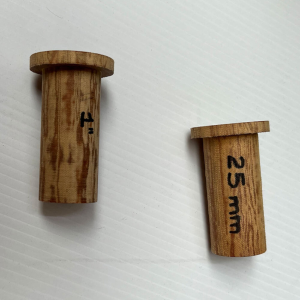
It does not necessarily need clearance for water to enter but there is a need for a small amount of clearance so that the shaft does not bind. The amounts are small - for example if you try a 25mm bearing on a 1" shaft the 0.4mm difference will prevent the shaft from turning.
 
It does not necessarily need clearance for water to enter but there is a need for a small amount of clearance so that the shaft does not bind. The amounts are small - for example if you try a 25mm bearing on a 1" shaft the 0.4mm difference will prevent the shaft from turning.
Obviously if one fits a wrong size it could cause problems. I did not ask that. But one has still not answered why my sliding fit imperceptible play ie none , fluted bearing on my launch is wrong . Why do I need play as tranona suggested? I am not arguing. I am asking
 
Obviously if one fits a wrong size it could cause problems. I did not ask that. But one has still not answered why my sliding fit imperceptible play ie none , fluted bearing on my launch is wrong . Why do I need play as tranona suggested? I am not arguing. I am asking

You don't need play, if the prop shaft is perfectly aligned, and the cutlass bearing perfectly sized there won't be any play, and the shaft will still turn freely. In the imperfect world we all live in there is inevitably a bit of play - if you've managed to set yours up without, you've done well. However, a GRP boat hull is slightly flexible, such that a perfectly aligned prop shaft when the boat is propped up out of the water may no longer be perfectly aligned once it's floating. Then when you engage gear the engine will move a little on it's flexible mounts, again potentially affecting alignment. If there wasn't a bit of play before, you could may now have a binding prop shaft, and be causing wear to the cutlass bearing.
 
There are no waterways on a standard original Contessa bearing as manufactured by Jeremy Rogers, it was plain Tufnol and still available from the yard:

1755438831804.png

Though they added grooves in later production.

This does not mean that a cutless bearing was not fitted later - there is just about room for one and they are available. The wall thickness and rubber insert is very thin,, though I have had good service with them and they may reduce transmission noise a little. From memory I think 1mm of movement looks ok but 2mm is getting excessive. The OP's tiny bit of movement sounds fine - 2mm is quite a clonk.

In any case pontentilla I would leave this till you need to do some more extensive maintenance. As the tiller, rudder and propshaft have to be removed it is probably a good time to consider refreshing the rudder bearing (plain Tufnol as well), stern seal and even the prop shaft and prop. Tufnol bearings can be made locally and may well save you money.

.
 
Last edited:
Obviously if one fits a wrong size it could cause problems. I did not ask that. But one has still not answered why my sliding fit imperceptible play ie none , fluted bearing on my launch is wrong . Why do I need play as tranona suggested? I am not arguing. I am asking
You are making a mountain out of a molehill. I used the incorrect bearing to illustrate how tiny the gap is - if there were no gap the bearing would seize on the shaft. It is a sliding fit and when the shaft is in you will be able to move it slightly from side to side. Happy now? - there is nothing wrong with your bearing/shaft, but next time it is out of the water check it.
 
All bearings need a clearance - otherwise you have (typically metal to metal contact) and a rapid seizure. In a high performance petrol engine you are looking for 0.0005 to 0.001" clearance per inch of journal. bear in mind these are pressure fed oil bearings.

On a cutlass bearing, where the 'lubrication' is external water, a clearance than small would immediately lead to damage. Think in terms of 0.5mm plus. Once you can wobble the whole shaft sideways then the wear is getting a little excessive. The trick is moving the end of the shaft side is acceptable, moving the whole shaft by more than perhaps 1.0mm suggests wear, and if it is much more time to think about a new cutlass.
 
May I ask- because I do not know-if there are flutes for the water to run down once burped ( if needed) why does one need even more play.?
Surely the water will get there without play and the bearing will remain cooled
Whenever I have fitted a new cutless bearing (think I have done 5) there has been no play at all, the flutes alone allowing enough water passage and never had premature wear. So you are right, the water will get there. Normally I get at least 10 years life and start to think about scheduling a new one when there is 1mm clearance/play and regard 2mm as a maximum. The amount of water flow will depend on whether you have a positive feed from the raw water pump or cast-in scoops in the stern casting or it just relies on the flutes to provide a wet film between the rotating shaft and the "rubber". If there is no positive flow from the pump or scoops and no internal vent then you need to ensure there is no trapped air by burping.
 
Last edited:
There are no waterways on a standard original Contessa bearing as manufactured by Jeremy Rogers, it was plain Tufnol and still available from the yard:

View attachment 197914

Though they added grooves in later production.

This does not mean that a cutless bearing was not fitted later - there is just about room for one and they are available. The wall thickness and rubber insert is very thin,, though I have had good service with them and they may reduce transmission noise a little. From memory I think 1mm of movement looks ok but 2mm is getting excessive. The OP's tiny bit of movement sounds fine - 2mm is quite a clonk.

In any case pontentilla I would leave this till you need to do some more extensive maintenance. As the tiller, rudder and propshaft have to be removed it is probably a good time to consider refreshing the rudder bearing (plain Tufnol as well), stern seal and even the prop shaft and prop. Tufnol bearings can be made locally and may well save you money.

.
Good suggestions. Will leave hacking off the skeg and dropping the rudder and taking the shaft out until next season.
 
Nigel Calder's rule of thumb is no more than 1/16" of clearance between shaft and bearing per inch of shaft diameter which actually translates into 1/8", over 3mm, of side to side play, if I have interpreted NC's definition of clearance correctly (I have assumed 1/16" all round).

I fitted a new T Norris standard cutless bearing last spring and at the time queried it because I thought it was already a sloppy fit as supplied but all the other bearing in stock had the same play. This was a 1" bearing on a 1" shaft, no Imperial/Metric dyslexia. It was fine all last season. The again at the start of this season during a haul out I felt it was a bit sloppy but a spare unused length of confirmed 1" shaft was also a sloppy fit in my local marine engineer's stock. Either all these cutless bearings from two different sources were defective, or some sloppiness is normal.

I did have some low rpm graunching at the start of this season, but I am pretty sure that was marine growth on the shaft which disappeared after the engine had run at cruising revs for 20 mins or so, and the bearing has since been fine (just under 100 hours so far this season). The shaft turns freely by hand with no stiff spots.

I also suspect that when the shaft is running at moderate and above RPM then there is significant gyroscopic stability, and that helps keep things steady.
 
Nigel Calder's rule of thumb is no more than 1/16" of clearance between shaft and bearing per inch of shaft diameter which actually translates into 1/8", over 3mm, of side to side play, if I have interpreted NC's definition of clearance correctly (I have assumed 1/16" all round).

I fitted a new T Norris standard cutless bearing last spring and at the time queried it because I thought it was already a sloppy fit as supplied but all the other bearing in stock had the same play. This was a 1" bearing on a 1" shaft, no Imperial/Metric dyslexia. It was fine all last season. The again at the start of this season during a haul out I felt it was a bit sloppy but a spare unused length of confirmed 1" shaft was also a sloppy fit in my local marine engineer's stock. Either all these cutless bearings from two different sources were defective, or some sloppiness is normal.

I did have some low rpm graunching at the start of this season, but I am pretty sure that was marine growth on the shaft which disappeared after the engine had run at cruising revs for 20 mins or so, and the bearing has since been fine (just under 100 hours so far this season). The shaft turns freely by hand with no stiff spots.

I also suspect that when the shaft is running at moderate and above RPM then there is significant gyroscopic stability, and that helps keep things steady.
Was this a brass housing or a resin one? The resin swells slightly on immersion, so are given slightly more clearance when dry. I fitted one years ago that seemed to have incorrect clearance. When wet it gripped the shaft very tightly: so much so that it was quite difficult to rotate the prop by hand.
 
Was this a brass housing or a resin one?

Sorry, I should have said, it was/is brass, and was a snug but not tight interference fit in the housing after freezing the cutless bearing and warming the housing in the oven, went in with gentle tapping with a hammer. It also has a rather neat clamp bolt at the aft end of the housing to further secure it.

Another partially relevant aspect of play is length of cutless bearing. The 'proper' length is four times shaft diameter, but they are often less, especially when no in a P strut, and this may contribute to a great sense of loose play.
 
Top