Daydream believer
Well-Known Member
When gardening, it is well known that stones grow. This is no different


Yes. Unfortunately, it's no good that way.Have you ever tried it through the hull like a ‘normal’ transducer?

And the big clusters in Honey Nut ClustersStones rise to the top at irregular intervals, physics / normal earth movements

Back in the Dark ages, when I was in my teens, I remember going to hear a lecture on powder mechanics at Manchester University. One thing I remember is that large particles (such as the rocks) tend to rise when a mixture of fine particles and large ones is agitated. It's because the small particles can easily flow under the large ones when the large particle randomly moves up. So there's a sort of ratchet effect. You can easily verify it in the kitchen, things like raisins will tend to come to the top of a dry mixture.Stones rise to the top at irregular intervals, physics / normal earth movements

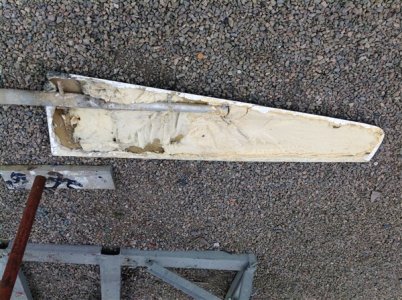
Could they not have displaced the rudder shaft? Or damaged the bearings?Despite the title of this thread I cannot think of any disaster those rocks could have caused if they were under a bilge keel,or rudder.
Well here is oneDespite the title of this thread I cannot think of any disaster those rocks could have caused if they were under a bilge keel,or rudder.


Same type of situation but I woke up, after drying out, to find my inflatable jammed under my boat due to tide and wind as the dinghy floated before the mother vessel. I now tie it up at the bows overnight to stop this from happening.So lucky I did not hit my rudder or keels on these rocks, and so unlucky that I managed to find the only patch of rocks in the entire bay.
View attachment 196021
Wouldn't do a lot of good if you hit a keel as it would put the keel bolts under a sudden shock and the skeg is only bolted to the hull and is a big lever so there again, not a good thing to do but if the boat had anchored and just settled on the rocks, as the tide went out then I agree but if the boat was run aground to dry out, and was moving at a couple of knots it could have caused damage.Despite the title of this thread I cannot think of any disaster those rocks could have caused if they were under a bilge keel,or rudder.
Were you anchored or did you run it aground.So lucky I did not hit my rudder or keels on these rocks, and so unlucky that I managed to find the only patch of rocks in the entire bay.
View attachment 196021

Just anchored, I had previously walked the beach and marked any areas with rocks.Were you anchored or did you run it aground.
That would have been a disaster for meDespite the title of this thread I cannot think of any disaster those rocks could have caused if they were under a bilge keel,or rudder.
 . A wrecked rudder or damaged bilge keel.
Check out rescued from the rocks on scuttlebutt!That must be where the expression comes from "I am stuck between a rock and a hard place" I think rocks and boats are best kept apart but I have seen bilge keelers, when lifted out of the water resting their keels on some pretty thin pieces of wood.

Check out rescued from the rocks on scuttlebutt!
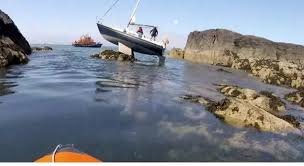
I would not attempt going in there, but is it the entrance to the NE.View attachment 196466
Rhyl sailor better check on the right entrance for this anchorage.
Getting the wrong entrance into the Skerries lagoon is way worse than a pile of stones by the Ship Inn!