1980's Beneteau Keel bolts - does this sound right

To answer your question why I still distrust bolt on keels to a GRP hull is because to me it seems very wrong to bolt under great torque a solid non-compressible iron keel to a GRP laminate which in itself is also non-compressible but crushable. The keel bolts only penetrate an inch or so which means that the compression in the keel is very small while the grp keel stub supplies virtually none and with very little elasticity to spring back ensuring tension over a long period of time.

Iron to iron seems OK to me. Wood is even better. It will compress ever so slightly so that the compression exerted by the bolts will be retained for many more years than the solidified jam of the GRP keel stub. It just seems wrong to me.

I would not be surprised if bolt on keels become a big issue in the next few years as more and more of the old ones start to fall off as the elasticity of the grp equalises and the keel becomes loose the detaches under stress. In fact I would say that it will only be the rust that will prevent the nuts from spinning off.

As you may have gathered I am not a mechanical or structural engineer. My field is electronics but as I will repeat it feels wrong.
 
Hi Jonathan,

Yes I am in NY, Long Island....The boat was originally purchased in france by my uncle in 1985...so I am not sure if it was made differently knowing it would go to the US...the mast is keel stepped. Those other two bolts also looked glassed over under that table support.

All your info and everyone elses is so much appreciated!

It has been nicer weather lately, and looking to clear out water from the bildge and really determine if there is really water seeping through bolts. After cleaning off the first few foward...and things are dry...i see no seepage.

The bolts are looking good, and waiting for last bits of water to clear on the last bolt aft...there seems to be some water...but it may be sitting in the channel for the hoses...trying to get that all out to determine if that one is seeping. Last short haul, about 2 yrs ago..keel joint outside looked fine..

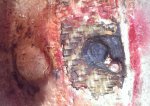
Its funny the "goop" that was put over the bolts is hardened, and looked like part of the bolt, cracking looking bad...which made it look like the bolt was falling apart...that does not seem to be the case.

I was planning to clean this area up, add some 4200 sealant around bolts, and lather on barrier coat paint (interlux-2 part epoxy paint), over the bolts as well as the whole bilge area. I bought new bolts from beneteau and may not need them after all...at least for a while!

I will plan I think to do the sailing for now as you suggest! More fun...

Keep you posted!

Thanks,
Bert

Keel stepped masts nearly always let water into the bilges, entering via halyard holes and dribbling down inside. Some havefoam inserts above deck level and drains to let the water escape there, the mast groove in the extrusion also needs to be blocked above deck level and the mast coat needs t be intact and properly attached to keep any water entering from there.my last keel stepped mast was fine on a swinging mooring but a veritable pain in a fixed position like in a marina or when laid up ashore in winter Any water getting in the bilges has the potential to corrode what is there at which time it can cause concern and worry.


Over The years we have traced water on several boats to, leaking hoses, fresh water tanks, hot water calorifier expansion relief valves engine seawater pump seals engine exhaust water inlet, leaking heat exchanger, drips from recovering anchor chain draining from anchor well, one through a pulpit bolt that ran half the length of the boat before reaching a place where it was visible. Even one through a solitary screw holding a sprayhood fitting to the coachroof that found it's way onto the VHF set many feet away and below. ,

All good boating fun, but you have a very nice boat to enjoy it on.
 
Last edited:
Hi Jonathan,

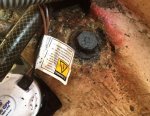
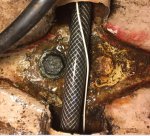
Cleaned the keel bolts some more...the worst one looks like the most forward one on the keel...none actually look like they are leaking after drying things out! The other actually are a bit rusted\worn, but not too terrible. there are the three that are covered in glass, and I did not expose them. As a plan, I think I would leave those in the glass, next haul check for any keel\hull seperation or crack...maybe replace the exposed more corroded bolts...the most forward one is somewhat worrisome, even though not leaking...see pic. I saw you had a spec from beneteau to torque the bolts to 154 ft/lbs...was that for all the bolts including the most forward one...it is the smaller bolt of the lot!
 

Attachments

  • IMAG1014[1].jpg
    IMAG1014[1].jpg
    103.9 KB · Views: 15
Hi Bert,

That bolt looks exactly like mine before I changed them. You know yourself you'll change it for piece of mind but I'll bet it comes out pristine :)

I've uploaded the Beneteau instruction sheet HERE

This is for the deep draught fin keel which Beneteau wanted confirmation of the type of keel I had before issuing. Makes me think there are different instructions for different keel types.

Also all the bolts on mine were the same size ....... no smaller one at the front like yours

Jonathan
 
To answer your question why I still distrust bolt on keels to a GRP hull is because to me it seems very wrong to bolt under great torque a solid non-compressible iron keel to a GRP laminate which in itself is also non-compressible but crushable. The keel bolts only penetrate an inch or so which means that the compression in the keel is very small while the grp keel stub supplies virtually none and with very little elasticity to spring back ensuring tension over a long period of time.

Iron to iron seems OK to me. Wood is even better. It will compress ever so slightly so that the compression exerted by the bolts will be retained for many more years than the solidified jam of the GRP keel stub. It just seems wrong to me.

I would not be surprised if bolt on keels become a big issue in the next few years as more and more of the old ones start to fall off as the elasticity of the grp equalises and the keel becomes loose the detaches under stress. In fact I would say that it will only be the rust that will prevent the nuts from spinning off.

As you may have gathered I am not a mechanical or structural engineer. My field is electronics but as I will repeat it feels wrong.
The problem is that as men get older they get cranky and fixate on things! I always say if you think there is a prob, identify it, research it and then if the research proves it is a prob, address it! Just thinking it is a prob doesnt hack it! The wealth of first hand experience on here is telling you that people who have gone down this route end up saying, with hindsight I wouldnt have done it. The nuts or bolt heads always look shitty, its the environment they are in. The shanks of the bolts are inevitably protected because of the way they are fitted! There are hundreds of thousands of figlass boats out there, I have never heard of a keel falling off due to bolt failure due to corrosion. The urban myth that you must check ypur bolts goes back to the days of wooden boats where the material was exposed to the elements by the nature of wood. Go sailing!
Stu
 
yes...the shank is pristine...but the head is what is actually holding the keel to the hull!!
If the head goes, the pristine shank will just slide right through, and the keel will just slide away with it...ergo...concern!

Bert
 
Hi Jonathan,

Thanks for the paperwork link to the beneteau doc. Not sure why there is a difference in the bolts we both have...definitely have a smaller one in the most forward point...and it is also part of the bundle of bolts I received from beneteau. I also have a deep draft fin keel....

I think i will have to do a little grinding on that bolt to get the edges of a socket to hold.

I think there must be a small leak from top side coming in along the line of the last keel bolt...looks like fresh water, but I have no water in the tanks...just rained a bit here the other day and there is a little extra water there, the other areas are dry... I will have to do some caulking above to get that stopped up. This water occurrence is probably originating from there...which started all this thinking the bolts are leaking.

I have had the boat for 7 yrs now...fixed everything else up on it...kind of left the bilge a little unsupervised...saw some water, relatively clean, but should have watched it better...

This was the first sailboat i have had and learned along the way...things are really good otherwise!

Will keep ya posted...might have a question or two as the time gets closer!

Regards,
Bert
 
Last edited:
Hi Jonathan,

I was re-reading the posts here...if I am correct, you received stainless studs and nuts to replace the original bolts? Is that right?

I just received the bolts ordered from Beneteau, and they look like the original galvanized or zinc coated steel bolts that are currently in place.

I did have another question: did you use any anti-seize or grease on the bolts or studs before putting them back and torquing them down? If so, anything in particular?

So it looks like I have direct replacements bolts and washers....I did not receive the one flat plate (with ground lug) for the most forward bolt. The big washers were also steel...not stainless. I have to contact them again.

Regards,
Bert
 
Last edited:
Hi Bert yes that's correct, I received stainless steel studs, nuts & washers. I was told Beneteau no longer had any of the galvanised ones left hence the switch to stainless. I wonder if your beneteau agent is stateside and have a stock as opposed to sourcing new from france?

No grease or thread lock was used. The studs were pre coated at one end with a "red" paint like finish which I guess was all the lubricant/thread lock that was required

jonathan
 
Hi Jonathan,

Question on the impact wrench you used for your keel bolts...specs?

I currently don't own an impact wrench, and have been looking over the various types. I know you mentioned you had used a 240v, 1/2" type... I have been reviewing battery types, electrics, and pneumatics(air). In the US, most electric is 115V. So the real question is, what is the max torque spec on the tool you used (Brand, model?)? For electrics here, they range in the 250ft/lb + range, Pneumatics are in the 600 ft/lb + range. I am leaning to the pneumatic type. I have a decent compressor. The electric version doesn't seem like it would be strong enough for these keel bolts.

Regards,
Bert
 
hi bert,

a 110v one will be fine. mine was from a local hire shop. Cost me £10 for a half day hire. In fact come to think of it mine was 110v too asit came with a 240/110v transformer.

I did own a battery one but the first bolt killed in in minutes
 
Hope you Gents don't mind but I would like to jump in here. I have a 1984 first 345, keel stepped mast, deep draft. This discussion is worth it's weight in crab meat to me as it is very timely. As it was being readied for launch we discovered the most after bolt/stud was corroded thru at the joint, leaving the threaded portion in the keel. The discussion now revolves around drilling out the old stud, tapping a new thread and using oversized bolt, or abandoning that position and drilling/tapping an entirely new hole. I lean towards the former. Also with regards to bolt position - did you find two under the table "saddle" just aft of the mast step?
Stephen
 
Hi Chefmango,

I am still planning on doing the keel bolts, but may wait until next spring. I have a 1985 first 345, keel stepped mast,...and I have 2 bolts under the table saddle...they are also fiber glassed over! I am not sure if I will touch those yet. I don't know if you have that as well. You will notice two bumps in the fiberglass, right where the bolts should be!

In you write up are you saying one of your bolts head has completed corroded away?

I also during my investigating, saw things about drilling out the bolt vs drilling a new hole and tapping. I am not sure which way is better. One note...if one of your bolts has broken apart, I would carefully check the others...additionally, you may want to take the boat out of the water and check the keel joint. If there is a gap, the other bolts could be in trouble. I know what you are thinking, since I have been thinking that too! After checking on my boat, the bolts are ok...but they definitely have some corrosion going on...I have pics of my bolts and locations in previous posts in this thead. Also Jonrarit had pics as well, and has gone through the bolt change. hope this helps...keep us posted!

Bert
 
Hi
I have a oceanis 500 and for insurance survey need to replace at least 2 bolts ( at mast area due to head corrosion), I don,t have any joy getting answers from Benny UK agents, can I ask if anyone can give me contact details for suppliers in uk or europe who will answer mails great thread to find, a lot of good reading here
 
Hello Bert,
Good news/ bad news with keel bolts. I have owned the boat for 13 years and inspecting the top of the bolts always gave me confidence in their condition as they were clean with no rust - however the two hidden bolts (on your schematic #9 & 11) were well degraded. #11 is the bolt that failed - corroded at the gap between keel and hull. I believe sometime in the past the easily accessible bolts were replaced and the two under the port side water heater were ignored. Got lucky with #9 after grinding a new hex on the head I was able to extract it and found it well on its way to failing. The bolts under the saddle had also been ignored, but they are in good enough shape to extract using a smaller socket. After discussing with a very helpful Beneteau service tech the strategy will be to drop the keel, remove the bolt thread that remains in keel position 11, re-bed the keel and attach with new bolts. So good news only 2 bolts were absolutely rotten, bad news have to drop the keel. Also the uncompromised bolts unscrewed without an impact wrench, but with a hefty 1/2" drive socket, a 2' leverage bar and brute strength. Also- Ward Richardson and everyone at Beneteau USA parts were very helpful and the service guys at the Beneteau dealer in Annapolis were terrific- willing to take the time to give me the best advice for the issue at hand. I'd send pictures but apparently I don't have that privilege as I am a new member.
Stephen
 
I am ready to lift the boat off the keel, and being a relatively competent carpenter I believe I am up to building a support cradle for the keel as it sits. Not wanting to re-invent the wheel I am looking for pictures and/or advice on design for such a structure.
Stephen
 
Hi ChefMango...

Looking at the keel bolts requirements, preparing things for april short haul and attempt at some keel bolt replacements. What year\model is your beneteau? I have the 1985 first 345.

I am looking and want to clarify what the torque settings should be.

Have you gone through this replacement?

Bert
 
Hello Bert, I have a 1984 first 345. This past summer I had to drop the keel in order to get at a sheared bolt. On inspection, besides the sheared bolt, one was corroded half way through and the heads of three were rusted to the point that I had to grind a hex shape into them in order to get them off. New bolts were had from Beneteau South Carolina for $15.50 each. An impact hammer was not necessary to remove. I used a 1/2" drive socket wrench with a 2' pipe extension for leverage and steady even pressure. In fact I would not recommend an impact wrench because if there is any weakness in the bolt it could shear when absorbing the shock. When replacing I rebedded with 4200 (not 5200) per the recommendation of a service mechanic at Beneteau, and be careful not to get any caulk on the threads. Torque value is 154 ft/lb.
Stephen
 
Hi ChefMango,

Thanks for getting back to me!

I did get bolts from Beneteau for the keel, and they are the "8.8" 20 x 70...I believe they are the M20
bolts and from a sheet I got from beneteau show some torque settings, it seems the M20 has a max of 195 Nm, which translates to 143 ft lbs! Min shows 94Nm which translates to like 80ft/lbs...ergo some confusion? I was thinking if I hit 120Ft/lbs, I would be good.

I guess a question is ...did you use Stainless bolts or the galvanized(zinc?) steel bolts? The stainless bolts show a higher torque setting?

Did your bolts leak water into the bildge? Is that what made you check them? Were any of the bolts covered by fiberglass like on my boat? ( wondering if I should crack through and check those?)

I am in the US...not sure where you are located. (I know you mentioned Annapolis)

Did you do all the work to reset the keel on the boat? Did you have a boat yard help or do the work for you?

What kind of bill did that give you? Did they do this in Annapolis? I am not looking to do a keel removal!
Thanks,
Bert
 
Keel Bolt plan\progress update

I have started to clear away things to access all the keel bolts.

I will be doing a short haul April 2017, attempt to replace bolts, paint the bottom!

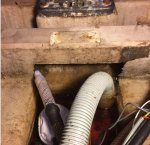
After clearing dirt, mess, tubing, some of the bolts don't look all that bad.

There are 3 bolts that are glassed over and cannot tell what condition those are in.
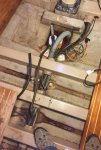
Two of these are under a support for the center table. I will have to either cut that support, or drill large holes to access those bolts.

I have a nice air impact wrench ready to go, new keel bolts\washers from Beneteau, and expect to torque those down to 125ft/lbs, with some 3m 4200 around washers at final seating.

I am visiting Annapolis in 2 weeks, and might stop by some service places for some advice.

Also looking to the ybw forum for peoples thoughts.

Some pictures are attached:

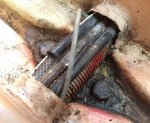
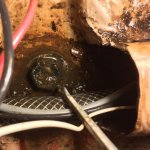
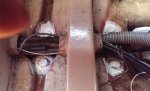
3rd row Stb Bolt.jpg4th row Bolts.jpgaft most bolt.jpgcovered up cleaned 4th and 5th row bolts.jpgFoward Glassed bolt and grounding bolt.jpgInitial Clearing.jpgTable Support over 2 bolts.jpgTwo Bolts Next to Last Aft.jpg
 
Top