Yanmar Exhaist elbow

The previous owner of my boat missed checking the elbow on the 1GM10 and ended up needing an engine rebuild and a new cylinder head, so I have been checking it every year. The rebuild was in late 2007 and this year's check has shown that it is starting to leak.

I ordered one from exhaustelbow.com and it arrived in about a week - from USA. At £80 rather than £180 for the Yanmar one I'm pretty happy with the service :-) Hopefully it will also last longer than the old one.
 
Out of interest only...
Why is the Yanmar exhaust elbow of this double walled construction and why, if it fails, is it liable to kill the engine?
If the exhaust elbow on my Beta fails I guess it would spray water and exhaust fumes into the engine bay but it wouldn't compromise the engine itself.
Can the Yanmar elbow not be replaced with a simpler, less dangerous-to-the-engine, design?
 
If your exhaust elbow needs replacing why not replace it with a stainless steel one? Much cheaper than the Yanmar original equipment.

See here http://www.exhaustelbow.com/

I have one of these. In fact I have two, because the first one looked a bit dodgy - the inner tube was not concentric with the outer and nearly touched it - and the chap sent me a replacement free of charge. Good service, arrived quickly and, as you say, half the price of Mr Yanmar's unobtainium one. I shall be taking mine off this winter to give the inside a good staring at; the outside looks fine.

Incidentally my original Yanmar one is stainless. There is a widespread belief that they are mild steel, which makes me wonder if they were at one time.
 
Out of interest only...
Why is the Yanmar exhaust elbow of this double walled construction and why, if it fails, is it liable to kill the engine?
If the exhaust elbow on my Beta fails I guess it would spray water and exhaust fumes into the engine bay but it wouldn't compromise the engine itself.
Can the Yanmar elbow not be replaced with a simpler, less dangerous-to-the-engine, design?

I cannot understand how failure of the exhaust manifold can damage the engine, maybe boggybrn can explain? AFAIK most designs are pretty similar, concentric tubes with water on the outside, exhaust gas on the inside. I don't think Yanmar are any different from Volvo, Bukh, etc.
 
I cannot understand how failure of the exhaust manifold can damage the engine, maybe boggybrn can explain? AFAIK most designs are pretty similar, concentric tubes with water on the outside, exhaust gas on the inside. I don't think Yanmar are any different from Volvo, Bukh, etc.
There is no double, concentric, tube on a Beta exhaust elbow. The water just sprays into the single tube coming off the exhaust manifold. It's made of aluminium.
 
There is no double, concentric, tube on a Beta exhaust elbow. The water just sprays into the single tube coming off the exhaust manifold. It's made of aluminium.

I guess that would be quite tricky and expensive to do in aluminium. The one on the BMC 2.2 in my motorsailer is the same, fabricated in stainless steel (photo). I suspect that erosion is more likely with that design than with the concentric tubes type.
f1cfbfb7294f830e04ba7ad3b6889756.jpg
 
There is a section of tube concentric with the main outer tube - so that the water injection sprays onto this. I guess that the problem is that the water injection is pretty close to the cylinder head and that any leaks in the welds for the inner tube can cause water to get into the exhaust port and hence onto the exhaust valve and into the cylinder.
 
There is a section of tube concentric with the main outer tube - so that the water injection sprays onto this. I guess that the problem is that the water injection is pretty close to the cylinder head and that any leaks in the welds for the inner tube can cause water to get into the exhaust port and hence onto the exhaust valve and into the cylinder.

Sorry, I don't think that could happen. When the engine is running there is a massive gas flow away from the engine that would transport any water away. If that was not the case the Beta design, where there is no inner tube, would not work. When the engine is stopped there is no water flow, of course, other than possibly a small drainage that would run down the exhaust hose.
 
There is no double, concentric, tube on a Beta exhaust elbow. The water just sprays into the single tube coming off the exhaust manifold. It's made of aluminium.

That's strange, although I don't doubt what you say. Yet I've installed two Betas, a 28 and a 50, both with the optional high-rise exhaust elbows. They were both double-skinned with the water injected between the skins.
 
That's strange, although I don't doubt what you say. Yet I've installed two Betas, a 28 and a 50, both with the optional high-rise exhaust elbows. They were both double-skinned with the water injected between the skins.

The standard Beta elbow is single skinned, with the water injection point well downstream. The high rise Beta item that I've seen only had a double skin on the last 2 or 3 inches of it's length, where the water injection point was attached. The curvy bit was single skin. It consequently gets very hot.
I think that the objective of the Yanmar design is to minimise the length of exposed pipe which is at exhaust gas temperature
 
That's strange, although I don't doubt what you say. Yet I've installed two Betas, a 28 and a 50, both with the optional high-rise exhaust elbows. They were both double-skinned with the water injected between the skins.

Maybe it's only on the standard exhaust on the smaller engines then? Mine is on the 14HP (BZ482). It has just finished its 10th year (but only 700Hrs) and so far as I can see there is no erosion/corrosion. I assume a smaller engine doesn't throw out as much heat into the elbow so it can get away with just the single wall.
 
Having mine off and checking it is on the list for this winter. Best way to decoke it internally please?

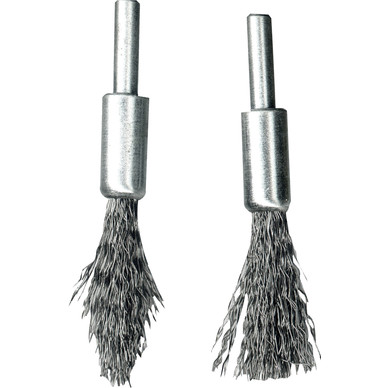
I have't done it myself, but I have decoked other things with an electric drill and these

53351.jpg


Dirt cheap - that picture is from Toolstation where they are £1.67 a pair (http://www.toolstation.com/shop/Pow...Abrasives/sd1920/Decarb+Wire+Brush+Set/p53351) but lots of places sell them - "decarb wire brush" or "decoke wire brush" normally finds 'em. You won;t get all the way down the middle tube, of course, but you'll get a fair way in from each end (may need a flexible extension for the downstream end).
 
Having mine off and checking it is on the list for this winter. Best way to decoke it internally please?

I do mine with a fairly long flat blade screwdriver. The carbon deposits can be very tough to get off. Also, this method whilst being fairly brutal will soon show up if there are any holes in the inner tube. Other less aggressive methods may well remove the surface carbon but baked on layers could still mask underlying weakness in the inner tube.
 
I do mine with a fairly long flat blade screwdriver. The carbon deposits can be very tough to get off. Also, this method whilst being fairly brutal will soon show up if there are any holes in the inner tube. Other less aggressive methods may well remove the surface carbon but baked on layers could still mask underlying weakness in the inner tube.

If there is a good engine reconditioners handy they may be able to dissolve off the coke in a hot caustic bath. I used to use Paynes of Eynsham for this, and they aren't that far from Bucks. There is no way I would want to try this at home.
 
I had first a 1GM10 and now a 3YM20 in the latest boat.

Yanmar seem to suggest, in both cases, that the exhaust mixer elbow is looked at very often, maximum 2 years ( every 200 hours for the 1GM10!)

The problem seems to be common to both engines - the burnt gas exits the block and after a time seems to burn lots of pin holes about 1cm or so into the elbow, through which seawater can be sucked back onto the exhaust valves, which rust and knock out the head.

On my 1GM10 I had an alternative arrangement made from cast iron piping and screwed on U-bends with the water entering the system after the U-bend and that never gave any problems after that. Cost about the same as the throwaway stainless original. You can get them from Cellar Marine in Porthallow.

It takes up more room than the original but well worth it. It needs lagging with insulation tape, as it gets hot.
 
Top