Worrying compression results HELP PLEASE

Thanks so much for all your help and advice guys,

Just ran another test. This time engine was cold and throttle open but i sprayed some 2 stroke oil in both cylinders and the readings i got was 95PSI on both cylinders. So compression is slightly rising when oil is in. Can anyone tell me is this a good or bad thing and would my readings be sort of normal for a 40year old engine?
I would have thought they were pretty normal for an engine of that age. You will get slightly higher readings when you put oil in the bores and seal the pistons better, but its a pretty old design which has seen some use so you cant expect high readings. 95 psi is almost a 7:1 compression ratio and back in the 80s even 4 stroke cars were only 9 or 10. Two strokes are always lower.

Does the engine work? If so, dont worry. Just get on with life.
 
I would have thought they were pretty normal for an engine of that age. You will get slightly higher readings when you put oil in the bores and seal the pistons better, but its a pretty old design which has seen some use so you cant expect high readings. 95 psi is almost a 7:1 compression ratio and back in the 80s even 4 stroke cars were only 9 or 10. Two strokes are always lower.

Does the engine work? If so, dont worry. Just get on with life.

That was my thinking that its 40years old and compressions where equal, trouble is its really low on power and a lumpy idle but other than that she runs. I just dont want it to let me down at sea because when things go wrong at sea... they go very wrong very quickly
 
Ok, today i have stripped the head off and no visible signs of gasket being blown (causing low compression symptoms) anyhow im changing it anyways to rule it out,

Whilst i had the head off and could see the top of the pistons i cleaned off as much carbon as i could, the bores seem perfect, no gouges or scratches or carbon build up however,...

I poured some deisel/2 stroke oil mix into the bores to hopefully try to wash any carbon that maybe stopping a piston ring from sealing properly and it came straight past pistons and flowing out of the reeds and carb backwards. It wasnt coming out as fast as i was putting it in but i could see visible continuous drips coming out until the bores had no more fluid left. Piston position was half way up bores so i could do both at same time.

Is this normal? If not what could be the cause of this? Any ideas would be greatly appreciated. Cheers
 
Now you have got that far pull the barrels and see if the rings are stuck or worn.

I think i would have to take off whole block and to do that i would have to remove flywheel/stator etc and work downovers, then retime and stuff when finished, im not that confident in stripping that far down and rebuilding especially if i come across anything that is broken and going to be a nightmare to source parts/ gaskets etc, im not very mechanically minded and i think ive hit my limit of balls as far as stripping down goes haha. Think im at a cross roads here the way the fluid was dripping backovers from cylinders to reeds dont seem right to me but again im far from an expert or a mechanic
 
If oil flows past the rings that quickly, air will have no chance. No wear lip at the top of the bore? I suspect without more dismantling you maybe need to scrap it.
Another thought, if the oil is flowing away so quickly I would have expected lower compression than you had, maybe the carbon you disturbed was a good part of the seal? Maybe re assemble with the old gasket (use Hylomar or similar on it) and see where you are?
 
If oil flows past the rings that quickly, air will have no chance. No wear lip at the top of the bore? I suspect without more dismantling you maybe need to scrap it.
Another thought, if the oil is flowing away so quickly I would have expected lower compression than you had, maybe the carbon you disturbed was a good part of the seal? Maybe re assemble with the old gasket (use Hylomar or similar on it) and see where you are?

Thanks i will order some hylomar and give it a shot, dont think its worth chucking 100s at it for its age. Thanks
 
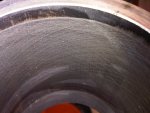
If the bore still has good cross hatching just suck it up and remove barrel /body and check ring clearance. It's an easy enough job and chucking motors for want of rings is simply barking. Whoever advised sealing the head with hylomar needs a public whipping. That is an almost guarantee of ruining your motor as it never sets and is truly superb at one thing, blocking oil and water passages.

IMG00421-20100328-2112.jpg
 
If the bore still has good cross hatching just suck it up and remove barrel /body and check ring clearance. It's an easy enough job and chucking motors for want of rings is simply barking. Whoever advised sealing the head with hylomar needs a public whipping. That is an almost guarantee of ruining your motor as it never sets and is truly superb at one thing, blocking oil and water passages.

View attachment 99957

The bores didnt look like that! They where sort of smooth polished surface, no gouges or cracks just smooth like it had been machine polished. I did not use hylomar as it stated on the description of gasket that no need to use such products. Anyhow i replaced gasket and still got 80PSI on both pots. Think bigger rings are needed as fogging oil leaked past pistons within minutes. Thanks
 
I always used Hylomar on the head gasket on my road and competition engines, as advised to do by the works guys.

Hylomar is great for sealing wetliners and the like. But a head or anywhere there are oil and water passages I'm firmly in not ever camp.
 
The bores didnt look like that! They where sort of smooth polished surface, no gouges or cracks just smooth like it had been machine polished. I did not use hylomar as it stated on the description of gasket that no need to use such products. Anyhow i replaced gasket and still got 80PSI on both pots. Think bigger rings are needed as fogging oil leaked past pistons within minutes. Thanks

Sadly I think your engine has run it's course. You need crosshatchings to retain oil for lubrication especially in a 2 stroke and without cross hatchings you should expect even higher compression readings. The bores have been worn alongside the rings and although you could put in oversize rings the engine would likely need a complete top end rebuild and it may not be financially viable.
 
Sadly I think your engine has run it's course. You need crosshatchings to retain oil for lubrication especially in a 2 stroke and without cross hatchings you should expect even higher compression readings. The bores have been worn alongside the rings and although you could put in oversize rings the engine would likely need a complete top end rebuild and it may not be financially viable.

Yeah i could possibly chuck 5-£600 at it but its age just simply doesn't justify that! Im looking for a little more power anyways, think il sell it for spares and save up for a 40. Thank you all very much for all your comments and top advice. Cheers BruceK
 
Hi folks quick update.....
I changed the head gasket and borrowed a friends compression tester today, the test was performed on a hot engine with the throttle open and did 3 tests per cylinder, the results are as follows...

Hot test
105psi on all 3 tests on both cylinders

Wet test
Top cylinder 124psi all 3 tests
Bottom cylinder 120 all 3 tests.

Would you say the increase between hot and wet test is cause for concern or is this pretty normal and also is 105psi hot acceptable or is there still an underling issue? Thanks folks
 
Would you say the increase between hot and wet test is cause for concern or is this pretty normal and also is 105psi hot acceptable or is there still an underling issue? Thanks folks

105 psi hot is acceptable but no cross hatchings is still a concern as the cylinder is not effectively lubricated. There is a chance the bores are glazed and a good clean may reveal some hatchings still, or you could have them professionally redone, forget scotch bright pads the angle is important and if the barrels are nikasil it will need specialist tooling.
For cleaning glazing dont be tempted to use abrasives. Use a cloth and clean first with brake cleaner and then with ATF (it's also a good detergent and will pick up where the brake cleaner left off.) Then run the engine under hard load with Seafoam. You may get lucky. Sea Foam 1 Pack (16 Ounce) Extreme Marine & Rv SF-16 Seafoam Liquid 16 Fl Oz: Amazon.co.uk: Business, Industry & Science
 
Last edited:
105 psi hot is acceptable but no cross hatchings is still a concern as the cylinder is not effectively lubricated. There is a chance the bores are glazed and a good clean may reveal some hatchings still, or you could have them professionally redone, forget scotch bright pads the angle is important and if the barrels are nikasil it will need specialist tooling.
For cleaning glazing dont be tempted to use abrasives. Use a cloth and clean first with brake cleaner and then with ATF (it's also a good detergent and will pick up where the brake cleaner left off.) Then run the engine under hard load with Seafoam. You may get lucky. Sea Foam 1 Pack (16 Ounce) Extreme Marine & Rv SF-16 Seafoam Liquid 16 Fl Oz: Amazon.co.uk: Business, Industry & Science

Brilliant i will get on with this, would you recommend to run a slightly rich fuel mix to give extra lubrication to a worn engine or could this cause more damage and problems down the road.
 
Top
