Wooden rudders

Rum Run

Well-Known Member
Joined
7 Apr 2011
Messages
893
Location
Me: Midlands, Boats: East Coast
Visit site
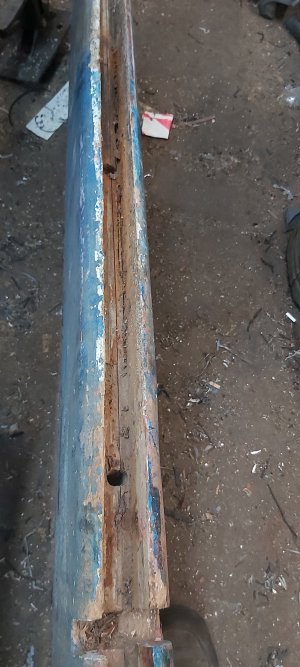
I have a 1968 half-tonner with a wooden rudder blade. It is on a skeg, and has a stainless stock and heel fitting. It is thoroughly dry at the moment and the existing paint is flaking, so will all be removed down to bare wood.
What is the best way of treating the wood - it's teak I think - prior to antifouling? It is fully submerged when afloat.
My main concern is longevity of the timber rather than minimising effort or materials.
 
I assume the rudder has not warped and has no sign of worms or other damage. If it has been like that in the water for some time then perhaps it does not need additional treatment apart from under coat and antifoul paint. usual thing if it is showing signs of damage might be to fix warm or fill holes then encase it is GRP. (epoxy of course)
However encapsulating in GRP can mean just a layer of glass and resin over the wood which may protect it. Or put on so much GRP thickness that the wood becomes in effect merely a mold for the many layers of glass and resin. Like more than 7 mm thick. The thin layer can delaminate the thick layer not so. However if you go the thick layer then you are changing the shape of the rudder. So make the wood thinner before you start or put up with thicker rudder. Sio the joy of boating is that you can do what you like. Do what you get the urge to do. ol'will
 
Just make sure that the areas where the metal pass through the wood do not need attention. Although in salt water durable woods are normally ok there can be a reaction with metal. I had to do some repair work. For coatings I used as above, a good underwater primer, undercoat and antifoul.
 
I am on my 3rd rudder in 44 years. The first two wooden bladed ones suffered impact damage and when I considered a repair I found evidence of rot at the top of the rudder. The blade underwater was fine but the top had collected rainwater which led to the rot. The original rudder had a stern light let into a hole in the top of the rudder. Apart from collecting water in the hole this also had the interesting effect of altering the angle of the light as the rudder was moved. The current rudder has a GRP blade and wooden cheeks and I hope it will outlast me if I look after it.
Primer and antifouling should be fine for you.
 
Thanks all. Scrape and paint it will be. I'll save the FRP magic until this one rots, which could be another 50 years, so not my problem anyway!
I shall probably use Jotun Vynaguard 88 as it has worked well in other underwater situations for me
 
Hello again !
I have an additional question - the stock (1" stainless round bar) sits in a trough down the front of the teak rudder blade and is open to the sea, though hidden from view by side cheeks on the skeg. There has been a lot of barnacle growth on the steel plus some slight surface corrosion. Antifouling anything in this trough is impossible without unshipping the rudder. I thought of gluing a timber fillet into the trough, so covering the stock. Then I worried about the possibility of crevice corrosion if there is no oxygen !
Do other boats have wooden rudder blades with a completely buried stainless steel stock?
 
Ive repaired/built a fair rew rudders. The only problems I've found with wooden ones is lack of protective paint leading to a worm attack at the waterline and the bottom of the rudder.
Its amazing how much more bouyancy a wooden rudder gets once fully dried out.
I removed a rustler 36 rudder, around 4m long and i think its iroko. Wanted to check the stainless hinge straps where they sit against the wood. A barely noticable amount of crevice corrosion and a few torredo worm holes. Nothing a few months in the summer sun wont cure.
The strangest rudder was on a saro scimitar. The rudder stock was a galvanised tube which just slid into a tubed hole in the rudder blade and had a nut and bolt through it to hold it in place.

@Rum Run - if it has worked so far with the current setup then why not continue with it ? I would possibly pour some glue some adhesive into the cracks before putting the rudder stock back on. You could use butyl tape to fully cover the stainless part that goes against the wood ?
A good wood primer and paint/antifoul to protect from gribble and it should be trouble free for many years to come.
 
Top