Trident
Well-Known Member
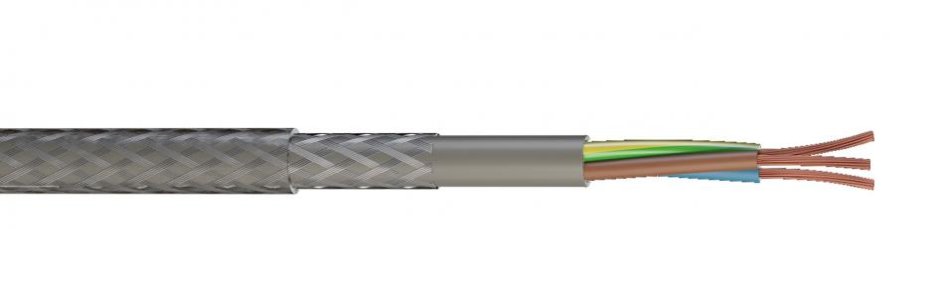
I always use SY cable - armoured, multi strand and looks really pretty - not expensive either

Our boat was wired from factory with cable marked H07 and it was in remarkably good condition 35 years later.See https://electrical.theiet.org/media/1592/the-use-of-arctic-cable.pdf
I believe the "correct" cable would be HO7 or possibly HO5

The only “Rule” is taken from the Electricity at Work Regulations 1989, where you will not find anything as specific as the French spec you cited. Even the IET Wiring Regulations do not have the force of law. However, the 1989 Regs do call for Electrical Knowledge by one form of phrasing or another. In effect competence and a competent electrician would reference several factors to come up with a solution, probably, close to the French spec! Cables to be as short as practicable and of a suitable grade for the job in hand, like the HO7 mentioned. 16A supplies are usual and then we only use about 3-5A so do not get found out, over longer lengths, for example. Have fun and happy to run some calculations over an example or two.May I ask a question: is there any rule in the UK for the mains cable between the pontoon socket and the boat?
I just discovered in France 3x2.5 is mandatory (even if one has appliances drawing at most 500-1000W), length must not exceed 25m, and there must be a 35ma safety device less than 50cm away from where the cable enters the boat.
Any such rules in the UK?


Well, It's done. No tripped breakers or bangs!
And no more extension leads trying to trip us up or garrotte us when we go for a pee in the middle of the night.
Interestingly, the cable I used, marked 05BN4F, is tinned. In what should be a relatively dry environment, not essential, but a bonus.
One supplementary question. The cable runs along inside corners of GRP lockers for much of its length. It isn't a particularly smooth surface - the "wrong" side of the GRP, and not somewhere I can use screwed or nailed cable clips. Any thoughts on the best way to fix it in place? Would a self-adhesive conduit stick properly?