

You are using an out of date browser. It may not display this or other websites correctly.
You should upgrade or use an alternative browser.
You should upgrade or use an alternative browser.
Who designed the best looking yachts?
- Thread starter coopec
- Start date
coopec
N/A
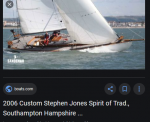
Charles Ernest nicholson ?
Where to start..so many beautiful boats.

coopec
N/A
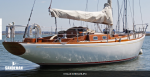
Another S & S fan here. She 31 is such a beauty:
...to say nothing of the 36...

coopec
N/A
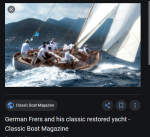
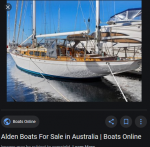
For modernish yachts, German Frers and S&S. A bit earlier Holman & Pye, Alden and and S&S again. Lots of designers have produced the occasional lovely yacht in amongst many others less pretty, but the above have a high percentage of beauty in their designs.
Last edited:
coopec
N/A
I like the style of Hans Christensen designed by Robert H Perry. (Has someone mentioned Perry before?)
But apparently GARDNER McKAY was designed by Scott Sprague under the guidance of the owner of Hans Christian to be a fast, blue water cruising yacht. She was constructed specifically to be the "Ultimate Blue Water Cruiser". Her cutaway forefoot full keel with detached rudder, canoe stern, and heavy rigging make her capable and strong on the open seas
48' Hans Christian - Gardner McKay
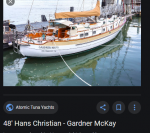
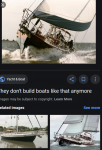
But apparently GARDNER McKAY was designed by Scott Sprague under the guidance of the owner of Hans Christian to be a fast, blue water cruising yacht. She was constructed specifically to be the "Ultimate Blue Water Cruiser". Her cutaway forefoot full keel with detached rudder, canoe stern, and heavy rigging make her capable and strong on the open seas
48' Hans Christian - Gardner McKay
Attachments

Last edited:
coopec
N/A
Compare Stormvogel and Wild Oats. So sad?
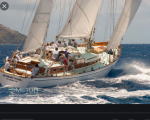
Stormvogel (Laurent Giles) winner Line Honors 1965 Sydney/Hobart
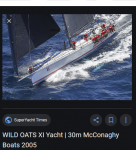
Wild Oats Line Honors 2014 Sydney/Hobart (Needs motor running all the time to provide power for winches, managing the ballast (maybe air conditioning, refrigeration and galley power as well?)
Stormvogel (Laurent Giles) winner Line Honors 1965 Sydney/Hobart
Wild Oats Line Honors 2014 Sydney/Hobart (Needs motor running all the time to provide power for winches, managing the ballast (maybe air conditioning, refrigeration and galley power as well?)
Last edited:
cherod
N/A
much as we love the Colin Archer technically it was ( iirc ) designed as a life boat / pilot vessel for Norweigan waters , not as a yacht .Colin Archer View attachment 91828
doug748
Well-Known Member
In GRP two designs, Nicholson 43:
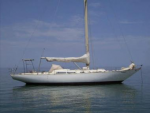
Courtesy Nautipedia
The helipad would have to go.
And the Marieholm IF Boat:
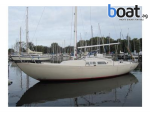
Courtesy of boat.ag
.
Courtesy Nautipedia
The helipad would have to go.
And the Marieholm IF Boat:
Courtesy of boat.ag
.
coopec
N/A
There must have been a number of Stormvogel yachts?

History
Ocean racing in the post World War 2 era was a changing sport. A far cry from the once ‘gentleman’s sport’ yacht racing was fast becoming a highly competitive field with new technologies and initiatives from progressive competitors. Stormvogel was the result of the radical ideas of Cornelius Bruynzeel, a Dutch construction timber manufacturer and a close collaboration of well-renowned designers.
Cees Bruynzeel was mainly interested in speed, boat for boat, to be first across the line, to achieve line honours, that was his goal. His experience with Van de Stadt design, in 1949 Zeevalk, a 12.5 meter offshore racer, and in 1956, Zeeslang, a 9 meter radical light weight racer convinced him that light displacement was the key if you wanted to be first boat home. Both yachts were hard chine construction, built of Bruynzeel plywood, and had a spade rudder and attached fin keel.
In 1959 he decided to apply this to the biggest possible yacht that was allowed to enter races, a boat with a 70 foot rating, and a length of approximately 23 meters, better known today as a Maxi. The yacht had to be as fast as possible, but it also had to be safe and easy to handle in all conditions, because it would be used as a charter vessel in between regattas. Celebrating his 60th birthday, Bruynzeel asked Van de Stadt to design the boat and make all the construction plans.
However, the Van de Stadt Zaandam drawing office was very busy towards the end of 1959 so Bruynzeel subsequently turned to Olin Stephens, but Stephens did not dare risk his reputation as a designer with a project that he felt involved a considerable risk. Bruynzeel then asked the English designer Laurent Giles, who had experience with building large, lightweight stringer construction wooden hulls to come up with a design. While Giles was still working on a preliminary design, Bruynzeel by chance meet Capt. John Illingworth, a man who loved to experiment and Bruynzeel could not deny him the opportunity to put his vision down on paper.
Bruynzeel was thus given two widely differing designs, making it difficult for him to choose. He asked Van de Stadt what his preference was, but he appeared not to be very enthusiastic about either plan, so during the following weekend Van de Stadt developed a preliminary design including lines.
Bruynzeel subsequently had models of the three preliminary designs tested in the towing tank of the University of Southampton. The tests showed the Van de Stadt round bilge design had by far the best characteristics. The Van de Stadt Zaandam Office, however had absolutely no time available to develop the plan in great detail. It was therefore agreed that Van de Stadt would design the hull, the keel and the rudder, Illingworth would work out the rig plan, and Giles would take care of the construction plans and the overall co-ordination.
History - Stormvogel
In Classics Racing, the 1960 Van de Stadt Ketch, Stormvog
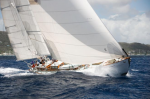
https://www.sail-world.com/photos/sailworld/Photos_2014_5/Alt_StormVogel Steve Manley1.jpg
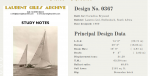
https://laurentgilesarchive.com/wp-content/uploads/2018/05/0367-Stormvogel-post-2015.jpg
History
Ocean racing in the post World War 2 era was a changing sport. A far cry from the once ‘gentleman’s sport’ yacht racing was fast becoming a highly competitive field with new technologies and initiatives from progressive competitors. Stormvogel was the result of the radical ideas of Cornelius Bruynzeel, a Dutch construction timber manufacturer and a close collaboration of well-renowned designers.
Cees Bruynzeel was mainly interested in speed, boat for boat, to be first across the line, to achieve line honours, that was his goal. His experience with Van de Stadt design, in 1949 Zeevalk, a 12.5 meter offshore racer, and in 1956, Zeeslang, a 9 meter radical light weight racer convinced him that light displacement was the key if you wanted to be first boat home. Both yachts were hard chine construction, built of Bruynzeel plywood, and had a spade rudder and attached fin keel.
In 1959 he decided to apply this to the biggest possible yacht that was allowed to enter races, a boat with a 70 foot rating, and a length of approximately 23 meters, better known today as a Maxi. The yacht had to be as fast as possible, but it also had to be safe and easy to handle in all conditions, because it would be used as a charter vessel in between regattas. Celebrating his 60th birthday, Bruynzeel asked Van de Stadt to design the boat and make all the construction plans.
However, the Van de Stadt Zaandam drawing office was very busy towards the end of 1959 so Bruynzeel subsequently turned to Olin Stephens, but Stephens did not dare risk his reputation as a designer with a project that he felt involved a considerable risk. Bruynzeel then asked the English designer Laurent Giles, who had experience with building large, lightweight stringer construction wooden hulls to come up with a design. While Giles was still working on a preliminary design, Bruynzeel by chance meet Capt. John Illingworth, a man who loved to experiment and Bruynzeel could not deny him the opportunity to put his vision down on paper.
Bruynzeel was thus given two widely differing designs, making it difficult for him to choose. He asked Van de Stadt what his preference was, but he appeared not to be very enthusiastic about either plan, so during the following weekend Van de Stadt developed a preliminary design including lines.
Bruynzeel subsequently had models of the three preliminary designs tested in the towing tank of the University of Southampton. The tests showed the Van de Stadt round bilge design had by far the best characteristics. The Van de Stadt Zaandam Office, however had absolutely no time available to develop the plan in great detail. It was therefore agreed that Van de Stadt would design the hull, the keel and the rudder, Illingworth would work out the rig plan, and Giles would take care of the construction plans and the overall co-ordination.
History - Stormvogel
In Classics Racing, the 1960 Van de Stadt Ketch, Stormvog
https://www.sail-world.com/photos/sailworld/Photos_2014_5/Alt_StormVogel Steve Manley1.jpg
https://laurentgilesarchive.com/wp-content/uploads/2018/05/0367-Stormvogel-post-2015.jpg
Last edited:

Tradewinds
Well-Known Member
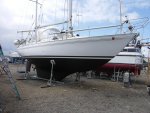
Ray Wall again - my Nicholson 39.

ghostlymoron
Well-Known Member
Beauty is in the eye of the beholder. The OP seems to assume that old is best, I believe that modern yacht designers have learned from their predecessors.
Dan Tribe
Well-Known Member
Even the best designers don't always produce beautiful yachts, commercial considerations sometimes prevail.
For example, consider
Holman & Pye Oyster 39 [probably Don Pye rather than Kim?]
Laurent Giles Westerly Vulcan.
Both fine ships with a faithful following no doubt, but not on my list of yacht porn.
For example, consider
Holman & Pye Oyster 39 [probably Don Pye rather than Kim?]
Laurent Giles Westerly Vulcan.
Both fine ships with a faithful following no doubt, but not on my list of yacht porn.
dunedin
Well-Known Member
Beauty is in the eye of the beholder. The OP seems to assume that old is best, I believe that modern yacht designers have learned from their predecessors.
I agree entirely. If you want retro (and better to look at somebody else’s old boat than to have to maintain and live with) then should go the whole hog and it must be a Wm Fife designed and Fairlie built wooden gaff rigger. Old looking GRP stuff with aluminium mast and Bermuda rig are neither one thing or the other.
But for a beautiful boat I might actually want to own and sail how about Stefan Qviberg, designer of Swedish performance beauties such as the Arcona 430. That’s a boat ....
IAmCharlieC
Member
Ray Wall for the Nic 55
(I set out to buy a 43 and came home with a 55 - she seduced me)View attachment 91873View attachment 91878
you bought Kukri! amazing - sailed with her [and the other 55's] in many Tall Ships Races over the years. This thing I will always remeberabout seeing the 55's is how they had to put the sails on deck to have enough bunks for the whole crew to sleep when not at sea doing watch-on-watch...

jordanbasset
Well-Known Member
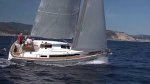
Agree, my Bavaria was designed by Bruce Farr and I think is beautifulBeauty is in the eye of the beholder. The OP seems to assume that old is best, I believe that modern yacht designers have learned from their predecessors.
(mines hasn't got the teak deck)
IAmCharlieC
Member
Folks,
for what it's worth - here is my vote.
Another vote for Kim Holman. Stunning boats (I might be slightly biased).
C. R. Holman and the Twister | Little Ship Club
The life and designs of Kim Holman - Classic Boat Magazine
I also cast second votes for Olin Stevens, Knud Reimers.
Very pleased to see people on this thread shouting out for Stormvogel. Donald Searle - which is a heavily built built-for-sail-training version of Stormvogel - is still sailing well from the Hamble 40 years after she was launched.
The Boats | Rona Sailing Project
Charlie
for what it's worth - here is my vote.
Another vote for Kim Holman. Stunning boats (I might be slightly biased).
C. R. Holman and the Twister | Little Ship Club
The life and designs of Kim Holman - Classic Boat Magazine
I also cast second votes for Olin Stevens, Knud Reimers.
Very pleased to see people on this thread shouting out for Stormvogel. Donald Searle - which is a heavily built built-for-sail-training version of Stormvogel - is still sailing well from the Hamble 40 years after she was launched.
The Boats | Rona Sailing Project
Charlie

Stemar
Well-Known Member
I wouldn't argue about many of those illustrated, but I'm no fan of the fat bottomed girls that are fashionable today. They may sail the socks off a long keeler from the 60s and 70s, but the older boats have an elegance that a modern boat just can't match
She isn't what I'd call elegant, but I've always fancied the Vagabond. She has a tough, purposeful air about her. She just says, I'll take you round the world in comfort and bring you back safely
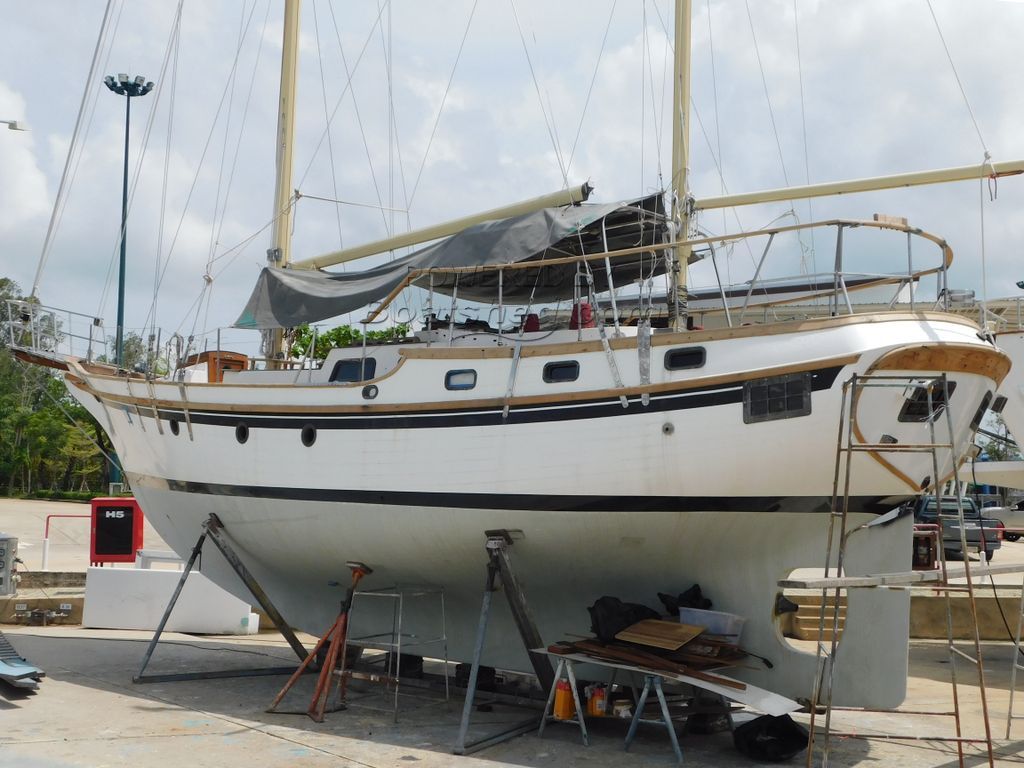
She isn't what I'd call elegant, but I've always fancied the Vagabond. She has a tough, purposeful air about her. She just says, I'll take you round the world in comfort and bring you back safely
Sharky34
Well-Known Member
IMO, you can't beat a Tradewind 35 for looks.
mucklestone
Well-Known Member
What looks good also depends on the users experience and knowledge of the subject.
About 20 years ago I got into sailing on a macgregor 26x power sailer. When moored in busy locations and public jetties, it got a lot of attention and compliments for the way it looked. Experienced sailors saw a tippy, lightweight boat that struggled when the wind picks up, but to the layman, they saw a super modern looking sleek sailboat. It was the one everyone wanted a photo with! It's not my cup of tea, but was certainly complimented at the time....
About 20 years ago I got into sailing on a macgregor 26x power sailer. When moored in busy locations and public jetties, it got a lot of attention and compliments for the way it looked. Experienced sailors saw a tippy, lightweight boat that struggled when the wind picks up, but to the layman, they saw a super modern looking sleek sailboat. It was the one everyone wanted a photo with! It's not my cup of tea, but was certainly complimented at the time....

michael_w
Well-Known Member
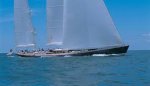
German Frers's Rebecca. That bow angle is perfect.
Charal
What she does makes her special - 60' up on foils.

Charal
What she does makes her special - 60' up on foils.
Other threads that may be of interest
- Replies
- 10
- Views
- 262