What's your chief dread at sea? Can we predict and prepare?

Umm...gentlemen, I...I'm deeply reluctant to butt in here, but...raft races? Get-togethers this weekend? Curry sauce?

What happened to the nightmare of psychotic oversize porpoises, and submerged containers and mid-ocean dismastings? :confused: :dejection::grey:
 
Umm...is that in any way related to sailing, or the dangers of the deep?
Yes!. At home I can always use the bidet to spray the affected area with cold water - not possible on the boat - not got room for a bidet nor enough fresh water storage to run one even if I had the room. You try sitting in the cockpit with a "burning ring of fire" and concentrate on navigation matters, avoiding the mobo drivers (I con't class them as sailors) and other duties of the skipper. It is really difficult to concentrate on anything apart from the pain hence the need for instant relief.
 
Reading the accounts of boats that get into trouble that are published in PBO it seems that often it is things happening together or shortly after each other that causes problems. Each of them is manageable on their own but together they can cause havoc. e.g. A rope goes round the propellor, fog descends, the wind dies, the radio stops working then someone falls overboard!

This is a very recognised feature in aviation - Crew Resource Management - where a series of small things lead to a disaster. Each 'small thing' contributing to the next small thing or distraction. It is often the series of events and decisions made that lead to the major problem. And that is hard to spot without hindsight.

I remember slumbering half asleep in my boat bunk listening to a radio play that started playing "pull up, pull up, pull up". I jumped from my bunk before remembering I was on a boat. :-)

One of my greatest horrors is grounding on a falling tide (fin keel) over inhospitable ground. Not so much from the PoV of fear of life, but the damage and distress to the boat.
 
This is a very recognised feature in aviation - Crew Resource Management - where a series of small things lead to a disaster. Each 'small thing' contributing to the next small thing or distraction.

Good point, made earlier and bears repeating. I expect the Air France flight 447 was amongst your thoughts. The fact that so much top-drawer high-tech kit monitored by a highly-trained crew, could still create a situation that was open to catastrophic misinterpretation, is very alarming...especially if the error is a trusted factor in subsequent steps taken.

...I suppose before GPS, the equivalent aboard yachts would have been undiagnosed compass error in fog. Too much faith in one input which mightn't be as good as we believe.
 
A lot of CRM is about avoiding overbearing Captains who intimidate crew into not speaking up.

I've always believed in speaking up when flying or sailing, better to look a live idiot...one time when a boy I said ' Dad, there's a submarine coming up behind us ! '

Dad was sure it was a wind-up and refused to look round; so was a bit surprised when an RN Oberon class boat went past on the surface at quite high speed.

Never be afraid to speak up !
 
A lot of CRM is about avoiding overbearing Captains who intimidate crew into not speaking up.

I've always believed in speaking up when flying or sailing, better to look a live idiot...one time when a boy I said ' Dad, there's a submarine coming up behind us ! '

Dad was sure it was a wind-up and refused to look round; so was a bit surprised when an RN Oberon class boat went past on the surface at quite high speed.

Never be afraid to speak up !

Lovely story.

Have a listen to this (from thirty seconds in as all music to start). It is from Cabin Pressure (Radio 4 comedy) - one of my faves. The scene progresses further than this clip and is very funny.

https://www.youtube.com/watch?v=Me_qte-oSDE
 
One of my worst moments was when I realised I had just one fag left on a trip due to last a further 8 hours. This was well before current tobacco phobia about smoking practically anywhere and I was totally untrained in self-restraint.

It was a bit of a wake-up call, I hadn't before realised how dependent I had become and gave up later that year.

I'm still in denial over the gin though, perhaps like Cliff...
 

Attachments

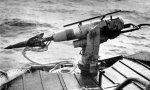
  • harpoon_gun.jpg
    harpoon_gun.jpg
    32.1 KB · Views: 0
Last edited:
That happened to me, in the Dover Strait separation zone, the heads door swung shut on me. No handle on the inside, sailing along by myself. I just booted the door open and laughed at the merest hint of adrenalin in my system.
The great Sir Robin Knox-Johnston took a 303 I believe, the Jungle Carbine would be ideal..
 
Dan, a very important question, deserving much thought and action.
I’m a member of the Cruising Yacht Association of Victoria. We encourage our members to look at this from a Risk Management point of view. Where (simplistically):
Risk = “Probability of something happening” (eg Rare . . . to Almost Certain) x “Consequences” (eg Trivial . . . to Catastrophic).
You then rank your list of risks and set out the equipment or actions to prevent/minimise, detect and recover from them. You might use this to make a Risk Plan and even incorporate the actions into your maintenance schedule (eg inspect stays every year AND before any major trip AND replace them every ten years).
Whilst each vessel will have a different Plan depending on the vessel, its crew, its sailing mode/area etc it does help to see other’s lists. Here is my ranked list of risks (any additions/subtractions?), (I forgot to include Sea Monsters), cheers Andrew:
Man Overboard
Flooding / Sinking
Anchoring system fails
Fire
Capsize
Lightning Strike
Dismasting
Crew injury
Crew illness
Collision
Motor not starting or running
Anchor drags
Grounding
Broaching or Pooping
Strong wind
Shore lines fail
Drinking Water depleted/spoiled
Food depleted/spoiled
Damaged Sails
Power failure/running low
(I should add that I mostly sail single handed, long distances, primarily up /down the East coast of Australia but one trip kept turning to port from Melbourne to Geraldton via Darwin)
Actually, quite a few folk could do with using this, though I would suggesting changing a few parameters.
First, set an expectancy to one year.. ever is a mighty long time, and second, if you are that keen , add that black swan scenario.
Why do I suggest a few people do this? Because the vast majority of people are totally useless as assessing and managing risk.. it all gets a bit emotional. So, consider doing this, because you might then get a sensible balance and chill out a bit more ;)
 
Story book tales, just don't relate to the family cruising I do.

Well...not that I'd wish anything but safe and comfortable voyages on anyone, however mundane their sailing...but I'd think anything more ambitious than a row on the Serpentine includes potentially mortal risks - there was a fascinating but frightening thread here, maybe 18 months ago, about the potential for deadly peril when transferring by tender in winter.
 
Last edited:
I dread everything on a boat.Chainplates coming loose,skinfittings breaking up,hitting a ship (done that) hitting a big heavy steel bouy (done that) running aground (done that) bic seas,small seal and no wind,ripping a sail,engine seizing,hell just about everything.I'll be putting the damned boat for sale,thank you very much for this thread!!!
 
Well...not that I'd wish anything but safe and comfortable voyages on anyone, however mundane their sailing...but I'd think anything more ambitious than a row on the Serpentine includes potentially mortal risks - there was a fascinating but frightening thread here, maybe 18 months ago, about the potential for deadly peril when transferring by tender in winter.

That's probably where the biggest risks are, that & walking along the pontoons after a night in the pub or club. We have plenty of "incidents" while sailing simple family trips, but VERY FEW could ever be considered life threatening.

Anchors are very useful in shallow water as is heaving to or deliberately running aground to deal with a problem. Have a cup of tea & think about the risks, they often aren't that great. You may struggle to get into your home berth after an engine problem, but you will be able to get somewhere safe to sort the problem out. I sailed out of Douglas inner harbour and into a berth in Port Penrhyn without an engine & then had the use of a derrick to get the engine lifted into the back of my car when I found that no-one in the IoM was interested in doing the work. No threat to life whatsoever.

We have bounced off rocks, big steel buoys, wrecks, sandbanks and other submerged or visible stuff with never more than the odd chip or scratch in the gel coat. Boats are much stronger than you might think provided you have the sense to be going slowly when there is a risk of hitting anything. Gas explosions are probably the biggest danger, but even so, they are extremely rare, and with care very unlikely.

By & large, sailing is very safe, just check out the statistics, for all the people & boats in use every year very few people ever die in yacht accidents. Most drownings happen inland & probably more often in cars than in boats. Most boat related deaths are in dinghies & small fishing boats where people may not have suitable safety equipment to hand.

Finally, a 3,000 mile 3-4week transatlantic crossing in an old boat with limited preparation is something I would consider dangerous, but pottering around the coast for a few days and miles at a time is not.
 
Last edited:
That would certainly get him out of a locked bog.

That happened to me, in the Dover Strait separation zone, the heads door swung shut on me. No handle on the inside, sailing along by myself. I just booted the door open and laughed at the merest hint of adrenalin in my system.
The great Sir Robin Knox-Johnston took a 303 I believe, the Jungle Carbine would be ideal..
 
Top