What to do about this teak deck?

burgundyben

Well-Known Member
Joined
28 Nov 2002
Messages
7,484
Location
Niton Radio
Visit site
This teak deck was laid in the 90's, its spent 18 years in a barn, has not been out in the weather since 2003. The teak log came from a ship that had sunk, the teak was underwater about 50 years, its proper teak, perfectly laid, swept just right, no fastenings and is laid on an epoxy coated ply sub deck.

As you can see in the photo, some caulking has let go. Given its teak on epoxy and no fasteners, could I ignore it? Smear in some caulk and sand? Or rake out and recaulk?

I'm nervous of raking out, I've seen many teak decks look awful with wide and wobbly lines after recaulking.
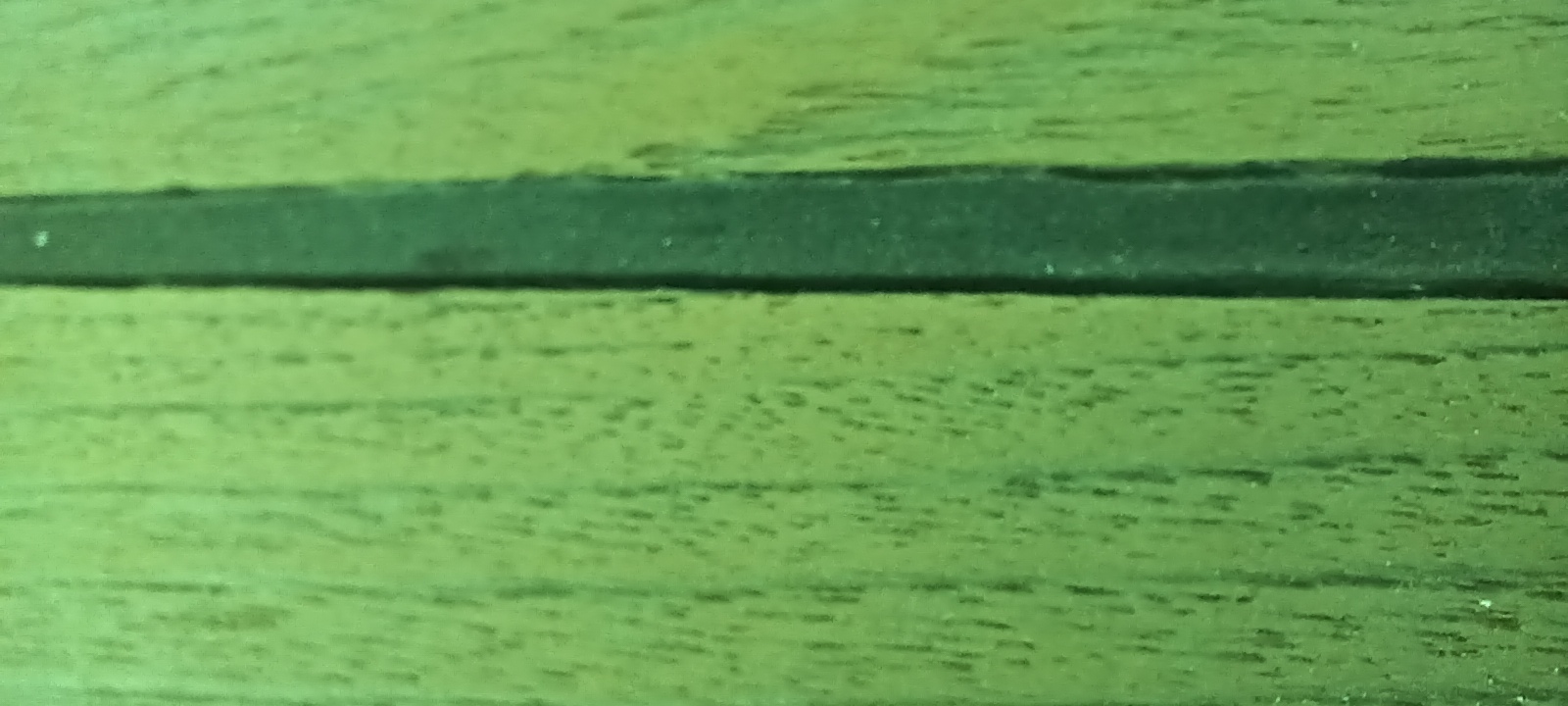
20231007-140745.jpg
 
You'll never get a better chance to get it right, and the deck is irreplaceable in practical terms - I'm afraid I'd do it.

I think a lot of recaulking ends up looking awful because it was left too long - meaning it's not level, the edges are soft and planks have warped. You're not in that position.
 
Is the caulking epoxy or "rubber"? If the latter getting a good finish of the new caulking is not difficult if you follow the instructions from Sika or TDS. Mask off, fill and level , remove tape then sand when cured. Epoxy with graphite similar but needs a bit of experimentation to get the mix right.
 
Rake it out. Clean the seams. Prime the seam sides (if required by the seam component manufacturer). Lay a bond-breaker in the seam bottoms. Re-pay the seams. Let cure and sand.

Epoxy/graphite is only good for thin (say 5mm) teak on ply.

Don't neglect it else you'll end up with rotten ply and more.

Cheers -- George
 
Last edited:
I would do the job properly by removing all the old caulking. With reasonable care and the right tools, you wouldn't damage the seams

I have a caulk removal blade for my Fein Multi-Master which works very well.

I also have an old file with the tang bent round to form a hook, hardened and tempered, and sharpened which is good for getting into the corners
 
If you are worried about damaging the sides of planks, make a plastic gouge to rake out the caulk. Less likely to rip the sides of groove.
 
Why not a hand held router running along a fence?
I suppose :

1) the cutter would quickly become clogged with the old sealant.

2) the fence would have to be curved to suit the sweep of the deck planking.

3) the noise would prevent one enjoying music or a talking book or silence!
 
I suppose :

1) the cutter would quickly become clogged with the old sealant.

2) the fence would have to be curved to suit the sweep of the deck planking.

3) the noise would prevent one enjoying music or a talking book or silence!
It would be easier on the back and hands though. If you went slowly enough there shouldn't be a problem of clogging the cutter, easy enough to make a curved fence it doesn't have to be a great big thick piece of wood. If you do it quickly enough no need for the distraction from the work with music or audio books, you could retire after completing the work with a drop of whatever suits your palate and pocket, feet up reading a book. 😁
 
It would be easier on the back and hands though. If you went slowly enough there shouldn't be a problem of clogging the cutter, easy enough to make a curved fence it doesn't have to be a great big thick piece of wood. If you do it quickly enough no need for the distraction from the work with music or audio books, you could retire after completing the work with a drop of whatever suits your palate and pocket, feet up reading a book. 😁
The time taken repositioning the fence (which would have to be flexible) and nailing(?) it in place for each pass of the router would negate any benefit gained by its speed of cutting.?

How do you make a router cutter run slowly? Mine revolve at more than 10,000 rpm.
 
The time taken repositioning the fence (which would have to be flexible) and nailing(?) it in place for each pass of the router would negate any benefit gained by its speed of cutting.?

How do you make a router cutter run slowly? Mine revolve at more than 10,000 rpm.
I didn't mean changing the speed of the cutter but how quickly you move the router. But each to his own way.
 
Router is a non starter. Firstly, nails to hold the batten on would compromise the epoxy layer under the teak and that a big no no no no no. Secondly, its a narrow deck, up against the super structure I wouldnt be able to get close, same at the deck edge due to a varnished toe rail, So it could only do half a job.

I've read the comments, thank you.

I'm still a little bit on the fence and thinking I might leave it, the epoxy barrier will protect the ply sub deck.

Its a work/benefit thing.
 
You could fix the fence with a few dabs of hot glue which are easily removed or simply use panel pins which do not have to penetrate through to the ply.
 
I merely cast a few pearls of wisdom and hope to inspire those that follow. ;) 😁
I wonder how long it will be until we see a post from BB along the lines of:

"I took advice from His Reverence but the batten came adrift, and now I have a 1/2" groove routed across three planks.

Any suggestions for when I get out of hospital?" 🤕
 
Funnily enough...

In a 45 year boating career, I've only falken off a boat once, my Huntsman 28, landed in the boatyard concussed with a broken arm...

I'll try not to wreck this deck.
 
Top