What is the cause, and how much should I have worried?

EugeneR

Well-Known Member
Joined
21 Aug 2009
Messages
1,251
Location
Hamble
Visit site
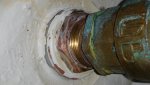
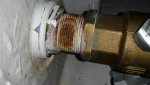
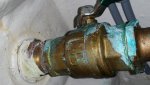
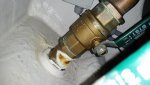
The pictures show the port and starboard through-hulls used for heads discharge on our Phantom 38, before and after (a bit of) cleaning.

Before cleaning, both of the through-hulls were covered with a soft, white substance and, over months, there would be a few drops of water in the bilge - not more than a tea spoon at a time. The blue-green above the port-side valve suggests a minor leak - probably mostly taken care of by the dehumidifier - whereas the starboard one showed a red, rust-like stain in the middle of the through-hull.

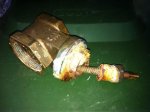
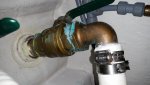
After cleaning, they appear to be showing different colours / patterns, as shown in the subsequent pictures. What could be the cause, and how much should I have worried? (Given my nature, the boat is on the hard with both sets to be replaced, but I am still curious).
20150509_104538.jpg20150509_104857.jpg20150509_110037.jpg20150509_110628.jpg
 
The green stuff isn't leak - it is copper sulfate which is a reaction between the salt water and the seacocks - completely normal. one of them looks OK (the 1st and 3rd picture I am assuming the same) - the other has the sign of oxidation - Do you have bonding system through your seacocks?
 
The third photo shows the retaining nut for the skin fitting distinctly pink, which is indicative of de-zincification, but bearing in mind the coating of salty deposit it had coated upon it it could just be from the surface material.

I would scrape away at the surface say near the corner of the nut with a small file and see if the underlying metal is still yellow. If this pinkness penetrates more than just into the surface i would replace the skin fitting and nut, and following further inspection of the valve itself, possibly that too replacing with DZR material.

This is what happened to a de-zincified heads seacock on Ocean Belle. The valve had seized and I decided to leave it alone pending haul out. It fell in half as I tried to remove it. Had this happened with the boat afloat - well it would have been afloat for long.

Gate valve aft heads.jpg
 
Pix 1 and 3 look fine, given that it's not leaking any more.
Pic 4 looks a bit dodgy: pink metal is not good ... check the bonding arrangements as others have said.
 
The valves are DZR (you can see the CR, Corrosion Resistant marks on them) and seem newish, so should be no problem with those. The fittings look original and may well not be DZR or bronze - the third picture does look like dezincification. suggest change the fittings for DZR or Bronze. Easiest done by grinding off the flange outside and pushing in. Undoing those lock nuts is likely to be challenging. As said already the green staining is normal.

No need to bond them to anodes - they do not seem to be bonded now.
 
How old are they?

The valve is marked CR so should be DZR I don't know about the other fittings as they are not marked.

valves should be operated regularly and if they do operate replaced, at 5 to 7 years they should be removed and inspected and only if in perfect condition re used, the reality is its more cost effective to replace with new DZR. If you don't the reality is following a sinking due to a failed valve or skin fitting is the insurance company may say that the boat has not been well maintained and not cough up.

It looks as if you can get to the collar and unscrew it, if so good if not cut off the mushroom head and replace all with DZR.

There are two schools of thought on bonding to bond or to not bond, I favour the former and the do continuity tests between fittings and anodes.
 
The boat itself is 2002/3 but I have only had her for the last two, so no idea whether the valves and fittings are newer, or not. From the look of the nuts, I suspect the hull fittings are original.

I note some sealant where the hose is connected, is this normal below the waterline? In addition to the two jubilee clips, that is.

20150509_105056.jpg
 
Last edited:
The valves look ok, but the skin fitting is looking a bit dodgy, Pink nut, washer and fitting. As the boat is already out I would change the skin fittings and check out the valve whilst its off. It's likely given the boats age that someone has already changed the valves for some genuine reason (stuck,siezed, leaks etc) and at the time the skin fittings looked OK. The sealant is probably there as the hose has been taken off and refitted. Sometimes they wont seal well and you get a drip. If you heat the hose up with a hot air gun (carefully) it should come off fine and see what its like inside. I heat them up again to make it easy to put them back on, other wise it can be very hard work.
 
The green stuff isn't leak - it is copper sulfate which is a reaction between the salt water and the seacocks - completely normal. one of them looks OK (the 1st and 3rd picture I am assuming the same) - the other has the sign of oxidation - Do you have bonding system through your seacocks?

+1 - I would change that seacock ASAP - also you must be crazy not to bond the seacocks when you have a large boat - On small vessels there's little value in bonding small metal pieces like seacocks but on a large vessel you get much more current circulation at various directions and in fact small metal pieces could corrode a lot faster than your engine or shaft...
 
+1 - I would change that seacock ASAP - also you must be crazy not to bond the seacocks when you have a large boat - On small vessels there's little value in bonding small metal pieces like seacocks but on a large vessel you get much more current circulation at various directions and in fact small metal pieces could corrode a lot faster than your engine or shaft...
Small isolated areas of zinc resistant material can fare perfectly well without bonding, indeed bonding can create a conductive path via the bonding circuit along the length of the boat that did not previously exist.

This can make certain fittings anodic and others cathodic. In the case of AC leakage currents then massive corrosion can occur via the bonding circuit knocking out the fittings at both ends.
 
For interest, the inlets and valves in the engine bay are grounded, but these ones nearer the bow, are not.

Now to find someone who can replace them within the next week or two - want to be in the water for the bank holiday... :-)
 
Top