What is the best way to make up a quick and dirty portable pump?

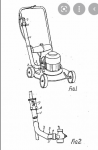
I had a cheap 12v bilge pump with hose and battery clips but that was a PITA. Now I use a diaphragm pump with lawnmower snorkel tubes (off the rubbish dump) and it works fine.

View attachment 121978
"Lawnmower snorkel tubes"! I'm picturing a ride-on with the fording capability of a Landrover Defender?. They've got to have disappointingly more prosaic explanation.
On the substantive question I can say that I was disappointed with my eBay purchase of a drill-powered pump. It needed to be primed before it would start pumping. Fine for situations where the (priming)fluid can be retained in the pickup pipe until under the surface of the fluid to be pumped out, but useless for emptying the diesel tank via the filler tube.
 
Last edited:
ircleaner
"Lawnmower snorkel tubes"! I'm picturing a ride-on with the fording capability of a Landrover Defender?. They've got to have disappointingly more prosaic explanation.
On the substantive question I can say that I was disappointed with my eBay purchase of a drill-powered pump. It needed to be primed before it would start pumping. Fine for situations where the (priming)fluid can be retained in the pickup pipe until under the surface of the fluid to be pumped out, but useless for emptying the diesel tank via the filler tube.

I've heard of Dublin. I suppose it would be too cold to grow a lawn way up there?:unsure:

A snorkel tube attaches to the carburetor on the motor and the air cleaner high up on the handle.
Screenshot 2021-09-07 at 09-49-46 lawn mower snorkel tube - Google Search.png
 
The combination of quick and dirty, petrol, and electric lead me not to respond to the this OP. I've done several acident investigations resulting from quick and dirty pumping of petrol mixtures. Static in one case, a hot surface in another.

Perhaps the simplest safe way to pump small volumes of petrol is a hand pump used oil extractor.
 
I want to have a small electric pump can attach to the battery with long clips and then throw a switch on it to empty water out of lockers full of rainwater and to get pump out old deisel and petrol from tanks for disposal.
Any recomendations for what would be a good cheap pump? what kind of hose required fo handling fuel as well as water and what sort of cable to wire it up with?
Thanks.
wet and dry vacuum cleaner. There is no runback as there is with fluid pumps. Excellent for deep bilges.
 
Thread drift I know, but wouldn't that ensure that any static discharge happened at the open mouth of the filler tube? I'm thinking that's not where I'd choose to do it! I think that cars are relatively good at discharging through the tyres, although obviously not perfect because I still get zapped every few years. Doesn't answer @PilotWolf's comment on why aircraft are bonded when their fuel is mainly far less volatile.
You'd be right, the relative charge levels of the nozzle and filler might be different enough to cause a momentary spark, but unless a weirdo stands holding the nozzle clear of the filler while filling a differential can't really build up and in any case filler pipes are designed to not propagate a flame and will likely have an atmosphere well over HEL. Aircraft fuelling often involves larger volumes and adding a bonding strap is a prudent safety precaution.
 
If your water leaks not in considerable volumes through leaks in lockers why not try one of those Outboard' squeezy' priming fuel pumps ; with the long tubes attached ,they would reach into inaccessible corners and be fully portable as well , and be O.K for handling fuel , obviously , in small openings to fully drain a fuel tank.
Just keeping it simple and cheap.

ianat182
 
I bought a pump just like this earlier this year Pump Extractor Oil Diesel Transfer Pump Liquid 12V Electric motor 280W 45L/Min | eBay

Worked beautifully for very quickly emptying a diesel tank into six 25 litre containers. Then the reverse to pump it back in.

Then very recently had to empty the same tank again: on this occasion it sucked up a bit of the retaining chain that had fallen off the filler cap and into the bottom of the tank - it wrecked the pump. I should have used the little filter attachment that came with it!
 
Out of interest do you have a reference?

Only piston engine helicopters use anything close to petrol - Avgas. Lots of them around but likely only a couple of manufacturers.

Have ‘hot’ fuelled jet aircraft many times and its perfectly acceptable as turbines ‘age’ based on start cycles.

W.
No reference sorry. It would have been 35 years ago. Yes a Bell 47 if I remember correctly. So definitely petrol. Avtur, kerosene, diesel is a lot less volatile than petrol. The story came in an Aviation Safety digest. An excellent publication every 3 months put out by civil aviation authorities. (Aus Dept of Civil Aviation as it was then) All now lost in cost cutting.
Re grounding before refueling in planes. I guess they are just more careful than motorists. The wire was connected to undercarriage to ground the airframe. Then a wire was connected to a tag near the filler connected to the pump hose etc. Then you taker the lid off the filler and fill er up. Super cautious maybe. ol'will
 
ircleaner


I've heard of Dublin. I suppose it would be too cold to grow a lawn way up there?:unsure:

A snorkel tube attaches to the carburetor on the motor and the air cleaner high up on the handle.
View attachment 122032
Au contraire, the weather is so mild that the grass continues to grow a certain amount through the winter, (likewise the weeds), despite, or perhaps because of the rain, hence the need you have alerted met to for a fording ride-on :)
 
No reference sorry. It would have been 35 years ago. Yes a Bell 47 if I remember correctly. So definitely petrol. Avtur, kerosene, diesel is a lot less volatile than petrol. The story came in an Aviation Safety digest. An excellent publication every 3 months put out by civil aviation authorities. (Aus Dept of Civil Aviation as it was then) All now lost in cost cutting.
Re grounding before refueling in planes. I guess they are just more careful than motorists. The wire was connected to undercarriage to ground the airframe. Then a wire was connected to a tag near the filler connected to the pump hose etc. Then you taker the lid off the filler and fill er up. Super cautious maybe. ol'will

I have a pilots license hence the interest.

W
 
In the Forum tradition of not answering the question, but telling you to do it another way...

Instead of a roving pump hot-clipped to the battery, what I have is a static diaphragm pump, bolted to a bulkhead with a permanent outlet to the cockpit, and a permanently wired-in connection to the boat's electrics. And a very long flexible tube that will reach all parts of the boat. It works very well, especially in the little recesses of the cabin floor which is divided into a dozen spaces by a GRP web.

The only thing to watch is the filtration - the small inline filter that came with the pump clogs easily; I keep meaning to put in a beefier one.
 
Au contraire, the weather is so mild that the grass continues to grow a certain amount through the winter, (likewise the weeds), despite, or perhaps because of the rain, hence the need you have alerted met to for a fording ride-on :)

My son gave me an oldish ride-on just a few weeks ago. I took it out yesterday for the first time. I was driving it back into the shed and went to switch off the engine but no ignition key: it had fallen out somewhere! (I managed to chuck it out of gear before there was too much drama)

Reading other posts though I am dead keen to check with the local rubish tip/ recycle depot to see if they have any wet/dry vacuum cleaners. They would be ideal because you cannot suck a bilge completely dry with a pump of any sort.
 
Top