What do I need to install gas supply to cooker?

My installation which came with the boat includes a gas locker draining to the transom and a solenoid switch immediately after the governor, operated from the main switch panel below. The routine is to turn it off after every use, which is more likely to happen than remembering to clamber out into the cockpit when it's raining to turn off the valve on the cylinder - and then having to turn it back on to make another cuppa. We always turn it off at night though.
 
Shut off valve near the cooker:

The BSS, for all its limitations, such as thinking gas behaves as a liquid not a gas, requires a shut off valve to be readily accessible.
I can't see that the cylinder valve, located in a locker within a locker fulfills that.

A readily accessible shut off valve comes in handy in several scenarios I've heard of happening, broken flexible hose, flare up due to regulator failure for instance. We always turn ours off whenever the cooker is not alight.

A gas bottle locker is non negotiable, anyone installing a gas system without one frankly needs a slap.
It must, in my view, be sealed from the accommodation, very strongly preferable that it opens to the deck or even transom.
ok, I can see the sense of a shut off valve by the cooker. If I installed that, would it make sense to the bubble detector at that end, where it is much more visible and you cant miss seeing it every time you go to light the cooker?
 
ok, I can see the sense of a shut off valve by the cooker. If I installed that, would it make sense to the bubble detector at that end, where it is much more visible and you cant miss seeing it every time you go to light the cooker?
No, because it'll only detect leaks downstream of it. It needs to be immediately after the governor.
 
ok, I can see the sense of a shut off valve by the cooker. If I installed that, would it make sense to the bubble detector at that end, where it is much more visible and you cant miss seeing it every time you go to light the cooker?

A bubble detector needs to be fitted immediately downstream of the regulator. If you fit a shut off valve where you suggest the bubbler will keep a check on the pipework between the gas locker and the shut off valve ( which incidentally I would omit) . There is always a risk however slight of damage to the pipework somewhere along its run.
 
Shut off valve near the cooker:

The BSS, for all its limitations, such as thinking gas behaves as a liquid not a gas, requires a shut off valve to be readily accessible.
I can't see that the cylinder valve, located in a locker within a locker fulfills that.
It depends entirely on the size of the boat. The BSS was devised for narrowboats, which could be 70' long with a gas cooker, gas heater and gas water heater. The OP has a boat - I've seen it - on which you can practically touch any cockpit locker from the cabin.

Furthermore, I would not consider it good practice to leave most of the system pressurised, even at low pressure, when no appliance is in use. If the cylinder cut-off is inaccessible it needs to be made more accessible.
 
The LPG tank fitting on my car - inlet, outlet and gauge sender - has a gas-tight housing over it and two vents to outside the car, through which the pipes from filler and to engine run. Topologically speaking, every connection is outside the car, although the tank is in the boot. For boats on which a gas locker really isn't a practical option, I wonder if it would be possible to make a flexible boot which clamped over the top of the cylinder with a vent pipe to a skin fitting as well as a gland for a delivery pipe.
 
Last edited:
As for the gas, I dont see how it can be sealed in when the lazarette, goes round the corner into the cockpit locker, and there is a gap between the deck and the top into the quarter berth. Leaking gas will sink, so a vent overboard mans a hole in the transom at the waterline, I'm then more likely to sink than blow up. There is so much volume in the lockers the bottle would be empty and the gas would still not reach a vent hole.
I get a gas locker is a good thing, but venting it into my lazarette seems a pointless exercise, probably be safer to keep it in the locker!
Venting onto deck via a hose from a gas locker might be possible, and a workable solution I would be interested in, but will it dissipate there or hang about the cockpit then into the cabin round the washboards?

The purpose of the gas bottle locker is to contain small gas leakages from the bottle installation and direct then via a DRAIN from the bottle locker directly overboard. not vent them into the lazerette/ cockpit lockers.
Its difficult in a small boat but the drain does not have to be right at the bottom of the gas bottle locker. Subject to certain requirements (see the details in the BSS) it can be above the bottom . (mine is several inches above the bottom)
With the gas bottle locker close to the transom it should then be possible for the drain to exit via the transom well above the waterline. My gas bottle locker drain is in fact above the level of the cockpit sole and the cockpit drains. If a drain through the transom at that height were to become submerged there would already be water gushing into the cockpit via the cockpit drains

If you wish you could fit the top of the gas locker with a gas tight lid . Mine is close fitting but not gas tight because there is no requirement for it to be gas tight. Maybe with a gas tight lid it would be a good idea to also fit a vent exiting outside the cockpit but it is not really necessary

I dont know why you have got the idea that I am suggesting allowing the gas bottle locker to drain in to the cockpit locker and then simply punching a hole throgh the transom to allow the gas to escape . That's crazy

I posted a link in #3 to the chapter of the Boat Safety Scheme which describes in detail all aspects of a gas installation ..... I suggest, again, that you read it carefully.

It may be difficult in small boat and you may have to follow the principles as closely as possible rather than the detail exactly but if you don't want to fit a gas bottle locker don't install the gas.

You seem to be under some misapprehension about the volume of gas in a small propane cylinder
I believe they contain 3.9kg. A little bit of year 8 science and some very simple arithmetic will tell you that is a little more than 2 m³ at normal ambient temperatures and pressures
 
Last edited:
Regarding gas lockers, we used a suitably sized brewing bucket with a drain fitted in the bottom and the LP hose exiting thru a cable gland.

Fitting it high enough to allow for the drain was the trickiest bit for our boat.
 
On an 18 foot boat you sometimes used to see a stove mounted directly on top of a gas bottle, within the accommodation.

No flexible hose, no shutoff tap, no copper piping, no bubble tester, no flexible hose.

Not sure where the regulator was...

No gas locker.


Then a chapter of accidents and it has got more complicated.
 
On an 18 foot boat you sometimes used to see a stove mounted directly on top of a gas bottle, within the accommodation.
No flexible hose, no shutoff tap, no copper piping, no bubble tester, no flexible hose.
Not sure where the regulator was...
No gas locker.
Then a chapter of accidents and it has got more complicated.
Like this ? Safe enough if you dont get it any closer to the boat than pictured.


CG stove.jpg
 
On an 18 foot boat you sometimes used to see a stove mounted directly on top of a gas bottle, within the accommodation.

No flexible hose, no shutoff tap, no copper piping, no bubble tester, no flexible hose.

Not sure where the regulator was...

No gas locker.
I had one of them on my Jouster - they were standard on 70s Westerlies. The dangling 904 provided weight low down for gimballing. There is no regulator - the burners run on HP gas. As long as you made sure that the sealing washers on the fitting which screwed into the gas cylinder (a bit like a banjo fitting) it was a very need system because it was so simple. 70s Westerlies did not have a reputation for blowing up.

I've just passed a spare set of burners and jets onto a forumite, so there is at least one still in use.
 
The purpose of the gas bottle locker is to contain small gas leakages from the bottle installation and direct then via a DRAIN from the bottle locker directly overboard. not vent them into the lazerette/ cockpit lockers.
Its difficult in a small boat but the drain does not have to be right at the bottom of the gas bottle locker. Subject to certain requirements (see the details in the BSS) it can be above the bottom . (mine is several inches above the bottom)
With the gas bottle locker close to the transom it should then be possible for the drain to exit via the transom well above the waterline. My gas bottle locker drain is in fact above the level of the cockpit sole and the cockpit drains. If a drain through the transom at that height were to become submerged there would already be water gushing into the cockpit via the cockpit drains

If you wish you could fit the top of the gas locker with a gas tight lid . Mine is close fitting but not gas tight because there is no requirement for it to be gas tight. Maybe with a gas tight lid it would be a good idea to also fit a vent exiting outside the cockpit but it is not really necessary

I dont know why you have got the idea that I am suggesting allowing the gas bottle locker to drain in to the cockpit locker and then simply punching a hole throgh the transom to allow the gas to escape . That's crazy

I posted a link in #3 to the chapter of the Boat Safety Scheme which describes in detail all aspects of a gas installation ..... I suggest, again, that you read it carefully.

It may be difficult in small boat and you may have to follow the principles as closely as possible rather than the detail exactly but if you don't want to fit a gas bottle locker don't install the gas.

You seem to be under some misapprehension about the volume of gas in a small propane cylinder
I believe they contain 3.9kg. A little bit of year 8 science and some very simple arithmetic will tell you that is a little more than 2 m³ at normal ambient temperatures and pressures
Thanks Vic, very useful as always. Not sure where I got the idea you were suggesting to vent to cockpit, my mistake and apologies, but I wasn't thinking a transom hole was part of it. I have your link bookmarked to read over before I do the install, but too many other things going on just now to pay it proper attention.
I'm interested in your idea that I could potentially have a relatively high drain hole above the waterline, I'll take another look at my set up and see, I was fairly certain I couldn't make that work, but I've been wrong plenty of times before :)
 
Gas lockers are still readily available, as you have probably found out, but they all seem to be side-entry for motorhomes and caravans or else large ones for existing lockers on boats.
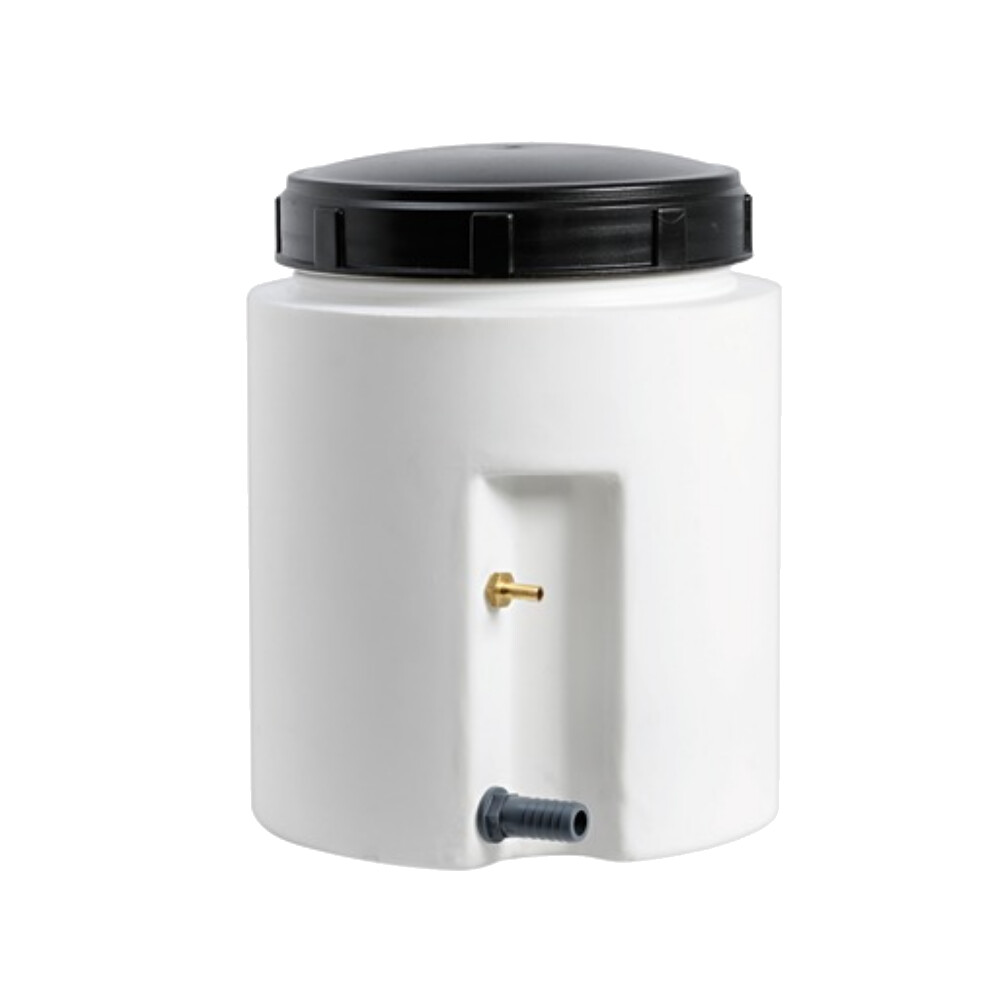
I don't know if it's coincidence or cleverly targeted marketing, but I have just been to the Force 4 website to look for something completely different and it offered me this:

Watertight-Gas-Bottle-Housing.jpg


It takes a Camping Gaz 907 with regulator; the small hose connector is for gas and the big one for a drain. Would one of them fit in Bethfran's lazarette? Link is Force 4 Watertight Gas Bottle Housing
 
I don't know if it's coincidence or cleverly targeted marketing, but I have just been to the Force 4 website to look for something completely different and it offered me this:
Watertight-Gas-Bottle-Housing.jpg

It takes a Camping Gaz 907 with regulator; the small hose connector is for gas and the big one for a drain. Would one of them fit in Bethfran's lazarette? Link is Force 4 Watertight Gas Bottle Housing

Nice idea but not so sure about the gas connector although I see they do offer a 8mm hose nozzle to 5/16" connector as an optional extra but its not a bulkhead fitting .

It's made of polythene ... will that be adequately fire resistant ?? They say made to ISO 10239 so I suppose it is

£100 is a bit expensive

Why am I looking at gas bottle "lockers" at this time of the night?
 
Last edited:
Nice idea but not so sure about the gas connector although I see they do offer a 8mm hose nozzle to 5/16" connector as an optional extra

It's made of polythene ... will that be adequately fire resistant ?? They say made to ISO 10239 so I suppose it is

£100 is a bit expensive

Why am I looking at gas bottle "lockers" at this time of the night?
At least I have a reason to :) But I'm preferring the old brewers bin idea as the locker costs more than the rather nice plastimo cooker!
 
On an 18 foot boat you sometimes used to see a stove mounted directly on top of a gas bottle, within the accommodation.

No flexible hose, no shutoff tap, no copper piping, no bubble tester, no flexible hose.

Not sure where the regulator was...

No gas locker.


Then a chapter of accidents and it has got more complicated.
I've sailed on a boat like that.
The upside was that you could take the whole thing on deck to change the bottle.
I don't know if it's coincidence or cleverly targeted marketing, but I have just been to the Force 4 website to look for something completely different and it offered me this:

Watertight-Gas-Bottle-Housing.jpg


It takes a Camping Gaz 907 with regulator; the small hose connector is for gas and the big one for a drain. Would one of them fit in Bethfran's lazarette? Link is Force 4 Watertight Gas Bottle Housing
Something like that in the lazarette offers zero protection against the problem of a regulator or bottle leaking while you are changing it. Which I'm told is not that rare.
But at least that's a problem you will know about.
The brass fitting looks like it could be changed to a bulkhead connection to copper pipe, but the pipe could be stressed unless the enclosure was mounted very carefully. You know how those screw-top lids stick on various plastic containers?
My first yacht, the gas bottle lived in the anchor locker and turned rusty in no time. This thing ^^ inside the anchor locker would have been a winner. Sealed from accommodation, drains overboard.
 
Top