Webasto Standpipe Leak

Ian_Rob

Well-Known Member
Joined
31 Jan 2008
Messages
1,209
Visit site
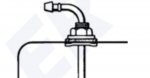
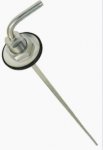
If I fill my tank to the brim I always get a slight leak from the Webasto standpipe that is not quite in the top of my fuel tank. Slightly tightening it has if anything, made it worse. The standpipe assembly seems to have a rubber washer that is pushed through a hole in the tank that is then tightened against an upper metal washer with a nut. Am I expecting too much of it to be diesel tight or do I have to just put in less fuel? I can tighten it further but didn’t want to do so before I left.
 

Attachments
  • B1BE7179-CCB3-4B49-98AA-B061F824E227.jpeg
    B1BE7179-CCB3-4B49-98AA-B061F824E227.jpeg
    24.5 KB · Views: 15
Last edited:
The standpipe assembly seems to have a rubber washer that is pushed through a hole in the tank that is then tightened against an upper metal washer with a nut.

The instructions usually say that the rubber washer should be on the outside surface of the tank.
 
The instructions usually say that the rubber washer should be on the outside surface of the tank.

From the photo I had assumed that the bottom washer was rubber so that it could be pushed through the hole in the tank before being tightened against the top metal washer, gripping the tank wall in the process. Both fuel pipes are on a portion of the tank approximately 30mm below the top. As such, with the tank full, the Webasto connection will be under slight pressure. Am I expecting too much of the seal?
 
From the photo I had assumed that the bottom washer was rubber so that it could be pushed through the hole in the tank before being tightened against the top metal washer, gripping the tank wall in the process. Both fuel pipes are on a portion of the tank approximately 30mm below the top. As such, with the tank full, the Webasto connection will be under slight pressure. Am I expecting too much of the seal?

Washer is supposed to be outside. Then you still have to seal the thread where the nut is.
Its a rubbish fitting at best, they were used on automotive kits at one time where the drips were less obvious!
 
I've just done my one. Rubber and metal washer on the outside of the tank. A coating of Loctite SI5980 on both sides of the rubber washer seems to have done the trick.
 
I've seen it recommended (and I can't remember where) that these standpipes ideally shouldn't be used on plastic tanks. Apparently the rotational moulding process results in uneven wall thicknesses.
 
I've seen it recommended (and I can't remember where) that these standpipes ideally shouldn't be used on plastic tanks. Apparently the rotational moulding process results in uneven wall thicknesses.
Interesting. I have just spoken with Butler Technik and was also told that the fitting is recommended for plastic tanks.
 
It's been many years since I last fitted an Essex flange to a hot water cylinder. The split washer relied on the tank wall being fairly thin to allow the washer to be turned from the outside to the inside. Is there anything similar that would do the job for a plastic tank?
 
Interesting. I have just spoken with Butler Technik and was also told that the fitting is recommended for plastic tanks.

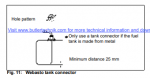
Webasto recommend only to use the tank connector on metal tanks. Here's an extract from a Webasto installation manual, found on the Butler Technik website...


Capture.PNG
 
So
Interesting. I have just spoken with Butler Technik and was also told that the fitting is recommended for plastic tanks.

SORRY….idiot mistake ……I was thinking ‘ISN’T’ but typed ‘IS recommended for plastic tanks’
 
Moulded plastic tanks are absolute demons for leaks round fittings: the tanks are too flexible and the wall thickness is uneven. Usually OK when new and fittings first screwed in, often with self-tappers. Undo one though and very difficult to get it to seal again. Definitely washers on the upper side not the inside, add some Hylomar red or Hylotite Blue sealant to joints, and you may get a seal again.
 
Follow-up - I have had supposedly nitrile black rubber washers including those suppled with tank fittings degrade and go soft/slimy with diesel, cork/nitrile seems OK. Maybe it's the bio-stuff they add to fuel these days.
 
We have a plastic fuel tank. Our Webasto is fed off a T-junction behind the engine fuel filter and as such has worked faultlessly and leak free for ten years. It also has the added benefit of getting clean fuel which was not always a given in the past.
 
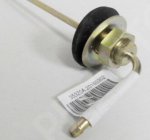
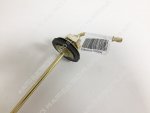
Thankyou. I like the idea of tapping off the engine fuel line but in the the first place I will take it out and try some sealant. It isn’t clear from the Webasto diagrams how the standpipe is actually secured. From the photo I attached to my first post as well as the one below, there appears to be only one rubber washer but if this is on top of the tank what’s below? The diagram shows something? If it isn’t rubber how does it fit through the hole? Is there a risk of dropping components into the tank if I loosen the top nut?
 

Attachments

  • E5AF437A-CD51-4201-A4E3-0A8EDED571D8.jpeg
    E5AF437A-CD51-4201-A4E3-0A8EDED571D8.jpeg
    182.4 KB · Views: 26
  • 5E073797-4378-477C-B658-070A0C069417.jpeg
    5E073797-4378-477C-B658-070A0C069417.jpeg
    148.2 KB · Views: 24
Last edited:
Holding the outlet pipe remove the nut and washer and rubber washer then manoeuvre the pipe out of the tank. The lower washer is oblong and slightly smaller in shape to allow it to fit through the hole with the dip pipe off to one side Webasto-Fuel-Tank-Standpipe-For-Trucks-650mm-close-1320399A.jpg
 

Other threads that may be of interest

Top